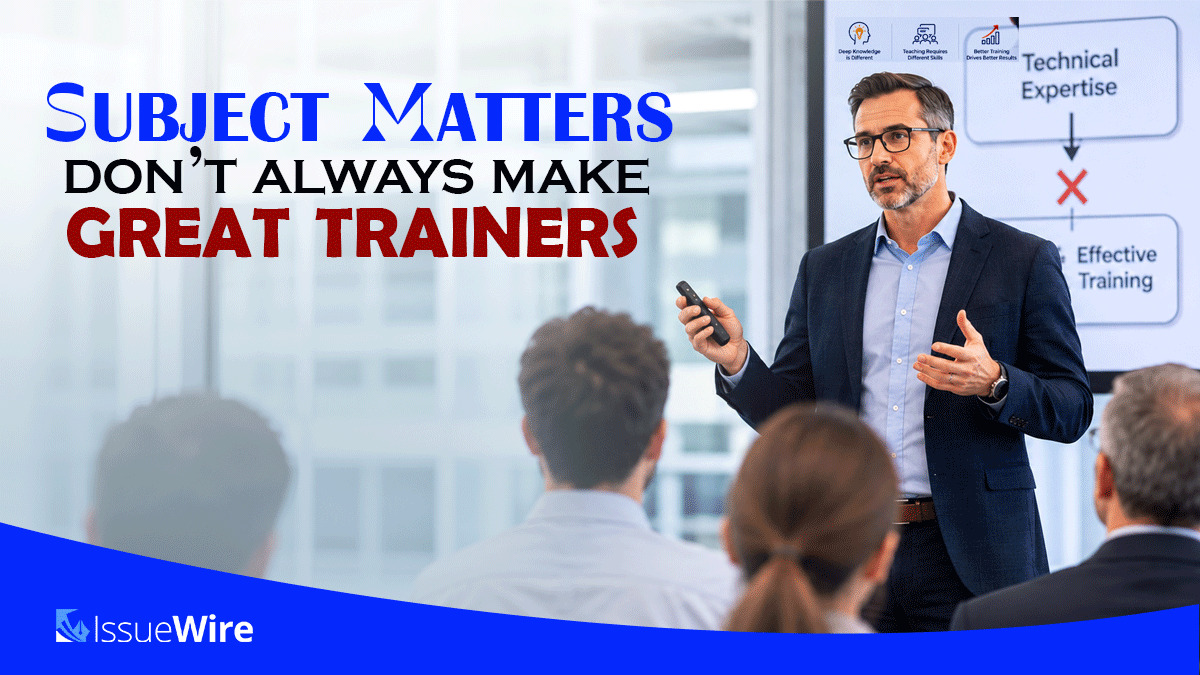
Many organizations follow the same pattern when choosing trainers. They prefer a high-performing employee with years of experience to teach others because they know every process and system inside out.
At first, the decision seems logical. After all, who could explain the job better than someone who does it every day? However, the real challenge begins when expertise is mistaken for teaching ability. Knowing a role and helping someone else learn it are two very different skills. This is very common in technical and operational workplaces where experienced employees juggle daily responsibilities while training others. Moreover, learners also stay silent because they worry their questions will sound too simple or stupid. So, let’s move on and understand why subject matter experts do not automatically know how to be a good trainer.
What is the Difference between SMEs and Trainers?
Subject Matter Experts bring deep knowledge that organizations depend on. They understand the work, the systems, how things run, and the challenges better than almost anyone else. That experience is incredibly valuable, but it does not automatically translate into effective teaching. Explaining a process to someone new requires patience, structure, format, and the ability to simplify complex ideas without losing their meaning. It also means asking the right questions, encouraging participation, creating opportunities to practice, and giving feedback that helps people improve. None of these skills comes naturally just because someone excels at the job.
This is not a criticism of SMEs, as most have never been taught how to train others. As a result, learners can become overwhelmed while organizations mistake knowledge for the ability to build genuine understanding and lasting capability.
How does Poor Internal Training Harm the Workplace?
When internal trainers do not receive the right support, the impact spreads far beyond the classroom. Employees often leave training with gaps in their understanding and little confidence in applying what they have learned. Important details fade quickly, mistakes keep happening, and supervisors spend valuable time correcting issues that better training could have prevented. Over time, teams begin following different approaches. They create inconsistency across the organization as well. Training then becomes another task to tick off instead of a meaningful opportunity to build capability. The risks grow even larger in industries like aviation, healthcare, manufacturing, and operations, where employees must make accurate decisions under pressure. There is rarely time to search through slides or manuals when a real situation demands immediate action.
Effective learning must prepare people in your workplace to think clearly and respond confidently, while actually applying their knowledge in the moment instead of simply remembering information from a presentation.
What does the Traditional Style Often Not Work?
Many workplace training programs still focus on delivering information instead of improving performance. Employees rarely struggle because they have never heard the content. They struggle when they need to apply it under pressure. That is where strong facilitation makes a difference. Good trainers connect learning to the actual work through discussion and reflection. With support in Instructional Design, SMEs can turn their expertise into training that builds confidence and consistency.
What Can you do Instead?
The answer is not replacing the subject matter experts. It focuses on giving them the support they need to succeed as trainers. With guidance in facilitation and instructional design, SMEs can turn their deep expertise into meaningful training. This helps the training become more engaging and far more effective.
Conclusion
Genuine learning comes from practice, feedback, reflection, and applying knowledge with confidence. Expertise matters, but great training needs strong teaching too. That is what helps people succeed when it matters most!


