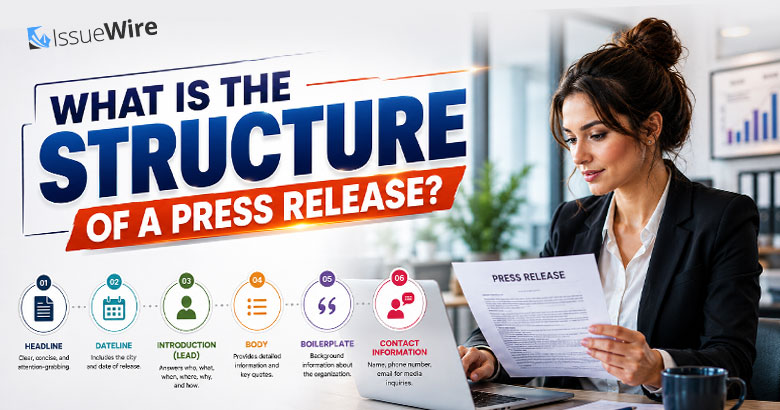
Crafting an impactful press release is an important Public Relations skill for businesses that want to share updates and attract media attention from the industry. While the process may seem challenging at first, understanding the right structure and approach can make it much easier. From an engaging headline and informative lead to a concise body and strong boilerplate, every element has a purpose in a PR (Press Release). The type of announcement also matters, whether it involves a product launch, company milestone, event, or crisis response.
The writing of a press release is as important as its distribution. It ensures the distribution efforts are going to bring the right results. In this guide, you will find out the answer to “What is the structure of a press release?”So, let’s get into it.
The Correct Structure of a PR -
1. Headline
A strong headline is the first thing a journalist or reader notices, so it needs to communicate the main point while creating enough interest to encourage them to read further. Keep it clear, concise, focused, and relevant to the story you are sharing. It can also help to study headlines used by the publication or media outlet you are targeting. Matching its tone and style can make your press release feel more natural and relevant to its audience.
2. Release Date and Location
A press release should clearly mention when it is being issued and, when relevant, the date of the event or announcement it covers. Including the business location also gives journalists useful context and helps establish why the news may matter to their audience. You will often see the phrase “FOR IMMEDIATE RELEASE” at the top of a press release. This signals that the information is ready to be shared publicly as soon as it reaches journalists. It makes the timing of the announcement clear from the beginning.
3. Opening Paragraph
The opening paragraph is often called the lead, and it should give journalists a clear understanding of the story from the very beginning. It needs to cover the five Ws so readers can quickly grasp the most important details without searching through the rest of the release. Start by explaining who the announcement is about and what is happening, then provide the relevant location and timing. It is equally important to explain why the news matters and what makes it worth attention. A strong lead of a press release should feel informative without becoming overloaded with detail. It should give journalists enough context to understand the announcement and decide whether it is relevant to their audience.
4. More Context
The paragraphs after the lead should develop the story by presenting the most important information first, followed by supporting details in a clear order. Keep the writing simple, direct, and easy for journalists to scan. Focus on what your business or project does and explain why it matters, rather than filling the release with every detail from its history. Include only information that strengthens the PR announcement and gives readers useful context without making the story feel overloaded or repetitive.
5. Unbiased Writing
Journalists are unlikely to respond well to exaggerated claims about a product or service being the “best,” especially when there is no evidence to support the statement. Unless the recognition comes from a legitimate award or achievement, avoid promotional language that feels overstated. A stronger approach is to present clear, relevant facts and let the quality of the announcement speak for itself.
6. Relevant Quotes
Well-chosen quotes can add personality and depth to a PR while giving journalists a stronger sense of the people behind the announcement. A business owner can share a personal perspective, while an employee closely connected to the news can offer a useful insight. The quote can be thoughtful, personal, or opinionated, but it should always add something meaningful to the story. Most importantly, clearly attribute every quote to the person who said it.
7. Singing Off
The ending of a press release can vary depending on the publication and industry, so it is worth checking the conventions followed by the media outlets you plan to contact. A clear closing helps journalists understand that the announcement has come to an end and prevents any confusion about whether more information follows. Common sign-offs include “###”, “XXX” and “-30-”, although their use differs across markets. Before finalizing your release, take a moment to research the preferred format in your region, so the closing feels professional and appropriate for your target audience.
8. Boilerplate
A Press release should end with a short and informative description of the business, similar to the introduction you might find on an About page of a business. Known as the boilerplate text, this section gives journalists the essential background about the company without adding any unnecessary detail. It usually covers information that remains consistent across different announcements, such as what the business does and who it serves. Even so, review the boilerplate before each PR to ensure every detail in it is accurately updated and relevant to your brand.
Mistakes to Avoid -
While crafting a press release for your next distribution campaign, make sure these common mistakes are not there.
- Overly promotional language to hype up the product or service. Journalists and people in the media are more likely to engage with your announcement when it seems genuine.
- Not understanding who the target audience is can be harmful to your press release publication. Failing to tailor your message for the right people might make your content miss out on coverage.
- Poor writing style or formatting can make your message look less professional. As a result, the journalists might not take your PR seriously.
- Not proofreading the text thoroughly might make you miss out on crucial typos or grammatical errors. It will end up harming the credibility of your PR content.
When your press release is ready and formatted correctly, the next step is to find a distribution service that understands your vision. Make sure the distribution network matches your target audience and the price is in your budget, and you are ready to go!


