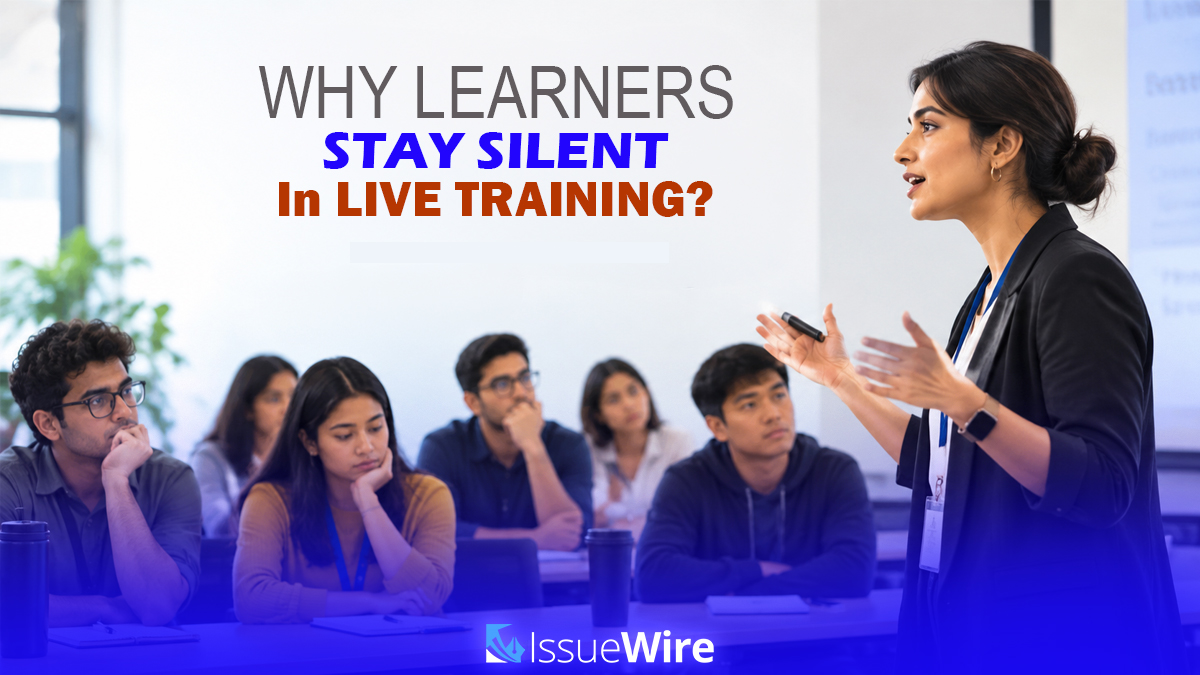
A silent training room can look like a sign that everything has clicked. However, it often means something else. Learners may have questions but hesitate to speak up, especially when the session leaves them waiting for the right moment. Your answer to this lies in changing the format to make participation easier and giving everyone a comfortable way to join the conversation. So, let’s move ahead and learn how.
Why Does Silence often Start with Fear?
To understand learner silence, start with what may be missing: psychological safety. Harvard researchers describe it as feeling safe enough to ask questions or admit confusion without fearing judgment. Learners make that calculation quickly. Will my question sound too basic? Does everyone else understand this already? Is it worth interrupting the session? When speaking feels risky, staying silent automatically becomes the easier choice. That silence can be misleading because trainers cannot always tell whether learners are following along or have simply stopped engaging. Research across classrooms and online sessions shows that when people feel safe, they participate more freely and stay engaged.
Why Does the Traditional Format Not Work?
A typical live session often makes questions harder to ask than they need to be. Saving them for the end means the moment of confusion has already passed, while asking for a show of hands puts one person in the spotlight. Speaking up in front of the entire room can make uncertainty feel even more exposed. These small choices quickly raise the cost of participation. As a result, the same confident voices tend to dominate while everyone else stays silent. That can create a misleading picture of the session, because positive feedback from a few active learners may hide how many others have quietly lost track.
Can Anonymity be the Answer?
The solution is not asking your learners to be braver. Instead, you need to make asking feel easier and safer for everyone. An anonymous Q&A removes the pressure of being identified, encouraging people to share questions they might otherwise keep to themselves. Timing matters too, so keep the Q&A open throughout the session while confusion is still fresh. Add upvoting, and you can quickly see which questions matter most to the group. You will spend less time guessing what the room needs and more time addressing the topics learners are actually thinking about. These changes simply create a more open and structured way for your audience to participate.
What Should be the Design?
If you create learning experiences, the bigger shift is to stop waiting for participation and start designing the session, so people have natural ways to join in. Open the question channel from the beginning, allowing questions to build while the discussion moves forward. Keep submissions anonymous when possible, especially with larger groups, and let learners upvote the questions they want answered most. This gives the whole room a voice instead of leaving the conversation to the most confident participants. How you respond matters too. When a difficult question comes in, answer it openly and directly. Learners notice that response and use it to decide whether speaking up is safe. The real measure of a live session is not how smoothly it runs, but whether the people who usually stay silent find a way to participate. Once they do, you get a clearer picture of what your learners actually understand.
Now, after your next session, measure participation instead of simply asking if it went well. The number of people who speak up will depend on how thoughtfully you design the experience!


