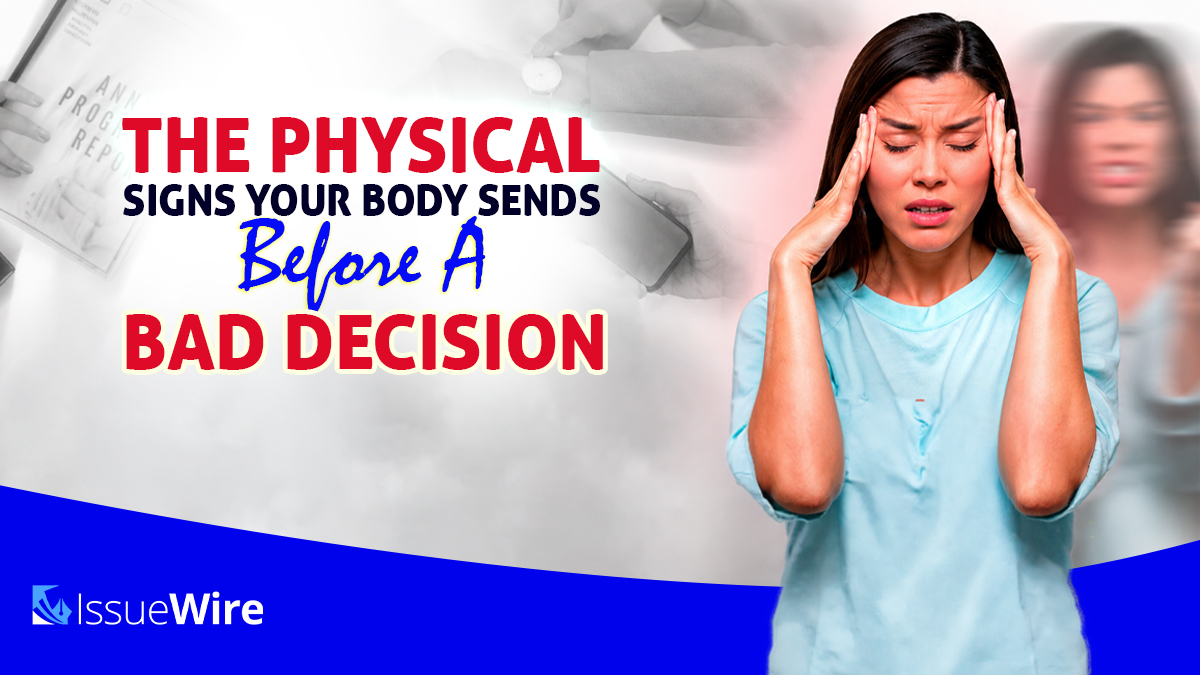
Decision-making is perhaps one of the most difficult jobs in the workplace, and every decision comes with certain analysis and deep thinking about the consequences. There are times when one can make a bad decision without understanding, and the realization comes much later when there is nothing to do. Now, a strange fact is that our body often knows about the decision before you can actively think and assess the situation.
The human body sends signals like tightness in your chest or stomach, a clenched jaw, bad sleep, restlessness, etc that mainly occur before you make a bad decision. The body tends to register a problem before even your mind can analyze the situation, and that is why experts suggest focusing on and listening to ‘gut feeling,’ which often leads to better results because trusting your gut is often more powerful than making analysis based on numbers.
The Science behind ‘Gut Feeling’
In terms of science, neuroscientists address ‘gut feeling’ as the somatic marker hypothesis. It simply means that the body stores the emotional outcome from past experiences and offers a similar feeling with bodily sensations when you get exposed to a similar situation. It is like muscle memory, and so, the body reacts before the mind. Those reactions can affect your decision before your mind is able to explain it. This feeling is often called a hunch or ‘intuition’ that guides you while making decisions.
Identifying Bodily Signals before a Decision
There are many kinds of bodily signals, and they are not the same for everyone, as every individual has a personal pattern to react to different situations and decision-making. Therefore, the gut feeling before a decision can vary from one person to another. Still, there are some certain and common signals that can be found in the majority of people.
- Shallow breathing and a tight chest are very common signal that occurs when the body feels a threat. Since the gut has a dense network of nerves, one can also feel something like a knot stuck inside the stomach. It happens unconsciously but affects your decision-making.
- Some people also feel tension in the jaw, shoulders, and neck, which is also associated with panic attacks. A clenched jaw and tensing up are common among people of all ages.
- Others might feel restlessness or tend to pace things to quickly end the process of decision-making.
- A lot of people also feel extremely tired, fatigued, or have a headache.
- Even feeling a strong surge of excitement is one of the signals that being too excited about something can also lead to a bad decision.
How to Use the Bodily Signals for Your Benefit?
-
Step 1 - PAUSE
Whenever you feel a reaction while making a decision, try to give it 10 seconds before you actually respond. Breathe out slowly and pinpoint the area where you feel it.
-
Step 2 - NAME
Name signals in simple words like TIGHT CHEST, HEAVY STOMACH, etc to name some. Naming the sensation can help you figure out what your body is telling you when your mind is busy.
-
Step 3 - QUESTION
There are two important questions to ask. What does the signal warn about? And is there any legit evidence for that?
-
Step 4 - WRITE
Finally, it is time to write down what you felt and what you opted for. A few months of monitoring will help you understand which signals you have to focus on.
Listen to Your Body
Just as you should not completely obey your body, you should also not ignore its signals, as they help in decision-making. So listen to your body, and then you can check with your mind.


