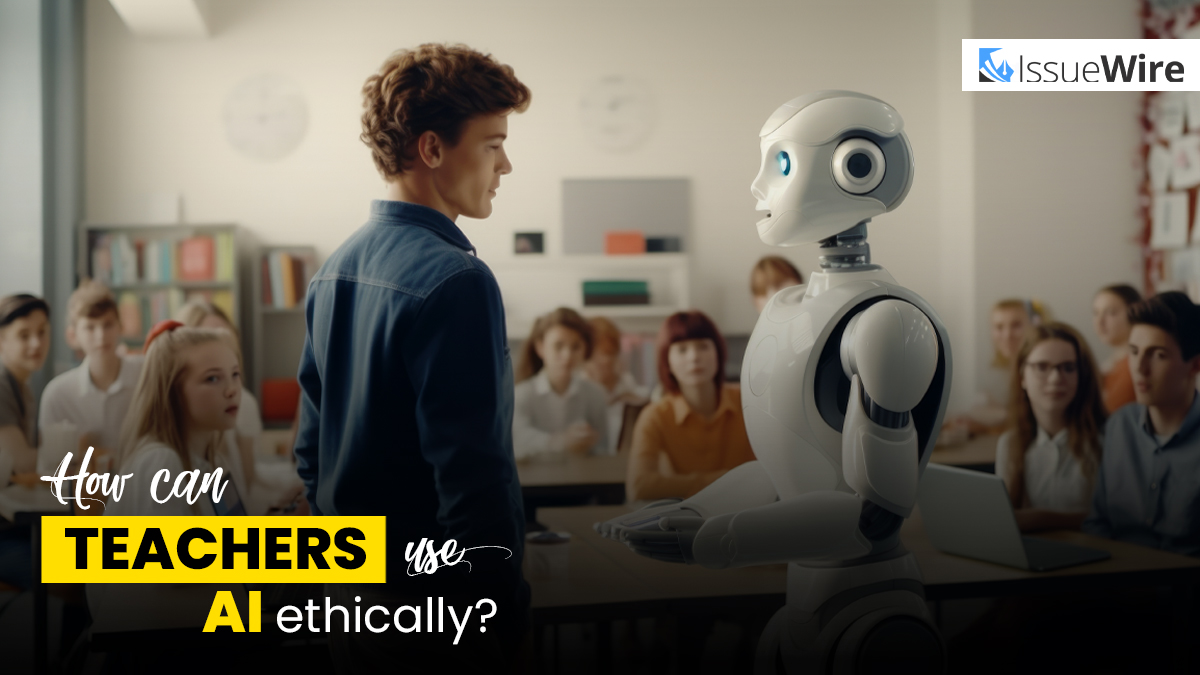
In this modern digital age, the influence of artificial intelligence (AI) can be found in every sector, and education is also a part of it. AI cannot replace teachers or their teaching, but it can help to improve it, allowing students to adapt to the digital landscape. More than half of the schools around the world are already utilizing AI in their system, and it is offering students a more effective and personalized learning experience. However, there are some ethical considerations as well.
What Do Teachers Need to Consider for Utilizing AI Ethically?
- Fairness and Bias - AI is a fast learner, and it learns based on the biases of the world. It can promote biases when it is taught with ancient cultures and old stereotypes. But it has to be neutral without any inclination.
- Privacy of Data - To provide a customized learning experience, AI needs to access student data, which creates a concern for sensitive student information. Starting from behavioral patterns, grades, and learning habits, everything is exposed to AI.
- Transparency - If you are using AI as a teacher, you must share that fact with the students, which offers more transparent access to technology. Students should also know that AI is not always right, but it can help to find and research better.
- Accessibility - AI can bring bigger change in the modern education system by making it more accessible for all kinds of students through simple and adaptive AI tools.
- Reliability - No AI tool can replace a teacher, and neither teachers nor students should rely on it too much. Over-reliance on AI is bad for both the teachers and the students. AI can help to make your class better by offering personalized support.
Enrich Curriculum with the Practical Ways
-
Personalized Learning Programs
Every student is different than another and a generic class for education is not always successful in teaching everyone. With the help of AI, teachers can easily adjust their lessons to meet the unique needs of each student while adapting to their pace. The AI platforms study students' performance and create content in real time, which can be helpful for that particular student.
-
Generating Content
AI can help to create chapters, worksheets, vocabulary games, and other types of content that help teachers to understand and teach students better. With more interactive measures and creative content, it can help to make the learning process more exciting and fun. Utilizing AI as a creative assistant can help to make education better and more engaging.
-
Boost in Student Engagement
Modern students have shorter attention spans, and it is quite difficult to keep them engaged. Teachers can leverage AI tech to make education more interesting and exciting inside the classroom. There are apps for virtual science labs, online programs, gamified tasks, and many other elements that make education more rewarding and allow students to complete the tasks.
-
Classroom Management
Teachers also have to handle a fair share of administrative work. Starting from digital reports, emails, organizing classes, and meeting with the parents, there is a lot of work, and it can get a little overwhelming. AI can help to set up your classroom virtually, and it can also send emails to the students to remind them of their curriculum.
-
Assessment and Feedback
Providing helpful feedback is one of the biggest tasks for a teacher, and with AI help, you can easily provide feedback based on each student. AI tools can organize grade quizzes, check assignments, and offer reasonable feedback.
Final Thoughts
Teachers are required to use AI wisely and ethically to create a better learning experience for all kinds of students. They need to adapt effectively to the modern tech era to prepare students for the future.


