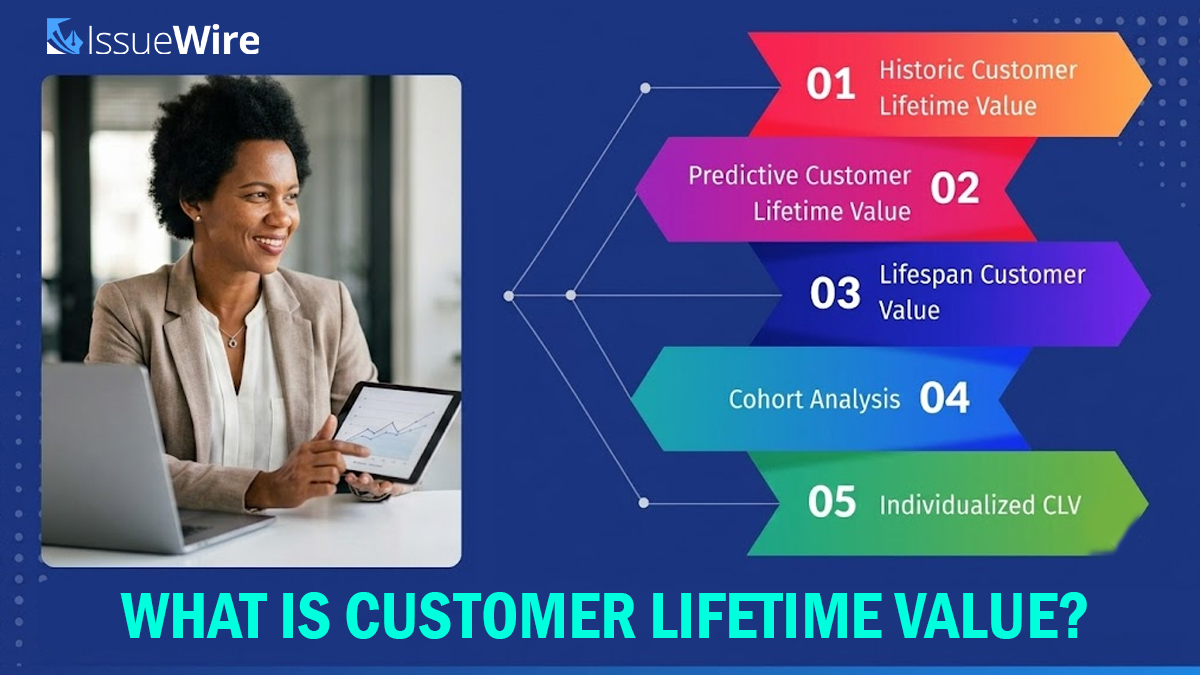
Today’s business landscape is constantly evolving, and to keep up with the evolving trends, businesses are required to look beyond just tracking ad clicks by online users. Although metrics are highly important to navigate through the modern digital landscape, the brands must focus on particular metrics that can bring more sustained growth to the company. The companies must understand the true value of each customer that comes through the entire course of their professional relationship and loyalty.
In modern days, Customer Lifetime Value (CLV) has emerged as a revolutionary metric that can help organizations gain sustained growth in this competitive market. It can also help to optimize marketing spend and foster a loyal customer base that can support the business's growth in the long term. Digital transformation, changing customer trends and expectations, evolved business models, and other elements are rapidly evolving the marketplace, and CLV can help to offer a foresight with long-term strategic impact. Let’s find out more about CLV and how it can help!
What is Customer Lifetime Value (CLV)?
Customer Lifetime Value (CLV) refers to a forecast or projection of the value of a customer, which is measured based on the contributions that the customer provides over the duration of their professional relationship. If seen from a simple angle, it means how much money a customer will be spending on your products and services over the course. It is a long-term metric that is measured based on customer behavior, purchase history, product life cycle, and many other factors. The estimated value can help a business find out who to focus on.
CLV = Average Purchase Value × Average Purchase Frequency × Customer Lifespan
E.g. – If a customer spends around 20$ per purchase and makes 5 purchases a year and remains a loyal customer for 5 years, then the CLV for the customer would be $1,000. There are mainly two types of CLV that companies are focusing on right now, namely, Historic CLV and Predictive CLV. By combining the elements, it can help to find out the areas of business growth and the quality of customers you have.
How Valuable are Your Customers?
Finding out the lifetime value can help to gain many critical insights, and it can reveal more data when fused with other important metrics. CLV is mainly utilized to find out customer value, and that is its common use in most industries. You can also utilize projected lifetime value to compare it with Customer Acquisition Cost (CAC). The combination of CLV and CAC can offer a clearer view of your customers and their value to your business. A lot of companies have already started leveraging CLV data to make informed decisions. The data can be utilized across various departments, whether it is the marketing team or the sales team. This allows targeting high-value leads and securing more projects with long-term loyalty.
Limitation and Challenges
CLV is no doubt a very powerful metric, but it also comes with certain challenges. The quality of data is very crucial here, as inaccurate customer data or misinformation can distort the results. The calculation for CLV can also ignore or overlook the changes that take place in customer behavior or evolving market trends. Sometimes, emphasizing the short-term gains can blur the vision of gaining long-term value. Therefore, only focusing on CLV is problematic, as you need to focus on other metrics to get a well-rounded view.
Business owners and companies in modern days must focus on improving the lifetime value of the business for better suitability as well as resale value.


