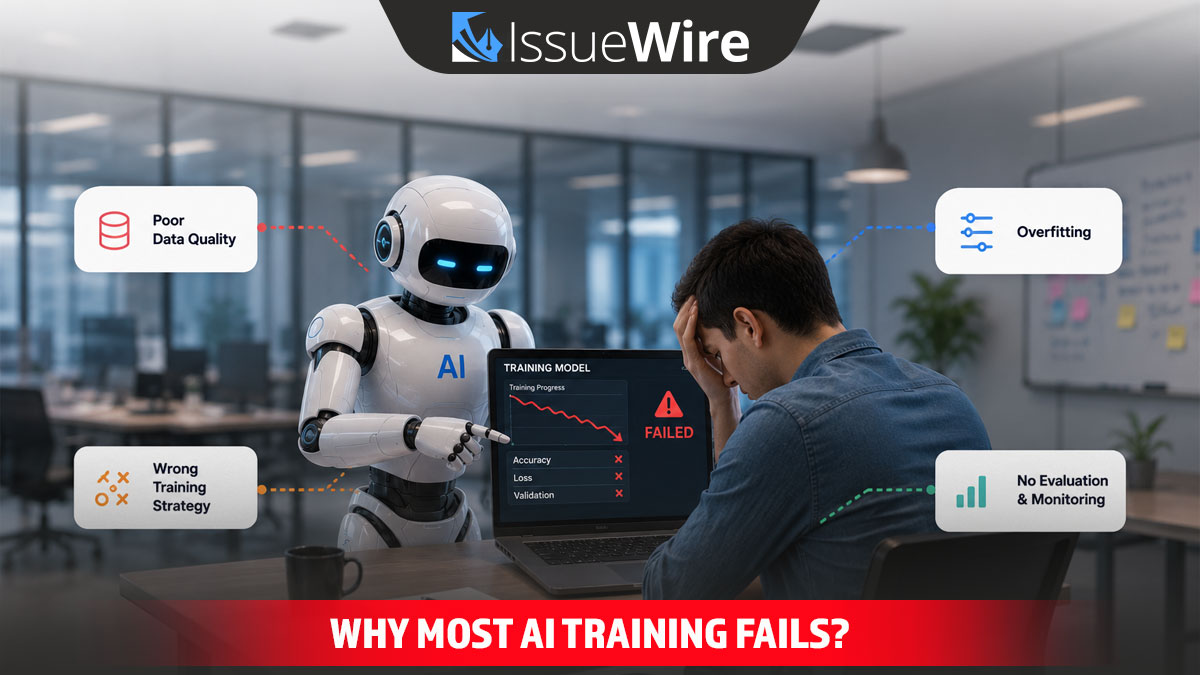
Many organizations invest in AI, expecting it to transform the way employees work. Yet, months later, only very little seems to change. Completion rates may look encouraging at first, but the real adoption of AI into the workforce continues to be low. However, the main problem is rarely the training of Artificial Intelligence.
It often comes down to a few overlooked design decisions that stop employees from using AI in real work. Let’s move ahead and see what the major problems are.
Generic AI Training is Not Relevant
One of the biggest reasons AI training falls short is that it rarely reflects the work employees actually do. Most courses rely on familiar office scenarios such as drafting emails, summarizing meetings, or reviewing documents. While those examples may suit desk-based roles, they offer little value to someone working in sales, retail, manufacturing, or the trades. When the training doesn't match your daily responsibilities, it becomes difficult to see how AI can support your work.
The difference lies in creating scenarios that mirror real challenges. Instead of generic exercises, you should be able to practice conversations, problem-solving, feedback, and decision-making that closely resemble situations you encounter every day. Whether you are pitching a client, handling objections, or recommending the right product, AI becomes far more valuable when it acts as a realistic practice partner. Training designed around your actual role builds confidence, develops practical skills, and makes it far more likely that you will continue using AI long after the course is complete.
AI Training Needs Practical Experience
Real learning happens when you practice a skill in the same environment where you will eventually use it. For example, a tradesperson does not master a new tool by watching a video alone. The real understanding comes from using it on the job, solving real problems, and seeing the results firsthand. The same principle applies to AI training. You are far more likely to adopt AI when you practice using it within your everyday workflow rather than in a standalone training module. Completing an online course may teach the basics, but it rarely builds lasting habits because the learning is disconnected from your daily responsibilities. Whether you are preparing a quote, assisting a customer, or managing a project, training should recreate those real tasks instead of relying on generic exercises. The closer the practice matches your actual work, the easier it becomes to make AI a natural part of your routine, leading to stronger adoption and more meaningful results.
Why Learning to Question AI Matters?
Learning when to trust AI is just as important as learning how to use it. Much like any new technology, confidence develops through experience rather than instruction alone. You build better judgment by encountering small mistakes in low-risk situations, understanding why they happened, and learning how to verify the information before relying on it.
Without that opportunity, many users lose confidence after a single inaccurate response. If AI provides an incorrect product specification, the wrong part number, or misleading technical advice, it is easy to dismiss the tool entirely. That reaction is understandable because people expect reliable information from any source they use in their work.
Effective AI training should prepare you for these situations before they happen in the real world. Instead of presenting AI as flawless, it should include realistic examples where the output contains subtle but believable errors. Your task should be to identify what is wrong, verify the information, and decide how to respond. This approach develops critical thinking and helps you understand both the strengths and the limitations of AI, which leads to more informed and consistent use.
Effective AI training starts with understanding your real workflow. When learning reflects everyday tasks, you are far more likely to adopt AI successfully.


