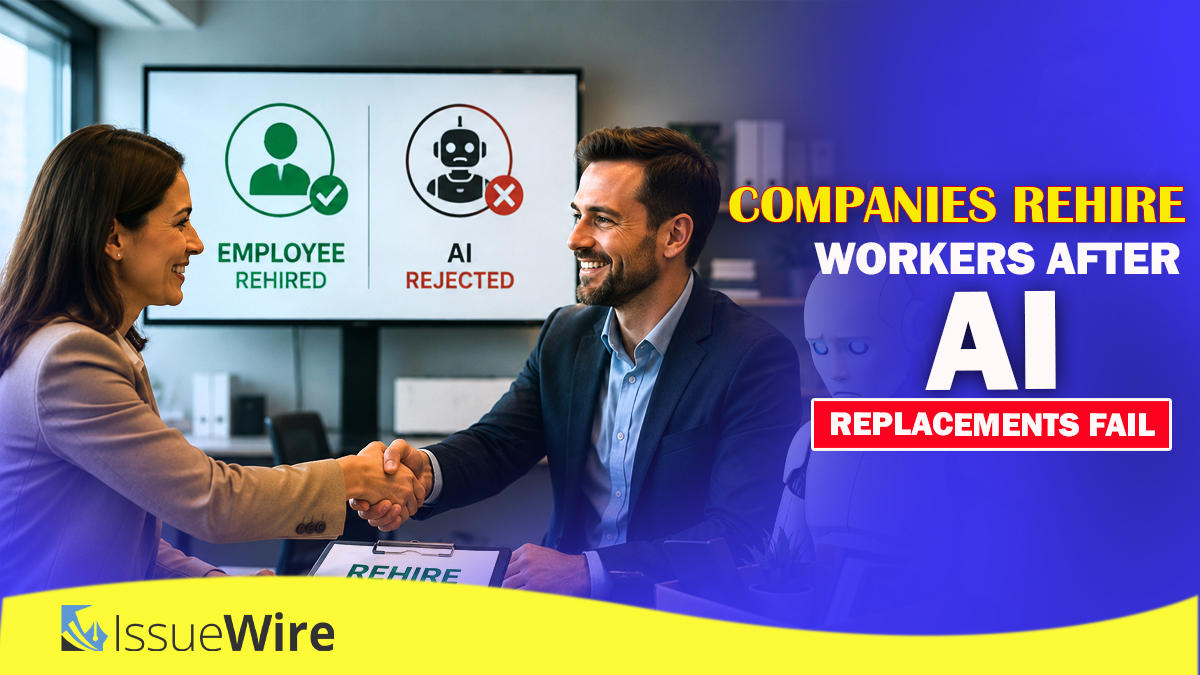
Artificial Intelligence continues to reshape workplaces across industries, but recent trends suggest that the transition is not always as straightforward as many companies expected. Some organizations that reduced staff after adopting AI are now regretting their decisions and changing their course. They are now bringing employees back as performance gaps become more apparent. While AI can handle many routine tasks, it often struggles with more complex responsibilities that still require human expertise. As businesses reassess their strategies, the conversation is shifting from replacement to integration, highlighting the need to balance technological advancement with workforce development.
Where did Companies go Wrong?
One of the biggest misconceptions about artificial intelligence is the belief that it can fully replace people. In reality, AI is often better at handling specific tasks rather than entire roles. If you look at positions such as customer service, sales, marketing, or accounting, much of the value comes from human judgment, experience, and relationship building. AI can answer questions, process information, and automate routine work, but it struggles with context, emotional understanding, and decision-making in complex situations.
This challenge has appeared across multiple industries. Some businesses discovered that AI-generated marketing content lacked the brand voice needed to connect with customers. Others found that while AI could process financial data, it often missed unusual patterns that experienced professionals would quickly notice. Sales teams have also learned that technology can help identify prospects, but building trust and closing deals still relies heavily on human interaction. As AI becomes more common, success will depend on how effectively you combine technology with human expertise. The most valuable employees may be those who can work alongside AI while providing the judgment and skills that technology cannot replicate.
What Small Businesses Need to Understand?
Many small businesses adopted AI, hoping to achieve the same efficiency gains seen at larger companies. While AI often handled routine tasks effectively, challenges emerged when work required judgement, content, and strong customer relationships. If you run a small business, the impact of these gaps can appear quickly. Even a small loss of customers can have significant consequences, especially when valuable clients expect personal attention. Unlike the larger organizations, small businesses often notice problems within weeks. This makes the results of AI decisions far more immediate and difficult to ignore.
How to Add AI into your Workforce?
A more effective approach to AI adoption begins with evaluating tasks rather than job titles. If you examine the work employees complete each week, you will often find a mix of routine activities and responsibilities that require judgment, experience, and context. Routine tasks can often be automated, while decision-making remains firmly in human hands.
It also helps to document daily activities over a short period. By tracking what team members actually do, you can identify which tasks are repeatable and which depend on expertise and problem-solving. Many of the most valuable contributions employees make are rarely listed in formal job descriptions. Long-term organizational knowledge should not be overlooked either. Experienced employees understand customer behavior, vendor patterns, and operational risks that develop over years of hands-on work. AI can support these processes, but it cannot easily replace that depth of understanding. The strongest teams are often those that combine human expertise with AI tools rather than choosing one over the other.
Summing it up…
AI works best as a tool that supports people rather than replaces them. If you combine automation with human judgement and relationship building, your business can gain efficiency without actually losing its strongest advantage. Companies that strike this balance are more likely to grow, while others may find themselves rebuilding the talent they let go.


