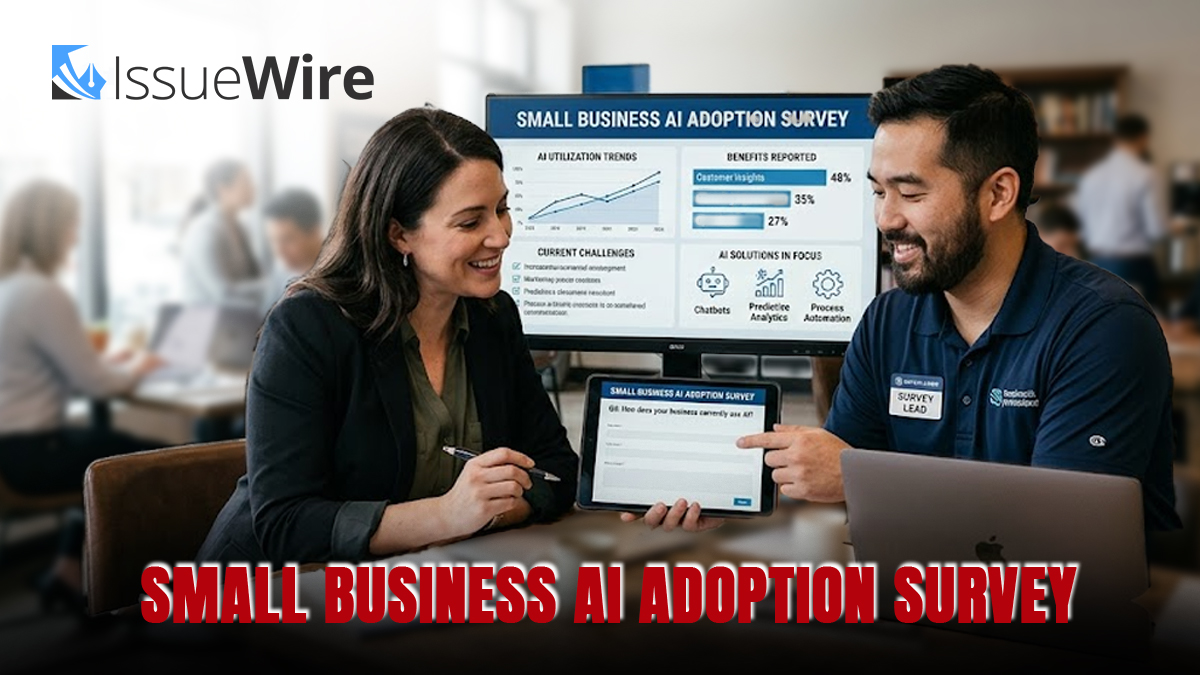
It goes without saying that AI is currently an integral part of a majority of business organizations and big names. However, AI integration is not a simple task as it includes a lot of investments, remodeling business operations and job roles, AI education for the workforce, abiding by legal terms, and many other aspects. While this could be easy for the bigger organizations, small businesses are not meant for automation through AI, as they cannot afford the money or time that is needed for AI integration. With a growing number of small businesses, AI adaptation can be challenging.
Understanding AI for the Main Street Act
The AI for Main Street Act is more like a legal declaration by Congress, where it is said that AI adaptation in small-scale businesses is a national economic priority, and it is not just important but compulsory for every small business. At the surface level, it might appear that this policy is implemented to empower the Small Business Administration (SBA) and Small Business Development Centers (SBDCs) in the digital world. However, it is actually establishing AI as a core and crucial business component. There are more than 33 million small businesses in America, and they are questioning how the Main Street Act can be helpful for them.
This new legislation is creating a framework to offer AI education through federal channels, and currently, SBA is working on tailored AI-training programs that can empower small businesses. SBDC is also working on providing guidance and showing a path to the small-scale businesses that haven’t integrated AI yet. This allows creating a technology-neutral adoption infrastructure, which can help to evolve in this AI-dominated landscape.
What does the Main Street Act not do?
The AI for Main Street Act might seem beneficial in this digital era of AI, but it does not offer direct subsidies for subscription to the AI software. There is no government-approved list for the AI tools that small businesses can or should integrate. There are no mandatory timelines and requirements of compliance, and that is why critics are considering that the legislation will not be successful in bringing real change. The primary problem with AI adaptation is not always the expenditure but the aspects like implementation capacity, confidence, and knowledge in the field, which are what are targeted through this act.
In which specific cases should small businesses leverage AI?
-
Customer Service and Communication
Customer communication is one of the prime aspects of small businesses, and it can also take a lot of time, which the owner and the staff can invest in high-value tasks. Starting from scheduling appointments, answering FAQ to following up on leads, many tasks can be handled with AI at ease.
-
Advertising and Marketing
AI has already transformed the marketing landscape for small businesses, and it can be utilized for generating high-quality content, videos, or images within a fraction of the time and cost needed for a human to do it manually. AI-assisted marketing campaigns can help to reach high-intent customers.
-
Business Intelligence and Financial Analysis
AI-powered tools can greatly help in financial analysis and decision-making, which are the two most important elements of a successful business. These tools are now able to find anomalies in expenses, analyze cash flow patterns, different pricing scenarios, and many others. This allows making the right decision for the business.
-
Hiring and Training Workforce
HR functions are often expensive, and small businesses can use AI for talent acquisition, hiring, and training workforce with a simplified program without any bias.
The AI for Main Street Act is currently highly important for US international economic competitiveness, and within a couple of years, all kinds of American small businesses will adopt AI systems.


