Xian, Shaanxi Oct 11, 2026 (Issuewire.com) - As demand for mineral-based dietary supplements continues to develop, magnesium glycinate has attracted attention from supplement brands, ingredient buyers, and contract manufacturers. Its formulation characteristics, consumer familiarity, and compatibility with capsule-based products make it an ingredient worth evaluating for companies developing mineral supplements. However, selecting the right magnesium glycinate product requires more than comparing prices or ingredient names. Buyers need to assess elemental magnesium content, raw material specifications, dosage forms, quality controls, and the suitability of the finished product for its intended market.
YTBIO, a nutritional supplement manufacturer established in 2014, highlights the importance of ingredient traceability, formulation accuracy, and manufacturing consistency in supplement development. These considerations provide a practical framework for businesses evaluating magnesium glycinate for new or existing product lines.
Understanding Magnesium Glycinate Before Selecting a Formula
Magnesium glycinate is a form of magnesium in which magnesium is associated with glycine, an amino acid. It is used in dietary supplement formulations designed to provide magnesium, an essential mineral involved in normal muscle function, nerve signaling, energy metabolism, and other physiological processes.
For supplement manufacturers, understanding the distinction between the magnesium compound and its elemental magnesium content is particularly important. The total weight of magnesium glycinate does not equal the amount of elemental magnesium supplied by the ingredient. Consequently, product specifications should clearly identify the magnesium source and the elemental magnesium delivered per serving.
Buyers should also review the ingredient's technical documentation, including its composition, recommended storage conditions, testing results, and applicable specifications. These details help product developers determine whether a material is appropriate for a particular formulation and ensure that product labels accurately represent the finished supplement.
Key Factors to Consider When Choosing Magnesium Glycinate1. Verify Elemental Magnesium Content
Elemental magnesium content is one of the first factors to examine when comparing magnesium glycinate products. Two products may use the same ingredient name but provide different amounts of elemental magnesium per serving because of differences in formulation and serving size.
Before approving a formula, buyers should confirm the intended daily serving, the amount of elemental magnesium, and the quantity of the magnesium compound required to achieve the target specification. These calculations should be verified through formulation development and appropriate analytical testing.
Clear specifications also help purchasing teams compare suppliers on a consistent basis rather than relying solely on the advertised weight of the ingredient.
2. Evaluate Raw Material Quality and Traceability
Raw material quality affects formulation consistency and the reliability of finished products. Supplement brands should request documentation that identifies the ingredient source, batch information, relevant purity specifications, and applicable test results.
A Certificate of Analysis (COA) can help buyers evaluate whether a particular batch meets its stated requirements. Depending on the material and target market, additional testing may be necessary to assess identity, elemental content, microbiological quality, or contaminants.
Traceability is equally important. A documented system linking raw materials to production batches can support quality investigations, supplier evaluations, and product recordkeeping. These controls become especially valuable when brands distribute products across multiple markets with different regulatory requirements.
3. Select a Suitable Dosage Form
Magnesium glycinate can be incorporated into several supplement formats, including capsules, tablets, powders, and selected blended formulations. Each format presents different considerations for production, packaging, and consumer use.
Capsules may suit brands seeking a straightforward mineral supplement, while tablets can support different serving configurations and packaging strategies. Powder formats may be appropriate for products designed to be mixed into beverages, subject to ingredient compatibility and sensory testing.
The choice should account for ingredient characteristics, serving size, capsule or tablet capacity, manufacturing feasibility, and the intended consumer experience. Product developers should evaluate the complete formula rather than assuming that a dosage form suitable for one ingredient will automatically work for another.
4. Review Formulation Compatibility
Magnesium glycinate may be used as a primary mineral ingredient or incorporated into a broader nutritional formula. When combining ingredients, developers need to consider the contribution of each component, the total serving size, processing requirements, and finished-product stability.
For example, a multi-ingredient capsule may contain magnesium alongside other active ingredients or excipients. The formulation team should verify that the ingredients are compatible and that each declared active component can be accurately measured and maintained within the required specifications.
Stability testing and production trials can help identify potential issues before commercial manufacturing. Packaging selection should also consider moisture protection, storage conditions, and the expected shelf life of the finished product.
5. Assess Manufacturing and Quality Systems
A reliable supplement manufacturing partner should demonstrate consistent production processes and documented quality controls. Buyers should examine how raw materials are received, tested, stored, weighed, blended, encapsulated, and inspected before release.
Manufacturing arrangements should be evaluated against the requirements of the target market and the specific product category. Certifications, audit records, testing documentation, and batch-level quality records can help buyers understand the scope of a supplier's quality management system.
YTBIO emphasizes raw material traceability, laboratory verification, ingredient specification control, and quality management aligned with applicable manufacturing requirements. Its manufacturing services cover multiple dosage forms, supporting businesses that need to evaluate ingredient selection alongside finished-product development.
6. Compare Customization, Minimum Orders, and Packaging
Commercial considerations are also important when selecting magnesium glycinate for a new supplement brand. Minimum order quantities, packaging options, production lead times, and formulation development requirements can influence the total cost and feasibility of a launch.
Buyers should clarify whether a supplier offers existing formulas, custom formulation, or both. Ready-made formulations may reduce development work, while customized products can provide greater flexibility in serving size, ingredient combinations, and brand positioning.
Packaging and labeling should be assessed early in the process. Product names, ingredient declarations, serving information, warnings, and marketing statements need to be reviewed against the rules of the intended market. Establishing these requirements before production can reduce avoidable revisions and delays.
How YTBIO Approaches Supplement Formulation
Founded in 2014, Shaanxi Yuantai Biological Technology Co., Ltd., operating under the YTBIO brand, focuses on nutritional supplements, ingredient development, and OEM/ODM services. The company has its headquarters in Xi'an, Shaanxi, and a manufacturing facility in Weinan with more than 10,000 square meters of production space.
Its services include stock formulas, custom formulation, manufacturing across several dosage forms, and support for packaging and labeling. These capabilities allow supplement businesses to assess ingredient requirements and finished-product specifications within a coordinated development process.
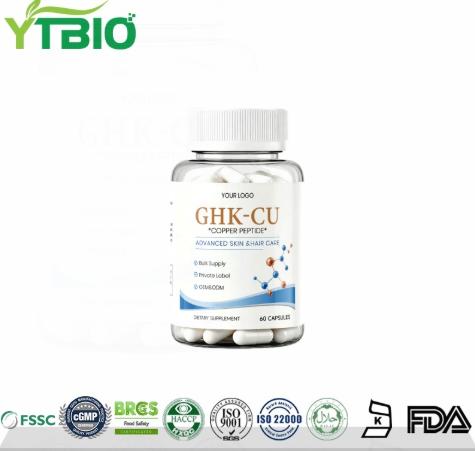
YTBIO's product information also illustrates how magnesium can appear in a multi-ingredient capsule formula. Its listed GHK-Cu Copper Peptide Capsules specify 120 mcg of GHK-Cu and 120 mg of magnesium as magnesium glycinate per serving. This example highlights why buyers should examine the complete ingredient declaration and serving specifications rather than evaluating a product by its headline ingredient alone.
For brands seeking a magnesium glycinate-only product, the appropriate next step is to confirm the available formula, elemental magnesium content, and product specifications directly with the manufacturer.
Conclusion: Build a Magnesium Glycinate Formula Around Verifiable Specifications
Choosing magnesium glycinate requires a structured evaluation of elemental magnesium content, raw material quality, dosage form, formulation compatibility, manufacturing controls, and market-specific labeling requirements. A clear specification and documented quality process provide a stronger basis for supplier comparison than price or ingredient naming alone.
For supplement brands, working with a manufacturer that supports formulation development, batch traceability, quality documentation, and packaging coordination can simplify the process from product concept to commercial production. By clarifying technical and commercial requirements early, buyers can make more informed decisions about magnesium glycinate and develop products that align with their intended markets.
YTBIO provides nutritional supplement manufacturing and OEM/ODM services for businesses exploring ingredient-based and finished-product solutions. Further information about its capabilities, product options, and customization services is available on the company's official website:
https://www.ytbio-healthy.com/
Media Contact
Shaanxi Yuantai Biological Technology Co., Ltd. sales@sxytbio.com sales@sxytbio.com https://www.ytbio-healthy.com/