Denver, Colorado Jul 4, 2026 (Issuewire.com) - Across much of cosmetic dentistry, the brightest and most uniform smile has quietly become the default goal. The whiter and more even the teeth, the thinking goes, the better the result.
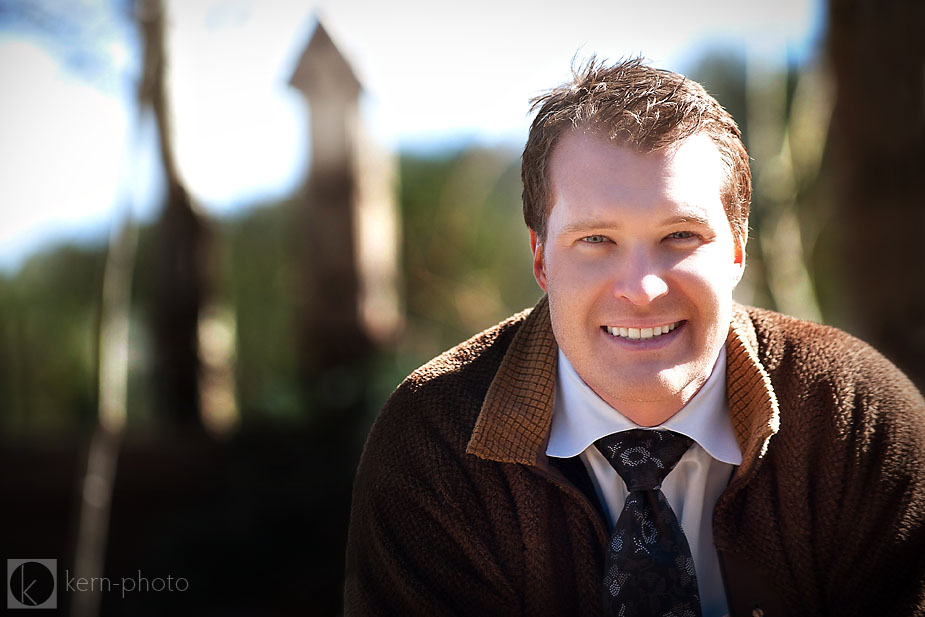
Christopher Sprout, DDS, a dentist serving Denver and based in Golden, Colorado, sees that default as a mistake. He argues that the chase for a flawless smile often produces one that looks unmistakably fake. 'Too many smiles are built to look perfect and end up looking fake,' he says.
His alternative is a principle he returns to often. A smile is a bite decision first. The look of a smile matters, in his view, but only once the way it works has been settled.
The Problem With the 'Perfect' Smile
The fake look is easy to spot and hard to undo. A row of identical, bright rectangles reads as artificial even when every tooth is technically well made.
Sprout traces the problem to a misunderstanding of what natural teeth look like. 'Real teeth are not identical and not pure white. The small imperfections are what make a smile look human,' he says.
Natural teeth are slightly translucent at the edges, a little warmer near the gum, and rarely a perfect match from one to the next. Strip those qualities away in pursuit of uniformity, Sprout explains, and the smile stops looking like it belongs to a face.
The irony, he notes, is that the result can announce itself as dental work. A smile meant to look effortless ends up looking engineered, which is the opposite of what most patients hoped to buy.
A Function-First Mindset in an Appearance-First Field
Sprout designs cosmetic work in an order that some patients find surprising. He starts with how the teeth come together, not with how they look.
'A smile is a bite decision first,' he says. The way the teeth meet and the jaw moves determines whether new dental work will last, and he treats that as the starting point rather than an afterthought.
It is a quiet form of pushback against an appearance-first habit in the field. Sprout does not argue that aesthetics are unimportant. He argues that they are the second question, and that reversing the order is how good-looking work ends up failing.
He frames the bite as the engineering beneath the art. A patient sees the shade and the shape, but the forces of chewing decide whether that result survives, and those forces do not negotiate.
None of this, Sprout stresses, is an argument against beautiful dentistry. It is an argument for building the beauty on a foundation that can carry it, so the result still looks right long after it is placed.
Earning the Right to Make the Case
Sprout's position comes from a background built around both function and appearance. He studied at the University of Denver and earned his dental degree at the University of Colorado School of Dentistry, then completed a fellowship in implant dentistry at the Medical College of Georgia.
He is a founding member of the Colorado Academy of Cosmetic Dentistry and holds Fellow status in the Las Vegas Institute for Advanced Dental Studies and the Academy of General Dentistry. He has also completed thousands of hours of hands-on and classroom continuing education.
That training spans the cosmetic and the structural sides of dentistry, which is part of why Sprout resists treating them as separate. In his view, the appearance of a smile and the mechanics behind it are the same project.
His memberships in groups focused on orofacial pain and implant dentistry sharpen the point. A dentist who treats jaw pain and rebuilds bite function, he suggests, learns quickly what happens when appearance is allowed to outrun function.
That breadth, he says, is what lets him make the case for function without dismissing the value of a beautiful result.
Why Function Matters
The consequences of ignoring the bite are not abstract. When teeth meet incorrectly, the force of chewing lands in the wrong places.
'The most beautiful veneers in the world will fail if they fight the way the jaw works,' Sprout says. Porcelain can crack, crowns can loosen, and the jaw joint can begin to complain, often on patients who followed every instruction they were given.
Sprout sees those failures as avoidable. The fix, he believes, is to map the bite before any cosmetic work begins, so the new teeth take force the way natural teeth are meant to.
That groundwork is invisible in a photograph and obvious over the years that follow. It is the difference, he says, between a smile that lasts and one that has to be rebuilt.
Sprout puts the stakes plainly. A cosmetic result that ignores the bite is a short-term result dressed up to look finished, and the cost of that shortcut tends to arrive later, after the photographs have been taken and the work has begun to fail.
The Role of Honest Conversation
Getting the order right depends on a conversation many patients never have. Sprout spends time early on asking what a person actually wants from their smile.
'A softer shade that suits the face almost always looks more expensive than the brightest one on the shelf,' he says. He sees part of his job as guiding patients away from the assumption that brighter is automatically better.
That guidance, he explains, is not about overriding what a patient wants. It is about making sure the result still looks like them once the work is done.
Sprout treats that honesty as part of the care rather than a sales step. A patient who understands the trade-offs, he believes, tends to be happier with the outcome long after the appointment ends.
He has found that patients rarely regret a result that still looks like them. The smiles that disappoint, in his experience, are usually the ones that chased someone else's idea of a perfect mouth rather than their own face.
Discipline Outside the Office
The same patience shows up away from the practice. Sprout fly fishes, golfs, skis, and scuba dives, pursuits that reward preparation and a steady hand more than speed.
He spends much of that time outdoors in Colorado with family and his two Flat-Coated Retrievers. The habits, he suggests, are the same ones that serve him in the operatory.
Both ask for attention to detail and a willingness to do the unglamorous groundwork before the visible result. In dentistry, that groundwork is the bite.
A Call for Change in Cosmetic Dentistry
Sprout would like to see the field reorder its priorities, putting how a smile works ahead of how bright it can be made. He frames it less as a complaint and more as a return to fundamentals.
He is careful not to fault patients for wanting a beautiful smile, which he considers a reasonable goal. His argument is with an order of operations that treats appearance as the whole job.
'Design the smile around how it works, and it will still look right years later,' he says. For a Denver-area dentist who builds cosmetic cases from the bite up, the perfect smile was never the goal. A smile is a bite decision first, and the rest follows from there.
Media Contact
Christopher Sprout *****@betterreputation.com http://christophersprout.com




