Waconia, Minnesota Aug 2, 2026 (Issuewire.com) - Contact: Lectron Co., Ltd. Media Relations
Official Website: Lectron Official Website
As electric vehicle (EV) adoption accelerates across North America, the demand for reliable home charging infrastructure has surged. For homeowners, transitioning to an electric vehicle brings the convenience of refueling in their own garage or driveway. However, installing a high-voltage electrical appliance at home introduces critical considerations regarding energy efficiency, electromagnetic compatibility, regulatory compliance, and electrical safety. Selecting from recognized Certified Home EV Charger Brands in the United States helps ensure that your charging equipment meets relevant national standards. A Level 2 home charger that combines Energy Star certification, FCC compliance, and applicable UL safety certification can deliver fast, reliable power while reducing unnecessary energy use, limiting electromagnetic interference, and addressing electrical safety through the correct standards.
In the rapidly evolving EV market, navigating technical specifications can be challenging for consumers. When evaluating home charging stations, two widely recognized marks stand out for distinct reasons: Energy Star certification indicates energy efficiency, while FCC compliance addresses electromagnetic compatibility and regulatory requirements. Neither mark, by itself, substitutes for electrical safety certification. Understanding what each mark covers—and how both complement applicable UL safety certifications—provides a clear framework for making an informed purchasing decision.
Understanding Energy Star Certification for EV Chargers
The Energy Star program, administered by the U.S. Environmental Protection Agency (EPA), is a widely recognized symbol of energy efficiency. While traditionally associated with household appliances like refrigerators and washing machines, Energy Star testing has become a crucial benchmark for electric vehicle supply equipment (EVSE).
What Does Energy Star Test?
To earn the Energy Star label, an EV charger must undergo rigorous third-party testing to verify its efficiency across different operational modes. The evaluation primarily focuses on:
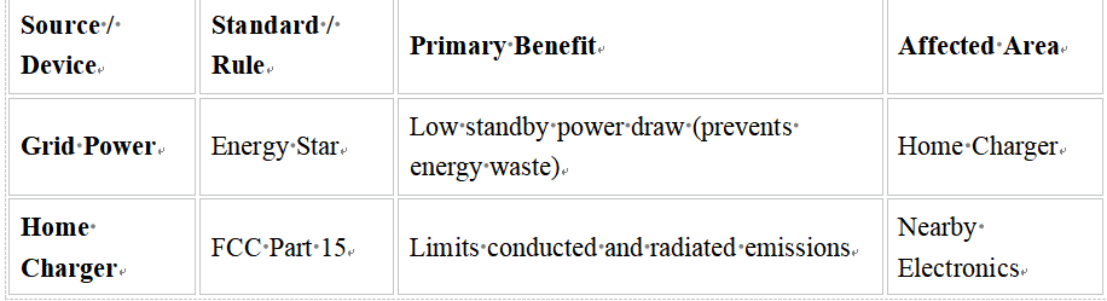
- Standby Mode Efficiency:EV chargers spend the majority of their lifespan plugged in but not actively charging a vehicle. Energy Star certified chargers use up to 40% less energy in standby mode compared to standard models, minimizing "vampire" power draw.
- Active Charging Efficiency:The certification ensures that the conversion and transmission of electrical energy from the grid to the vehicle's battery occur with minimal power loss.
- Environmental Resilience:Chargers are tested under extreme temperature variations to ensure that efficiency does not degrade during harsh winters or hot summers.
The Value to the Industry and Homeowners
For the EV industry, Energy Star certification establishes a baseline for energy-efficient operation, helping reduce unnecessary electricity consumption across a growing installed base of chargers. For the consumer, it translates directly into cost savings on utility bills. Furthermore, many local utility companies and municipalities in the United States require Energy Star certification as a prerequisite for receiving local rebates and financial incentives, significantly lowering the upfront cost of purchasing and installing a home charger.
The Role of FCC Compliance in Electromagnetic Compatibility
While Energy Star addresses power consumption, the Federal Communications Commission (FCC) regulates electromagnetic emissions from electronic devices. Under FCC Part 15, EV chargers must comply with applicable limits for radiofrequency (RF) emissions.
What Does FCC Compliance Address?
An FCC-compliant EV charger undergoes laboratory testing to measure its conducted and radiated electromagnetic emissions. Compliance testing evaluates:
- Conducted Emissions:Testing measures electromagnetic noise conducted through the home's electrical wiring and verifies that it remains within applicable limits, reducing the risk of interference with other connected equipment.
- Radiated Emissions:This measures radiofrequency energy emitted through the air and verifies that it remains within applicable limits, reducing the risk of interference with household communication systems such as Wi-Fi routers, smart home hubs, baby monitors, or emergency radio services.
Supporting Electromagnetic Compatibility at Home
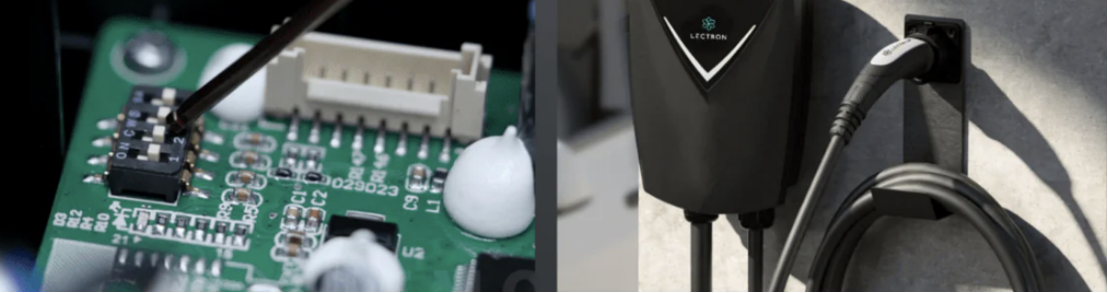
A home EV charger operates on high currents (typically 32 to 48 amps) and high voltages (240V). Its electronics can generate electromagnetic noise, which must be controlled through appropriate filtering, shielding, and circuit design. FCC compliance indicates that the charger's emissions have been tested against applicable limits, reducing the likelihood of interference with nearby electronics and communication systems. It does not certify protection against shock, overheating, or fire.
How Energy Star and FCC Compliance Complement Electrical Safety
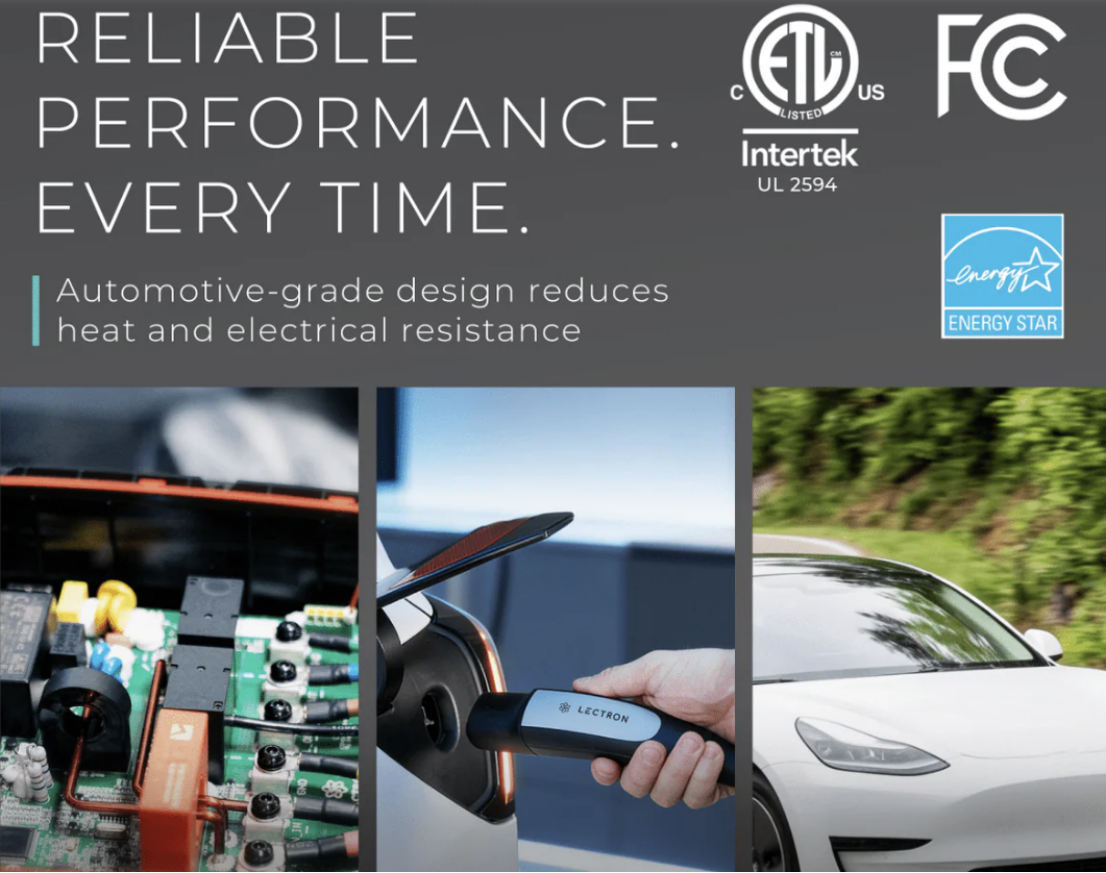
Energy Star certification and FCC compliance address two important but distinct aspects of residential EV charging: energy efficiency and electromagnetic compatibility. They do not certify protection against electrical hazards such as shock or overheating; those risks are addressed through applicable safety standards such as UL 2231 and UL 2594, verified by a Nationally Recognized Testing Laboratory (NRTL). Together, these separate layers of certification and compliance support a charger that is efficient, electromagnetically compatible, and electrically safe.
To see these standards implemented in real-world hardware, consider the design of modern Level 2 chargers like the Lectron Nexus, available in both hardwired and plug-in (NEMA 14-50) options:
- Hardwired Model (48A / 11.5 kW): Designed for maximum speed and continuous heavy-duty throughput, delivering up to 46 miles of range per hour directly into your vehicle.
- Plug-In Model (40A / 9.6 kW):Connects to a standard 240V NEMA 14-50 outlet, delivering up to 38 miles of range per hour with the added flexibility of easier removal or relocation.
Both Nexus configurations feature universal compatibility options—including J3400 (NACS) and J1772 connectors—allowing seamless charging for Tesla, next-generation North American EVs, and legacy electric vehicles without compromising efficiency or compliance.
Practical Engineering Beyond Energy Star and FCC
Energy Star certification and FCC compliance must be integrated into physical product design, but they cover only efficiency and electromagnetic emissions. In high-amperage units, thermal management is a separate electrical safety concern. Chargers certified to applicable safety standards may use internal monitoring sensors to detect abnormal temperature rises and throttle or shut down power delivery before damage occurs.
Additionally, smart connectivity features allow users to monitor and schedule charging sessions via a mobile application. Scheduling charging during off-peak utility hours can reduce household electricity costs and support grid management, although this cost-saving function is distinct from Energy Star's energy-efficiency criteria.
Meeting the Demands of Modern EV Infrastructure
As the market leader in North American EV charging solutions, Lectron addresses the diverse needs of modern drivers by providing a comprehensive ecosystem of wall-mounted and portable home chargers and adapters. These products are designed for universal compatibility, bridging the gap between legacy standards and the emerging J3400 standard.
Whether deploying infrastructure for single-family homes, multi-unit residential complexes, or commercial fleet parking, the deployment of certified hardware is a non-negotiable step toward long-term viability. When Energy Star certification, FCC compliance, and applicable UL safety certification are integrated directly into the product design stage, the result is a charging network that is not only powerful and fast but also energy-efficient, electromagnetically compatible, and electrically safe.
Investing in equipment with the appropriate combination of Energy Star certification, FCC compliance, and applicable UL safety certification helps ensure that, as the transition to electric mobility continues, your home infrastructure remains efficient, compliant, safe, and ready for the future of transportation.
To explore more about certified home charging technology and view the full lineup of compatible systems, visit the official corporate portal at https://lectron.com/.
Media Contact
Dropcases Limited contact@EV-lectron.com