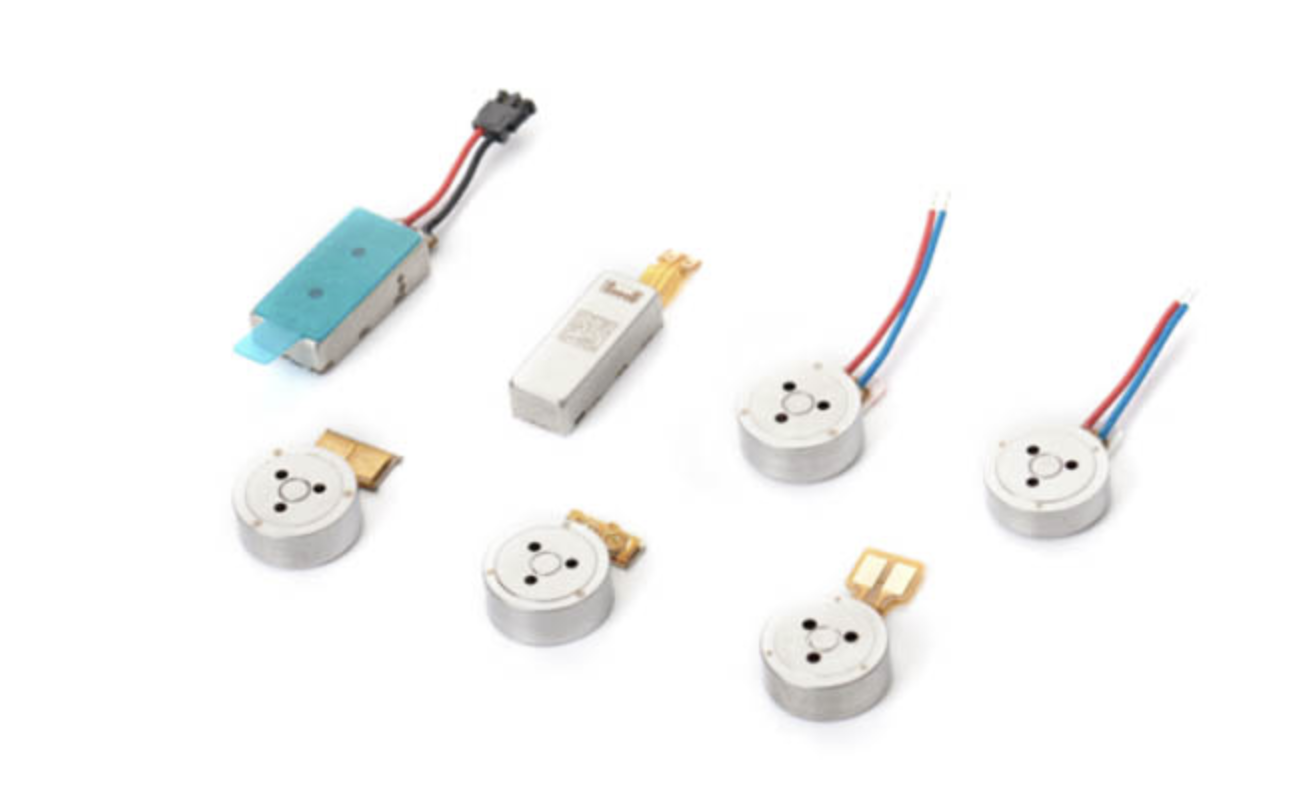
Huizhou, Guangdong Jun 10, 2026 (Issuewire.com) - How do product design teams select the optimal haptic feedback technology when standard solutions no longer meet user expectations? As consumer electronics become increasingly sophisticated, selecting the right tactile hardware requires a deep technical assessment rather than merely opting for the latest industry trends. When sourcing high-performance tactile components, global procurement managers and hardware engineers frequently encounter a critical dilemma: should they incorporate a linear resonant actuator (LRA) or rely on traditional eccentric rotating mass (ERM) motors? Evaluating this technical crossroad requires a comprehensive analysis from a Global Leading LRA Motor Manufacturer that designs and produces millions of specialized tactile components annually. Choosing the right lra haptic motor solutions involves understanding the fundamental physical limitations, cost implications, and integration parameters of various mechanical designs. The key challenge lies in accurately determining when an application perfectly aligns with the boundary constraints of LRA technology, and when an alternative tactile approach offers a more reliable, cost-effective return on investment.
To establish a clear baseline for when to use lra motor architectures, engineers must examine the intrinsic electro-mechanical differences between inertial vibration technologies. Unlike traditional ERM motors that generate multi-directional forces via an asymmetrical mass rotated by a DC brush assembly, an LRA operates through a suspended internal mass driven by a voice coil along a single linear axis. This fundamental variance in physical execution directly translates into distinct performance advantages and operating limitations. A standard LRA moves strictly in a straight line, responding to alternating current to produce precise, localized tactile sensations. This precise movement removes the rotational latency common in ERM systems, enabling extremely fast start and stop times that are critical for crisp button simulations, virtual keyboard typing, and immersive user interfaces. However, achieving this high performance requires matching the electrical drive frequency precisely to the mechanical resonant frequency of the spring-mass system. Understanding this constraint helps engineering teams correctly identify where these components succeed and where they create unnecessary system complexity.
Best Fit Scenarios for Linear Resonant Actuators
The operational framework of linear resonant actuators makes them ideal for specialized applications that demand high durability, sophisticated feedback patterns, and strict power efficiency. Because LRAs lack sliding mechanical brushes, they experience significantly less internal wear over time compared to ERM alternatives. This mechanical design makes them highly suitable for premium hardware environments that require long lifecycle reliability and consistent performance over millions of operational cycles.
A primary environment for linear resonant actuator applications is the modern wearable devices market, where internal physical space is highly constrained and power budgets are strictly limited. Smartwatches, fitness trackers, and augmented reality controllers rely heavily on distinct tactile notifications to communicate data without occupying a user's visual attention. In these small form factors, an LRA delivers exceptional acceleration output per unit volume, generating strong tactile sensations while drawing less current than a rotating mass motor. Furthermore, high-end medical devices, industrial handheld terminals, and specialized massagers benefit greatly from the clean, directional acceleration of an LRA. This precise movement provides clear tactile feedback through thick protective enclosures or water-resistant layers without causing excessive acoustic noise or vibrating the entire product chassis.
Not the Best Choice
While the technical advantages of linear resonant actuators are significant, an experienced component manufacturer must also provide clear guidance on when an LRA is not the optimal choice for a project. Designing high-performance systems requires recognizing that certain operating conditions, cost constraints, and product definitions do not align with the strict physical requirements of resonant systems. Forcing LRA technology into incompatible applications frequently increases development costs, complicates software integration, and compromises overall product reliability.
The primary constraint that makes an LRA inappropriate for certain applications is its narrow frequency bandwidth. An LRA is highly dependent on its specific resonant frequency; operating even a few hertz away from this peak causes a sharp drop in acceleration output and efficiency. Therefore, projects that require wide-spectrum vibrations, continuous low-frequency rumbles, or variable speed alerts are fundamentally unsuitable for LRA integration. For instance, low-cost electronic cigarettes, basic consumer toys, or simple alert devices that only require a basic buzzing sensation do not benefit from the precise characteristics of an LRA. In these cost-sensitive scenarios, traditional ERM motors remain the superior choice, delivering high-amplitude, multi-directional vibrations at a fraction of the component cost and without requiring complex drive circuitry.
Additionally, large-scale industrial machinery or heavy ruggedized equipment requiring substantial physical displacement cannot be effectively driven by standard miniature LRAs. The internal spring-mass structures of compact LRAs are optimized for low-mass applications, such as portable electronics and hand-held devices. Attempting to vibrate a large surface area or high-mass enclosure with a miniature linear actuator results in insufficient mechanical feedback and subjects the internal suspension springs to excessive stress, shortening the component's operational lifespan. When a product design demands robust, broad-spectrum mechanical force across a large layout, traditional larger brush motors or specialized high-output electromagnetic actuators represent a more stable technical path.
How Do You Choose the Right Driver for an LRA Motor Project?
Transitioning from basic motor selection to successful system integration requires a detailed evaluation of the accompanying electronic hardware. Unlike ERM motors, which can be driven by a simple direct current voltage source, an LRA requires an alternating current signal that precisely matches its internal resonant frequency. Consequently, choosing the right semiconductor driver is a critical decision that directly impacts the tactile performance, power profile, and reliability of the end product.
Engineers can choose between two primary driver architectures: auto-resonance tracking drivers and fixed-frequency drivers. A fixed-frequency driver outputs a pre-determined alternating current wave based on the motor's nominal specification sheet. While cost-effective, this approach fails to compensate for manufacturing tolerances, temperature shifts, or mechanical aging, all of which can alter the LRA's true resonant frequency over time. To counter this, advanced product designs utilize auto-resonance tracking ICs. These specialized drivers monitor the back-electromotive force (Back-EMF) generated by the moving mass, automatically adjusting the output drive frequency in real-time to match the exact resonance of the actuator. This continuous optimization ensures the system maintains maximum acceleration and peak energy efficiency across all operating conditions, transforming standard hardware into a highly responsive tactile interface.
What Technical Support Matters Most When Sourcing LRA Motors?
Sourcing high-quality tactile components requires deep engineering collaboration between the original equipment manufacturer (OEM) and the component supplier. Because LRAs are mechanical resonance systems, subtle variations in housing materials, mounting methods, and chassis dampening can significantly alter the user's tactile experience. Therefore, selecting a supplier involves assessing their engineering capabilities, testing infrastructure, and technical support services just as much as comparing unit costs.
A reliable manufacturing partner must provide comprehensive technical services, including detailed finite element analysis (FEA) of the product chassis, precise resonant frequency calibration, and customized driver firmware optimization. Supplier support should extend beyond providing a component datasheet; it must encompass full integration assistance to resolve complex mechanical dampening challenges, prevent parasitic acoustic noise, and ensure consistent tactile feedback across mass production batches. Without this advanced engineering support, product development teams frequently face extended debugging cycles, delayed product launches, and unexpected field failures due to unoptimized mechanical mounting.
Strategic Integration with LEADER
For global enterprises navigating these complex electro-mechanical decisions, partnering with an experienced, high-capacity manufacturer is essential for mitigating technical and supply chain risks. Established in 2007, LEADER Micro Electronics (Huizhou) Co., Ltd. is a prominent high-tech enterprise that seamlessly integrates the research, development, production, and sales of high-performance micro vibration motors. The company's extensive manufacturing portfolio includes specialized coin motors, linear motors, brushless motors, and cylindrical motors designed to meet strict quality and performance standards.
With an annual production capacity of nearly 80 million micro vibration motors, LEADER has delivered nearly one billion components to diverse global markets. These precision-engineered units are integrated into approximately 100 different types of products spanning multiple demanding sectors, including advanced wearable devices, modern electronic cigarettes, and ergonomic massagers. By maintaining complete control over precision manufacturing, automated assembly lines, and rigorous quality assurance protocols, LEADER ensures that every LRA shipped delivers consistent resonant characteristics and long-term durability. This large-scale manufacturing capability, backed by deep technical expertise, allows LEADER to provide comprehensive engineering support that guides customers from initial prototyping through full-scale global production, ensuring every tactile integration project achieves its performance and financial goals.
For more detailed technical specifications, custom engineering inquiries, and product portfolio details, please visit the official corporate website at https://www.leader-w.com/.
Media Contact
Leader Micro Electronics (Huizhou) Co., Ltd leader@leader-cn.cn https://www.leader-w.com/