Hangzhou, Zhejiang May 28, 2026 (Issuewire.com) - Globally, the coffee industry has shifted toward convenience without giving up on brewing quality or environmental responsibility. As portable brewing methods like UFO filters and hanging ear drip bags skyrocket in popularity, answering the question of what material is used for coffee filter bags has become central to a brand's identity and the overall consumer experience. Advanced Coffee Filter Bag Manufacturers face a continuous challenge in balancing structural integrity on automated packing lines with a smaller environmental footprint.
Choosing the right material is far more than a basic purchasing decision. It directly affects extraction rates, the clarity of the final cup, and how well a brand complies with strict international sustainability standards. Modern manufacturing has evolved way beyond simple paper filters, shifting toward sophisticated, multi-layered substrates that can comfortably withstand boiling temperatures while remaining completely flavor-neutral.
Primary Materials in Modern Coffee Filtering
The materials used for coffee filters are highly diverse, tailored to meet the varying regulatory and consumer needs of global markets. They range from conventional, cost-effective options to certified compostable, high-performance alternatives.
Traditional Paper and Wood Pulp
High-density wood pulp remains the foundational material for the filtration industry. These filters are highly preferred for their natural ability to trap fine oils and bitter sediments, resulting in a clean, crisp cup of coffee. However, the manufacturing process behind them has improved significantly. To ensure that absolutely no chemical residues or off-flavors are left behind, leading producers now use advanced oxygen-bleaching methods instead of traditional chlorine processes.
In heavy-duty industrial applications, paper filters are specially reinforced to prevent tearing under pressure. Experienced manufacturers leverage over 15 years of technical expertise to ensure even standard paper options pass rigorous physical tests for tear strength and wet permeability. This material remains a favorite for classic drip coffee bags due to its familiarity and smooth performance in high-speed, automated packaging systems.
Non-Woven Fabrics and Synthetic Fibers
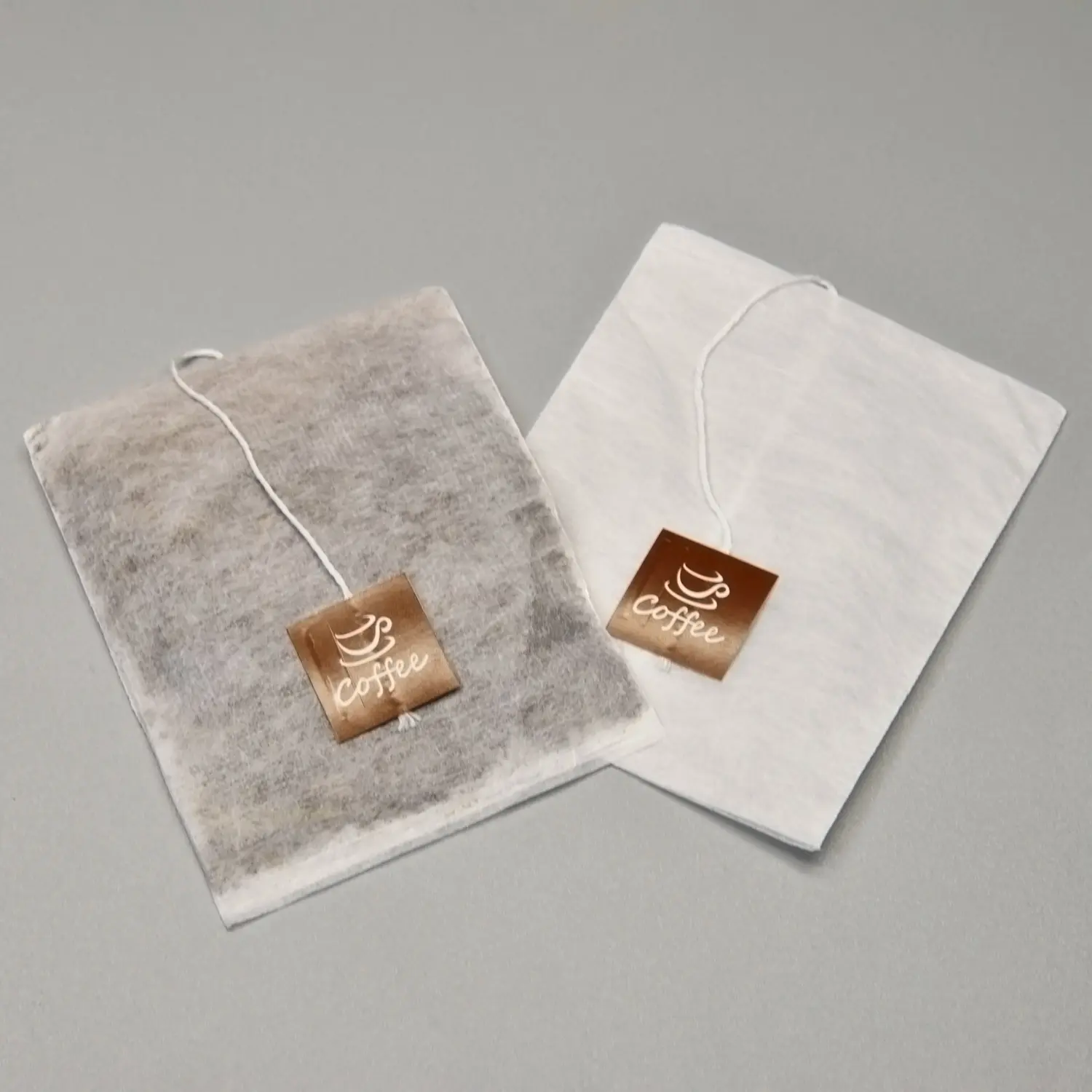
The beverage industry has widely adopted non-woven materials as the standard for iced brew bags and hanging ear pouches. This category includes food-grade polypropylene (PP) and polyethylene terephthalate (PET). These synthetic fibers deliver superior heat resistance and excellent elasticity, which are absolutely essential for keeping the bag's shape intact when it is suspended over a cup.
A prime example of this is the IIced Brew Non-Woven Coffee Filter Bag with Hanging Tag. Non-woven fabrics offer a highly effective alternative to traditional paper because their woven structure allows for faster flow rates while still trapping medium-to-coarse coffee grounds perfectly. This material is exceptionally durable in cold brew applications, where the bag must remain completely submerged in water for 12 to 24 hours without degrading or tearing. Furthermore, non-woven fabrics are highly compatible with ultrasonic sealing technology, completely eliminating the need for chemical glues or heat-seal adhesives during assembly.
PLA (Polylactic Acid) and Biodegradable Substrates
As environmental regulations tighten globally, PLA has become the top choice for eco-conscious coffee brands. PLA is a plant-based bioplastic made from renewable resources like corn starch, and it is fully compostable under industrial conditions.
On the plus side, PLA delivers the exact tensile strength, durability, and clean transparency of traditional plastic, but with the eco-friendly footprint of organic matter. It leaves behind zero harmful microplastics or toxic chemical residues. The primary trade-offs are the higher cost of raw materials and more specific storage requirements to prevent premature degradation.
Advanced testing laboratories check these biopolymers against strict global benchmarks like OK Compost and DIN-Gepruft to bridge the gap between sustainability and high-volume performance. By integrating PLA mesh into UFO filters and premium tea bags, manufacturers offer a practical solution for the fast-growing market segment that values verified social compliance. This strict attention to technical detail allows a modern factory to operate as a high-quality drip coffee bag exporter, fully capable of meeting the rigorous ESG mandates of the European and North American retail markets.
Technical Innovation and Quality Assurance
A filter's ultimate performance depends on rigorous engineering and quality testing, not just the raw material chosen. In food-grade packaging, technical parameters like water permeability and microbiological security are completely non-negotiable.
Running a dedicated in-house research center is vital for testing new substrate blends. Inside professional facilities, filter materials are subjected to automated permeability testing to determine the precise water flow rate needed for ideal coffee extraction. Strict microbiological testing also ensures that the materials remain inert and safe when immersed in boiling water.
With an 11,000-square-meter certified workshop, modern production lines can easily handle complex, multi-layer filter structures. Every certified drip coffee bag produced in China undergoes a strict series of physical quality checks, ensuring that high-performance output is paired with competitive pricing and social compliance. This robust infrastructure allows for a low-MOQ (Minimum Order Quantity) customization model, giving independent boutique roasters direct access to the exact same premium materials used by global beverage conglomerates.
Logistics and supply chain structures have also evolved alongside material science. Direct factories optimize production costs and keep wholesale pricing highly competitive by running multiple production sites. Supporting modern shipping setups like dropshipping has made these premium materials accessible to everyone, allowing digital startups to experiment with innovative formats like the increasingly popular UFO drip bags without taking on heavy upfront overhead.
Shifting Trends Across the Beverage Industry
The application of these advanced substrates goes well beyond the standard coffee cup. Today, coffee and tea packaging are converging rapidly. Specialty tea filter bags are now manufactured using the exact same high-strength non-woven fabrics originally built for coffee extraction, while outer folding packaging boxes are being completely redesigned to eliminate hidden plastic linings.
For any brand wanting to capture a leading share of the specialty beverage market, understanding the technical differences between wood pulp, non-woven synthetics, and PLA is essential. The choice of filter material shapes the consumer’s daily brewing routine, whether they rely on the classic clarity of paper, the heavy-duty durability of synthetic non-wovens, or the eco-certified purity of PLA. By combining 15 years of technical manufacturing experience with a genuine commitment to environmental sustainability, direct factories can now deliver tailored, high-performance filtering solutions that satisfy quality-conscious brewers and protect the planet at the same time.
For more information on customized packaging solutions and technical specifications, please visit the official website: https://www.coffeeteabag.com
Media Contact
Tonchant Eco Friendly Technology Co., Ltd. tonchant@tonchant.com