
Chongqing, China Apr 16, 2026 (Issuewire.com) - What makes a professional RF signal jamming device?
In an era where unmanned aerial vehicles (UAVs) are becoming increasingly sophisticated, the ability to effectively neutralize unauthorized drone activity has become a critical component of low-altitude security. A Professional RF Signal Jamming Device Company from China must be evaluated not just by the raw power of its output, but by its frequency agility, its integration with detection systems, and the underlying research and development infrastructure that supports its technology. MYT, a leading innovator in the field, has set a new benchmark by bridging the gap between high-frequency laboratory research and field-ready defense applications.
1. The Evolution of Spectrum Coverage: 70MHz to 8000MHz
The primary challenge in modern RF interference is the sheer breadth of the signal spectrum used by commercial and proprietary drone links. Traditional jamming equipment often focuses on standard 2.4GHz and 5.8GHz bands, leaving significant vulnerabilities in lower frequencies used for long-range telemetry or higher frequencies utilized by modern digital transmission protocols.
A professional-grade solution must provide comprehensive coverage. MYT’s development of an ultra-wideband signal architecture enables a single integrated system to monitor and suppress signals ranging from 70MHz all the way to 8000MHz. This expansive range ensures that whether a drone is operating on VHF/UHF bands or high-frequency satellite navigation bands, the defense system remains effective. This technical feat is made possible through the independent development of wideband signal sources and power amplifiers, moving away from off-the-shelf components to custom-silicon and hardware solutions designed specifically for high-clutter environments.
2. Intelligence Through Integration: Detection Meets Neutralization
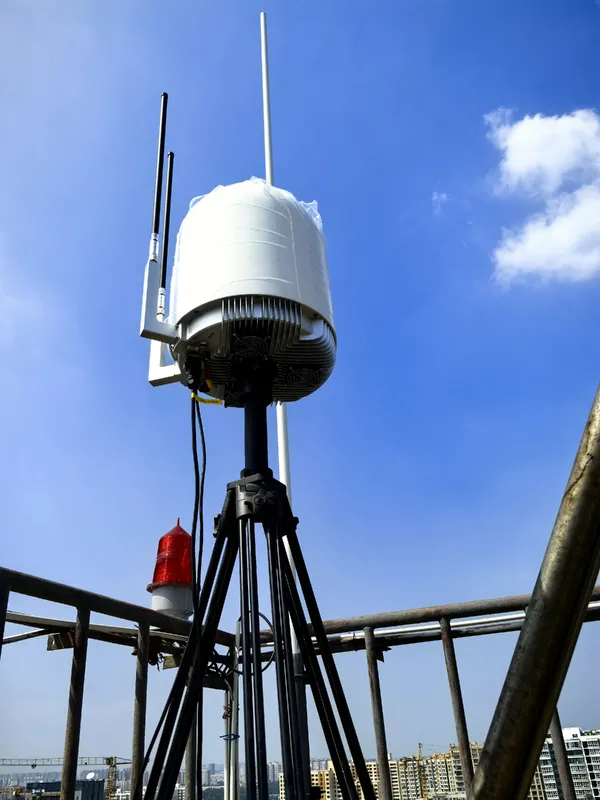
A jamming device is only as effective as the intelligence guiding it. Passive RF sensing is the "eyes" of the operation. Modern systems, such as the Fixed KZ-02 Drone Detection Device, utilize a full-band RF scanner that works in tandem with 360-degree monitoring capabilities. By employing a Software Defined Radio (SDR) architecture, the device can scan the environment with extreme precision, identifying the unique "fingerprint" of a drone’s control link or video feed before the jamming sequence is even initiated.
This integration is vital because it allows for surgical precision. Instead of "blasting" the entire spectrum with white noise—which can interfere with local emergency communications or Wi-Fi networks—professional systems use smart spectrum analysis. They identify the specific frequency hop of the intruder and apply targeted suppression. This not only preserves the electromagnetic environment for authorized users but also concentrates the jamming power where it is most needed, significantly increasing the effective range of the defense system.
3. Technical Prowess: From MIMO Arrays to AI Recognition
The core competitiveness of MYT stems from its deep-rooted affiliation with the Institute of Internet of Things (IoT) under the Chinese Academy of Sciences. This academic foundation has allowed the company to pioneer technologies that are often beyond the reach of standard commercial manufacturers.
One such innovation is the use of Multiple-Input Multiple-Output (MIMO) microstrip antenna arrays for drone identification. In a complex urban environment, signal reflections and "clutter" (interference from buildings, birds, or weather) can create false positives for traditional radar. By utilizing MIMO technology alongside advanced clutter algorithms, the system can filter out the "noise" of the natural world to focus exclusively on the target. Furthermore, when combined with AI-based recognition and tracking via photoelectric cameras, the system provides a multi-layered verification process: first detected via RF spectrum, then confirmed via radar, and finally tracked visually via AI-enhanced optics.
4. Precision Engineering and Hardware Specifications
When examining the technical specifications of professional-grade scanners and jammers, the details matter. High-performance systems typically feature a high scan rate and low latency. For instance, a professional RF scanner might offer a detection radius of up to 3 to 5 kilometers depending on the environment, with the ability to identify multiple targets simultaneously.
The hardware must be ruggedized for permanent outdoor installation. A professional fixed-site device usually features an IP66 or higher weatherproofing rating, ensuring it can operate in temperatures ranging from -20°C to +60°C. Internally, the use of waveguide slot antennas with Digital Beamforming (DBF) recognition allows the system to direct its energy with high spatial accuracy. This ensures that the defense system covers a full 360-degree horizontal field, providing a "protective dome" over sensitive infrastructure such as airports, government buildings, or industrial sites.
The Professional Standard in Low-Altitude Security
Technology alone does not solve security challenges; application does. The nuances of the electromagnetic spectrum vary significantly between regions. A frequency band that is open in South America might be reserved for military use in Europe. A professional provider must possess the ground-level experience to adapt their systems to local conditions.
With a dedicated R&D team of over 100 members—including academicians, Ph.D. holders, and dozens of master’s degree engineers—the group company has accumulated extensive field experience across the United Kingdom, Spain, the Middle East, and South America. This global footprint allows for the provision of tailored technical support. For example, in high-density urban areas, the solution might prioritize directional transmission to minimize collateral interference, while in open-border or maritime environments, an omnidirectional approach might be used to maximize the detection perimeter.
What distinguishes a professional RF signal jamming device is the synergy between academic research and practical engineering. It is the ability to not only "jam" a signal but to detect, identify, and track it with high reliability under adverse conditions. By maintaining leadership in SDR broadband technology and integrating AI-driven photoelectric tracking, companies like MYT are moving the industry toward "Integrated Defense Systems" rather than standalone hardware.
As the threat of unauthorized drone incursions continues to evolve, the reliance on ultra-wideband solutions (70MHz-8000MHz) and intelligent signal processing will become the standard. For organizations responsible for critical infrastructure, choosing a partner with a proven pedigree in both theoretical science and field deployment is the only way to ensure long-term low-altitude security.
For more information on professional drone detection and defense solutions, please visit: https://www.chinaantidrone.com
Media Contact
Chongqing Miao Yi Tang Technology Co., Ltd. gary@chinaantidrone.com