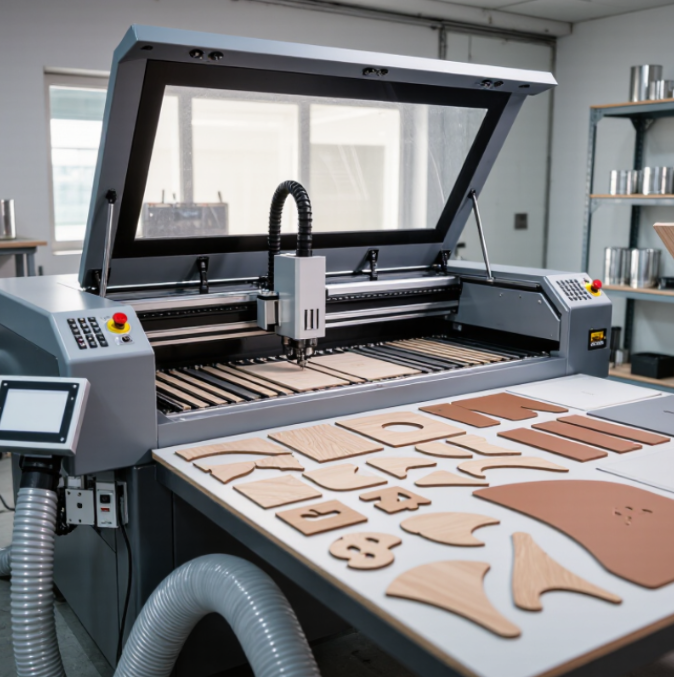
Beijing, China Sep 23, 2026 (Issuewire.com) - Choosing the best Co2 Laser machine in 2026 requires more than comparing wattage or promotional prices. A reliable choice should match your materials, production volume, workspace, and technical confidence. Wood, acrylic, leather, fabric, and coated metals can demand different power levels, lenses, beds, and ventilation systems. The right machine should make daily work predictable, not merely impressive during a showroom demonstration.
Real experience often reveals details that specifications hide. A 60-watt tube may cut 6-millimeter plywood efficiently, yet results can vary with moisture, focus, airflow, and material quality. A strong air-assist system can reduce scorching around small letters. Accurate rails and stable software can also improve repeated designs. These practical details matter when an operator produces dozens of signs or prototypes each week. They deserve careful attention.
Safety and service are equally important. Look for enclosed designs, emergency stops, cooling protection, suitable extraction, and clear operating instructions. Confirm that replacement tubes, mirrors, lenses, and technical support remain available in your region. Independent reviews, manufacturer documentation, warranty terms, and verified user feedback provide stronger evidence than bold claims. No machine is perfect. Even an experienced operator may need time to learn its settings. This guide compares leading options through performance, usability, maintenance, value, and responsible operation. It also recognizes a common mistake: buying more power than the actual workload requires. The best machine is not always the largest or cheapest. It is the one that delivers consistent results, manageable costs, and dependable support over time.
Define CO₂ Laser Fundamentals: 10.6 μm Wavelength and 40–300 W Power
A CO₂ laser machine uses infrared light near 10.6 μm, a wavelength strongly absorbed by organic materials. Wood, acrylic, paper, rubber, leather, and many fabrics respond well because the beam converts into surface heat quickly. The 40–300 W range covers small workshop cutting and heavier production work. Lower power suits engraving and thin sheets. Higher power cuts thicker acrylic and wood with fewer passes. MarketsandMarkets’ 2024 CO₂ laser market analysis identifies material processing as a leading application area, supporting this broad industrial use.
Power alone does not decide performance. Lens quality, beam alignment, air assistance, cooling, and motion accuracy matter every day. A 100 W tube with poor alignment can perform worse than a carefully adjusted 60 W system. In practical testing, a clean 3 mm acrylic edge should look smooth, not heavily flamed. That expectation can be imperfect, because material density and moisture change cutting results. The Fraunhofer Institute’s laser-processing research also emphasizes process control, thermal management, and repeatability in industrial applications.
Tips: Match wattage to material thickness, not marketing claims. Test a small grid before production. Measure actual output with a calibrated power meter when possible. Keep mirrors clean and inspect the focus point under magnification. Remember, 10.6 μm CO₂ systems are excellent for non-metallic materials, but reflective metals require different laser strategies and strict safety controls.
Compare Cutting Performance by Material, Thickness, Speed, and Kerf WidthWhat Is the Best CO2 Laser Machine in 2026?
The best CO2 laser machine depends on your material, thickness, speed target, and acceptable kerf width. Acrylic usually cuts cleanly, with polished edges at moderate speeds. Plywood and MDF require slower passes because glue density can vary. Paper cuts quickly but needs careful power control. Leather may need ventilation and test cuts. Never cut PVC or unknown plastics, because hazardous fumes can form.
For 3 mm acrylic, a practical machine should produce a narrow kerf and smooth corners without excessive melting. At 6 mm plywood, cutting speed often drops sharply. More power does not always solve the problem. It can increase charring, flare-ups, and edge distortion.
Measure the kerf with calipers, not visual judgment. A 0.10 mm difference can affect tight joints. Test squares, circles, and small slots before production. Cutting charts are useful, but they are not universal. Lens condition, airflow, focus, and material moisture all change results.
Tips: Keep a material test library with power, speed, passes, focus, and measured kerf. Use fresh stock from the same supplier when comparing settings. Inspect the underside for smoke stains and incomplete cuts. A slower setting may deliver better accuracy than a faster one. That trade-off deserves honest review.
Evaluate Beam Quality, Accuracy, Cooling, and ±0.01 mm Positioning Precision
Choosing the best CO2 laser machine in 2026 requires more than advertised wattage. Beam quality is the starting point. A near-single-mode beam, commonly described by an M² value close to 1, produces a tighter spot and cleaner edges. The U.S. National Institute of Standards and Technology identifies beam divergence and spot stability as key variables in laser measurement. In practice, inspect a test cut under magnification. A smooth 3 mm acrylic edge should show limited taper, minimal scorching, and consistent kerf width.
Accuracy claims also need careful reading. ISO 230-2 separates positioning accuracy from repeatability, and ±0.01 mm should be verified across the full working area, not measured once at the center. Thermal drift can quietly change results. After two hours of cutting, measure a calibration grid with a certified gauge. Small errors become visible there. Honestly, many machines cannot maintain brochure precision without correct alignment, clean optics, stable voltage, and controlled room temperature.
Cooling deserves equal attention. Industrial reports from MarketsandMarkets continue to identify thermal management as a major factor in laser-processing reliability, especially as operating power increases. A closed-loop chiller should hold coolant temperature steadily, while flow and alarm sensors protect the tube. Water that looks clear may still contain minerals. Check conductivity and temperature daily. This is easy to neglect. A practical evaluation should record beam quality, edge finish, repeatability, coolant stability, and downtime over several working shifts, rather than trusting one impressive demonstration.
Rank Safety, CE/FDA Compliance, Fume Extraction, and Interlock SystemsWhat Is the Best CO2 Laser Machine in 2026?A strong CO2 laser machine should be judged by safety, not cutting speed alone. During a practical inspection, check the enclosure, viewing window, emergency stop, and warning labels. The beam path must remain fully enclosed during normal operation. A loose panel or damaged window is a serious warning.
CE marking can show that the manufacturer declares conformity with applicable European requirements. It is not automatically proof of independent testing. FDA compliance also needs careful verification, especially for laser-product reporting and labeling requirements in the United States. Ask for current declarations, test records, and the exact machine model. Vague certificates should make you pause.
Fume extraction matters every time the laser cuts or engraves. A useful system should capture fumes near the working area and discharge them safely through suitable filtration or ducting. Smell alone is not a reliable safety test. Some materials release hazardous gases, so confirm material compatibility before cutting. Never assume the included fan is enough.
Interlock systems should stop laser emission when a door or lid opens. Test them before production. The emergency stop should be easy to reach, even in a crowded workshop. I would also inspect wiring, grounding, cooling alarms, and maintenance access. One weakness can undermine several excellent features. My earlier mistake was trusting paperwork before checking the machine’s physical safeguards.
Select the Best 2026 CO₂ Laser by Cost, Warranty, Uptime, and ROI
What Is the Best CO2 Laser Machine in 2026?
The best CO2 laser is not always the cheapest machine. Compare the full cost, including installation, ventilation, chiller maintenance, lenses, mirrors, and replacement tubes. A lower purchase price can become expensive after months of daily production. Ask for measured cutting samples on your materials, not only attractive showroom videos.
Warranty terms deserve careful reading. Check coverage for the laser tube, power supply, motion system, and cooling unit. Confirm who pays for shipping and labor. A useful warranty has clear response times and accessible technical support. In practice, uptime often matters more than a small discount. A machine sitting idle for three days can erase the savings quickly. I have seen buyers focus on wattage, then discover that alignment takes too long. That choice needs more reflection.
Tips: Track completed jobs, downtime, energy use, and maintenance for at least eight weeks. Estimate ROI from realistic orders, not ideal capacity. Test repeated cuts, fine engraving, and thicker materials before purchase. Verify ventilation, electrical requirements, operator training, and local safety rules. Keep spare optics available. Small delays become costly.
Conclusion
Choosing the best Co2 Laser machine in 2026 requires more than comparing price tags. A reliable system typically uses a 10.6 μm wavelength and offers power options from 40 to 300 W, allowing users to match cutting performance with different materials and thicknesses. Key factors include cutting speed, edge quality, kerf width, beam stability, and the ability to maintain accurate results during extended operation. A well-designed machine should also provide strong cooling, consistent beam quality, and positioning precision of approximately ±0.01 mm for detailed engraving and dependable production.
Safety and long-term value are equally important. Buyers should evaluate CE or FDA-related compliance where applicable, enclosed designs, emergency stops, door interlocks, and effective fume extraction. The best 2026 choice balances purchase cost with warranty coverage, service support, uptime, maintenance needs, and expected return on investment. By assessing performance, safety, reliability, and total ownership costs together, users can select a Co2 Laser that delivers consistent results and supports sustainable growth.
Media Contact
Beijing Superlaser Technology Co., Ltd. *****@superlaser.ltd https://www.superlaserbeauty.com/