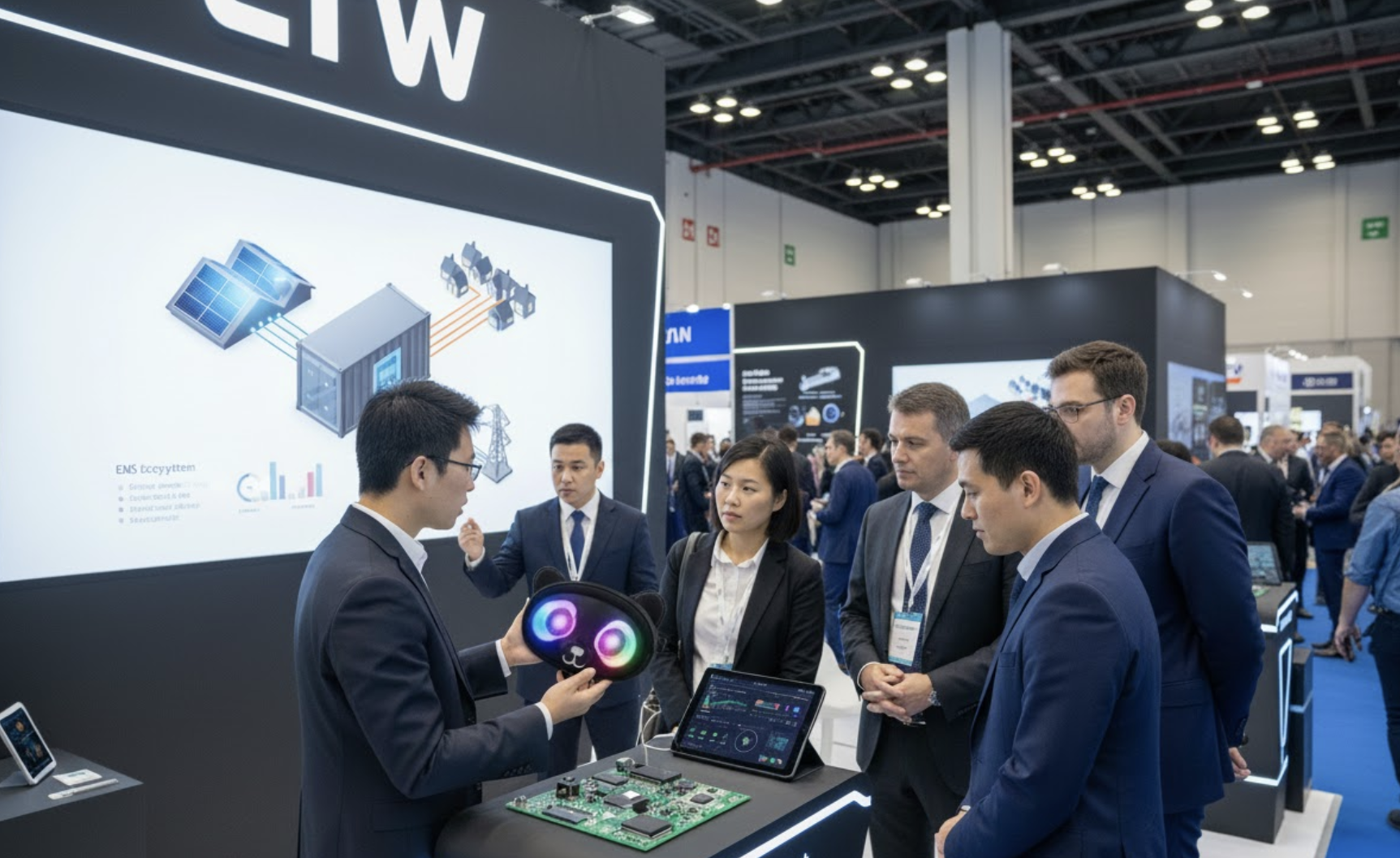

Shenzhen, Guangdong May 22, 2026 (Issuewire.com) - Trade fairs rarely make headlines the way product launches do. Yet for manufacturers operating at the intersection of battery technology, energy management, and consumer electronics, exhibitions like the World Battery & Energy Storage Industry Expo (WBE) and the China International Battery Fair (CIBF) function as something more consequential than sales events. For any Certified Smart BMS Factory tracking where the industry is heading, these gatherings compress months of market intelligence into days — surfacing buyer expectations, technology convergence signals, and regulatory pressures that would otherwise take years to accumulate through commercial feedback alone. The question worth examining is not whether trade fairs matter, but how the most capable manufacturers translate what they observe on exhibition floors into engineering decisions that shape subsequent product generations.
Why WBE and CIBF Function as the Battery Industry's Most Concentrated Signal Sources
WBE and CIBF attract participants across the full battery industry value chain — cell manufacturers, BMS developers, system integrators, fleet operators, and international buyers sourcing for export markets. This concentration creates a feedback density that no single customer relationship or sales channel can replicate. Competing products appear side by side. Buyers articulate unmet needs directly to engineers. Regulatory representatives signal upcoming compliance shifts before formal publication.
For BMS manufacturers specifically, the intelligence value is acute. Battery chemistry evolves, application scenarios multiply, and communication protocol standards shift — often faster than product development cycles can comfortably absorb. Manufacturers who treat trade fairs as passive showcases miss the loop. Those who approach them as structured listening environments gain a systematic advantage in aligning R&D priorities with market trajectories before competitors do.
Signal 1 — The Outdoor and Wearable Energy Trend: How Consumer Demand Shapes Integrated Accessory Development
One signal that has grown consistently stronger across recent battery industry exhibitions is the convergence of energy management with consumer lifestyle applications. Outdoor recreation, urban mobility, and wearable technology have all pushed demand for power solutions that integrate seamlessly into physical products — not as separate power banks, but as embedded energy infrastructure within the product itself.
Shenzhen Litongwei Electronic Technology Co., Ltd. (LTW) reflects this trend in its accessory product line. The Cool LED Bluetooth Speaker Waist Bag integrates Bluetooth 5.2 audio, rhythm-responsive RGB lighting, and a rain-resistant wearable enclosure — powered by an external power bank through a USB connection that enables over ten hours of continuous operation. The product weighs under 470 grams and fits waist sizes from 60 to 110 centimeters. These specifications did not emerge from abstract engineering exercises. They reflect an understanding that the outdoor and cycling market demands energy-adjacent products that handle real conditions — variable weather, extended duration, and multi-function integration — without adding meaningful weight or complexity.
This kind of product represents an R&D direction informed by observing where consumer energy expectations are moving, not just where BMS technology currently sits.
Signal 2 — Photovoltaic and Mobile Storage System Thinking: How Exhibition Feedback Drives BMS-Inverter Co-Evolution
A second signal that trade fair environments amplify is the shift from component-level thinking to system-level thinking in photovoltaic and mobile energy storage. Buyers at industry exhibitions increasingly ask not about BMS boards in isolation but about how battery management integrates with charging controllers, inverter stages, and monitoring interfaces to produce reliable end-to-end system behavior.
This shift has direct implications for R&D prioritization. Manufacturers who develop BMS products without inverter and power conversion expertise find themselves at a structural disadvantage as buyers move toward consolidated system sourcing. LTW's product development across both BMS and inverter categories positions the company to respond to this demand pattern. The photovoltaic energy storage and mobile energy storage solution line pairs BMS intelligence with bidirectional power conversion in a system designed to function as a unified architecture rather than an assembly of separate components. The feedback loop between exhibition-floor system conversations and engineering investment decisions produces this kind of cross-category coherence over time.
Signal 3 — Industrial IoT and Remote Asset Tracking: How Connectivity Demand Translates into Smart Accessory R&D
A third signal visible at battery industry exhibitions is the growing expectation that battery-powered assets should be remotely trackable and network-connected. Fleet operators managing electric vehicles, logistics companies running AGV deployments, and shared mobility platforms all express the same underlying need: knowing where a battery-powered asset is, and what its operational status is, without requiring physical inspection.
LTW's 4G and GPS positioning module addresses this demand directly. The product enables real-time location tracking and remote status reporting for battery-powered vehicles and equipment — extending the functional scope of battery management from electrochemical protection into operational visibility. This is not a product category that BMS manufacturers traditionally occupy. Its presence in LTW's portfolio reflects a deliberate decision to follow the connectivity signal rather than treat it as someone else's problem. Trade fair conversations between BMS engineers and fleet system buyers accelerate precisely this kind of category expansion by making explicit what users need that current products do not yet provide.
Signal 4 — Global Certification Pressure: How Export Market Standards Feed Back into Factory Quality Architecture
A fourth signal that international trade fairs amplify — and that domestic exhibitions alone cannot fully surface — is the certification and compliance landscape that governs access to export markets. European, North American, and Australian buyers bring specific regulatory requirements to trade fair conversations: not as abstract compliance discussions but as practical sourcing conditions. Suppliers who cannot demonstrate relevant certifications face disqualification before technical evaluation begins.
This pressure feeds back into factory quality architecture in ways that go beyond adding certificates to a brochure. LTW holds ISO 9001, ISO 14001, IATF 16949, and ISO 45001 certifications, alongside the national high-tech enterprise designation. IATF 16949 in particular — an automotive-grade quality management standard — imposes production consistency and traceability controls that align with the documentation expectations of regulated export markets. The Manufacturing Execution System operating across LTW's facilities in Shenzhen and Dongguan Huangjiang provides the component-level batch traceability that international buyers require when conducting supplier audits. These infrastructure investments reflect the sustained influence of export market compliance signals on how a factory structures its quality systems, not just its product specifications.
From Exhibition Floor to Engineering Blueprint: How LTW Closes the Loop Between Market Intelligence and Product Delivery
The distance between a trade fair signal and a shipped product is where most manufacturers lose the value of what they observed. Signals fade. Engineering teams default to incremental iteration. Market intelligence gathered at exhibitions rarely survives the translation into formal R&D priorities unless deliberate organizational mechanisms carry it forward.
LTW's R&D investment exceeding 10% of annual sales for five consecutive years, combined with over 100 patents across circuit design, testing methodology, and automation processes, represents an institutional capacity to absorb and act on market signals rather than merely record them. The product range spanning hardware BMS, software BMS, inverters, and smart accessories reflects a portfolio that has expanded in response to observed market directions — outdoor energy integration, photovoltaic system coherence, industrial IoT connectivity, and global compliance — rather than confining itself to the product categories the company started with in 2005.
Trade fairs like WBE and CIBF do not build products. However, the manufacturers who treat them as structured inputs to R&D planning — rather than promotional venues — consistently produce product portfolios that stay aligned with where demand is moving. That alignment, maintained over years and across product generations, is what separates factories that exhibit at industry events from those that genuinely learn from them.
More information is available at https://www.ltwpower.com/.
Media Contact
Shenzhen Litongwei Electronics Technology Co.,Ltd ltwbms@gmail.com 1st-5th Floors, Building C, Baifuli Industrial Park Shanghenglang Industrial Zone, Tongsheng Community Dalang Subdistrict, Longhua District Shenzhen, Guangdong Province, China https://www.ltwpower.com/