Shenzhen, Guangdong Jul 25, 2026 (Issuewire.com) - Executing successful cross-border trade into the United States requires far more than submitting a routine declaration at the border. Modern import operations depend on an unbroken chain of operational coordination connecting initial importer identity, formal entry responsibility, customs bond requirements, pre-arrival documentation, customs release, and final destination delivery. When cargo arrives at a busy port without synchronized documentation and clear role boundaries, shipments risk severe delays, customs holds, and unexpected storage costs. Securing a reliable Professional US Customs Clearance Service ensures that every required regulatory field, financial bond, and transport document is fully aligned long before the vessel or aircraft arrives at the port of entry. By integrating origin coordination with US destination delivery and real-time shipment tracking, TRANSWORLD bridges the critical gap between regulatory compliance and physical freight distribution.
US Customs Clearance Starts with Role Clarity
Navigating US customs clearance starts with establishing distinct operational boundaries among the Importer of Record, licensed customs brokers, customs bond providers, ocean or air carriers, and freight forwarding coordinators. While these logistics roles work in close daily alignment, their legal and regulatory responsibilities do not substitute for one another. Under explicit guidance from US Customs and Border Protection, licensed customs brokers operate as regulated private professionals rather than government employees. Furthermore, even when an importer engages a licensed broker to prepare and submit entry documentation, the Importer of Record retains ultimate legal responsibility for the accuracy of all submitted data and the timely payment of applicable tariffs, taxes, and statutory fees. Within this structured regulatory environment, TRANSWORLD focuses specifically on transport orchestration and logistics coordination. The team evaluates shipment specifications and urgency to select appropriate road, air, or sea modes, organizes necessary origin and destination paperwork, and collaborates seamlessly with licensed brokers and carriers across global trade lanes.
The IOR Retains Entry Responsibility
Understanding the legal realities of cross-border commerce requires recognizing that the Importer of Record is not merely an administrative label on a shipping invoice. Instead, the Importer of Record is the legally accountable entity responsible for the truthfulness of all customs declarations, precise product valuation, proper tariff classification, and full fee compliance. Effective entry preparation requires consolidating foundational commercial facts into a consistent documentation package well ahead of entry filing. Critical data fields include the exact country of origin, verified manufacturer identity, detailed material composition, intended commercial use, and transparent pricing or payment records. For ocean cargo, this accountability extends to the Importer Security Filing, which requires advance cargo data to be submitted before vessels depart for the United States. Even when importers utilize specialized logistics coordinators to manage data transmission, the underlying regulatory liability for filing accuracy and completeness remains firmly with the Importer of Record.
Customs Bonds Secure Entry Obligation
While the Importer of Record bears ultimate responsibility for entry compliance, a customs bond provides the mandatory financial security connecting that compliance obligation directly to US Customs and Border Protection. Whether an importer utilizes a single-entry bond for occasional shipments or an annual continuous bond for regular commercial importing, the bond must be structured around the exact legal identity of the importer, specific cargo characteristics, and verified entry activities. Centralized regulatory administration connects bond sizing guidance, formal documentation requirements such as CBP Form 301, surety underwriting details, and electronic eBond processing into a single oversight path. Operating within this framework, TRANSWORLD serves as a vital informational bridge between milestones. By verifying that basic cargo data matches importer profiles early in the shipping cycle, the team passes consistent transport records to importers, licensed brokers, and surety partners, ensuring that once customs release is granted, cargo moves immediately into final port pickup and delivery schedules.
Pre-Arrival Documents Keep Clearance Moving
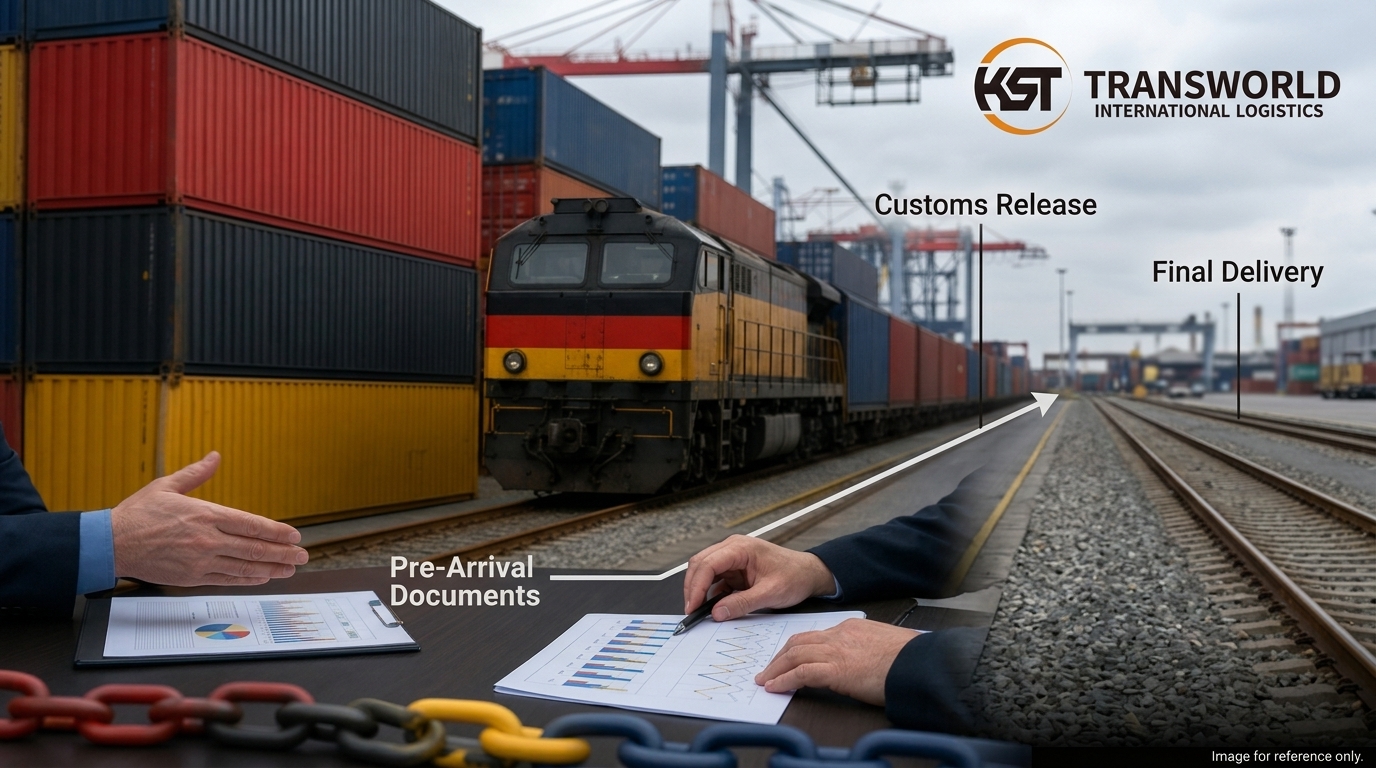
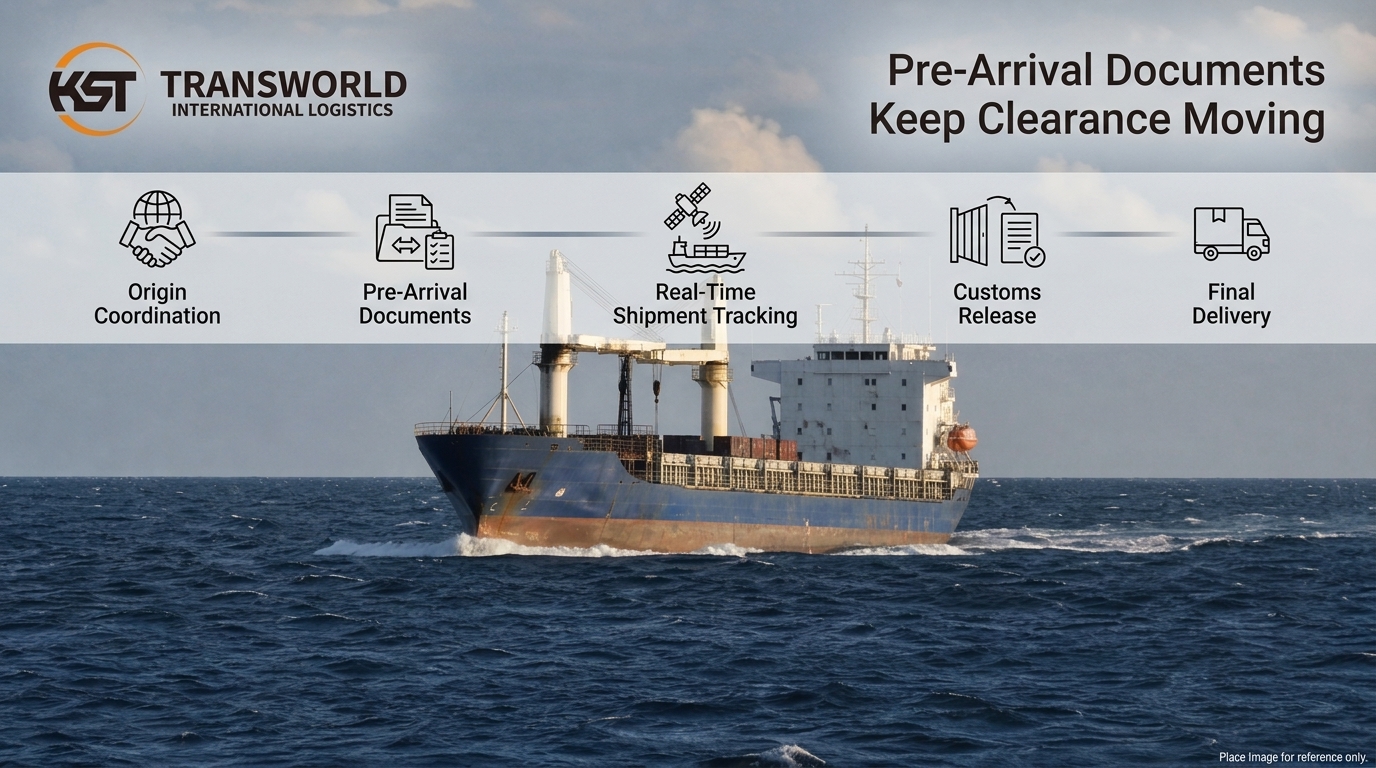
Clearance velocity at US ports depends heavily on front-loading document preparation and maintaining absolute data consistency across every commercial and transport record. Long before cargo reaches American customs gateways, key fields across the commercial invoice, detailed packing list, precise cargo descriptions, country of origin certificates, manufacturer records, valuation disclosures, and bills of lading must align without discrepancies. In ocean freight workflows, mandatory advance filing rules push essential data requirements even earlier in the timeline. Missing paperwork, ambiguous product descriptions, or conflicting data across documents directly increase the risk of physical examinations, administrative holds, and costly post-entry corrections. To eliminate these administrative bottlenecks, Shenzhen Transworld Supply Chain Co., LTD structures its Delivered Duty Paid shipping coordination around proactive document verification for both origin export and US destination clearance. By synchronizing pre-arrival documentation with real-time shipment tracking, the company ensures that documentation verification moves in exact harmony with physical cargo progression.
TRANSWORLD Connects Release Milestones with Final Delivery
A common operational pitfall in international logistics is treating customs release as the final destination rather than a critical midpoint transition. Once US Customs and Border Protection grants formal cargo release at the seaport or airport, immediate coordination is required to transition goods smoothly into local drayage, long-haul trucking, container de-stuffing, and final delivery scheduling. To support this end-to-end requirement, TRANSWORLD connects established origin networks directly with comprehensive North American transport solutions. Having developed a robust operational foundation since 2016 across major Chinese coastal hubs including Shenzhen, Dalian, Ningbo, Shanghai, Qingdao, and Guangzhou, alongside inland gateways in Wuhan, Chongqing, and Changsha, the organization maintains rigorous control over initial booking and export documentation. Upon arrival in North America, this network connects with sea, air, and overland transport options across primary US ports including Los Angeles and New York. This integrated approach ensures that customs release milestones immediately trigger scheduled trucking and proactive status updates for receiving facilities.
A Clearance-Ready Booking Aligns Every Party
Establishing an aligned shipment data package during the initial booking stage is the most effective strategy for preventing customs friction and delivery delays. When all participating parties—including the Importer of Record, licensed customs broker, surety provider, ocean or air carrier, and final delivery coordinator—operate from an identical set of verified facts, clearance predictability increases dramatically. A comprehensive pre-booking information package should clearly define the legal importer identity, complete commercial cargo description, country of origin, actual manufacturer facility, product composition, intended end use, customs valuation, selected transport mode, estimated arrival milestones, and exact US delivery address. Using this verified baseline, TRANSWORLD coordinates optimal transport routing, document distribution, status tracking, and door-to-door delivery. Throughout this collaborative process, clear regulatory boundaries are preserved, ensuring that formal tariff classification, bond submissions, and regulatory entry determinations remain strictly with the Importer of Record and qualified customs professionals.
Ultimately, certainty in US customs clearance arises from clear Importer of Record accountability, properly structured customs bonds tied to verified entry activities, front-loaded documentation consistency, and seamless coordination between border release and destination distribution. When regulatory compliance is synchronized with physical transport planning, cross-border export shipments move through US ports with speed, transparency, and predictability.
TRANSWORLD — Connecting China to the USA with Precision.
Importers and cross-border businesses seeking reliable shipment coordination can visit https://www.transworldcn.com/ to submit comprehensive cargo descriptions, origin locations, preferred transport modes, arrival timelines, and US destination addresses. The specialized logistics team at Shenzhen Transworld Supply Chain Co., LTD will evaluate transport requirements, organize essential documentation workflows, and coordinate delivery schedules while connecting importers with appropriate customs clearance professionals.
Media Contact
Shenzhen Transworld Supply Chain Co., LTD. *****@transworldcn.com +08618664988865 https://www.transworldcn.com/