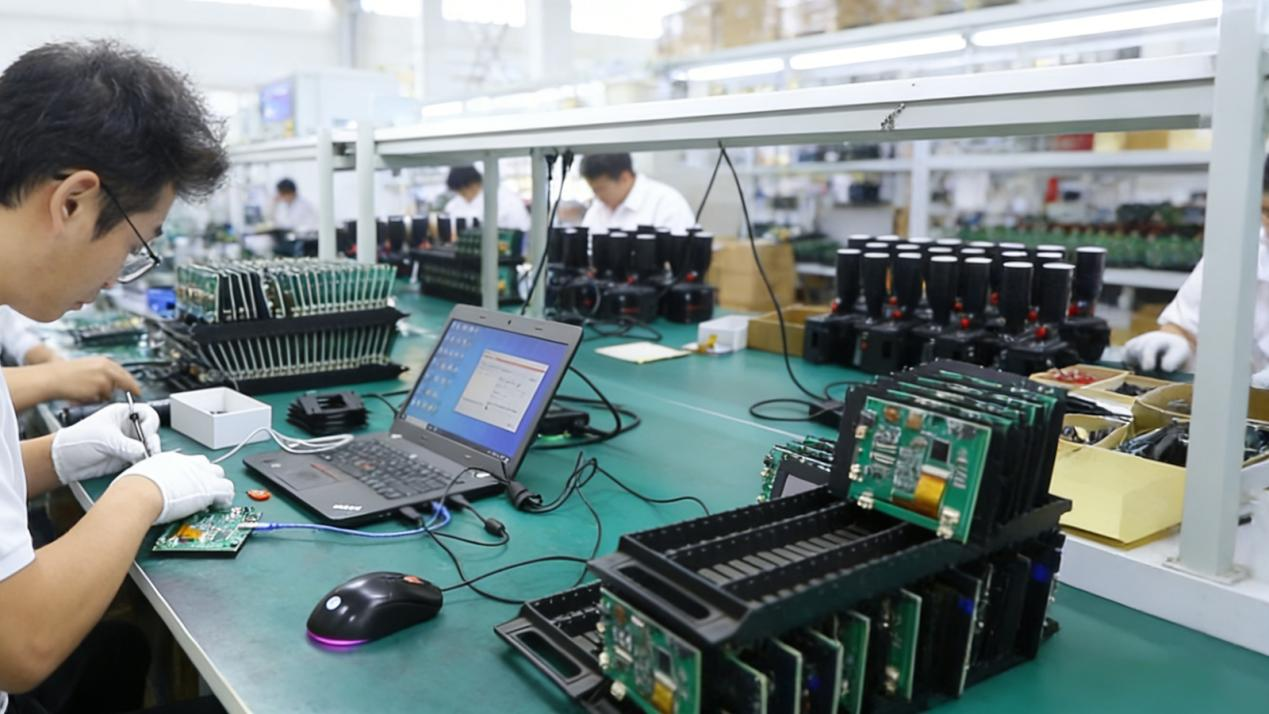
Shenzhen, Guangdong May 24, 2026 (Issuewire.com) - Industrial coding requirements have grown considerably more complex over the past decade. Production lines now span multiple sites, substrates range from flexible films to rigid pipes, and brand owners demand device configurations that align with regional compliance frameworks. Against this backdrop, the role of an experienced OEM TIJ Inkjet Printer Manufacturer has shifted from component supplier to strategic production partner. Shenzhen Chiky Technology Co., Ltd. (Chikytech), founded in 2015 and operating across a 2,000-square-meter facility in Shenzhen, represents a well-documented example of how this manufacturing relationship works in practice.
OEM Engagement vs. Standard Procurement — A Process-Level Distinction
Standard catalog procurement fills a specific, pre-defined hardware need. OEM engagement, by contrast, begins with structured requirements mapping and concludes with production-ready equipment built around the client's operational context. This distinction carries real consequences for industrial buyers planning multi-site coding deployments or long-term supply chain integrations.
A catalog purchase delivers a fixed product. An OEM partnership delivers a configurable manufacturing process. The difference matters most at scale — when print specifications, branding requirements, or regulatory demands diverge from standard configurations. Buyers who treat OEM manufacturing as a premium option miss its core value: it reduces downstream integration friction and replaces repeated ad hoc modifications with a single structured customization cycle.
TIJ Architecture as a Naturally Scalable OEM Platform
Thermal inkjet technology offers a structural advantage for OEM manufacturing. Its cartridge-based, modular design allows a shared technical foundation to support radically different product tiers. A manufacturer builds lightweight handheld units for mobile field applications from the same core platform that powers high-throughput conveyor line systems. This is not product differentiation for its own sake — it reflects the genuine flexibility of TIJ architecture under real industrial conditions.
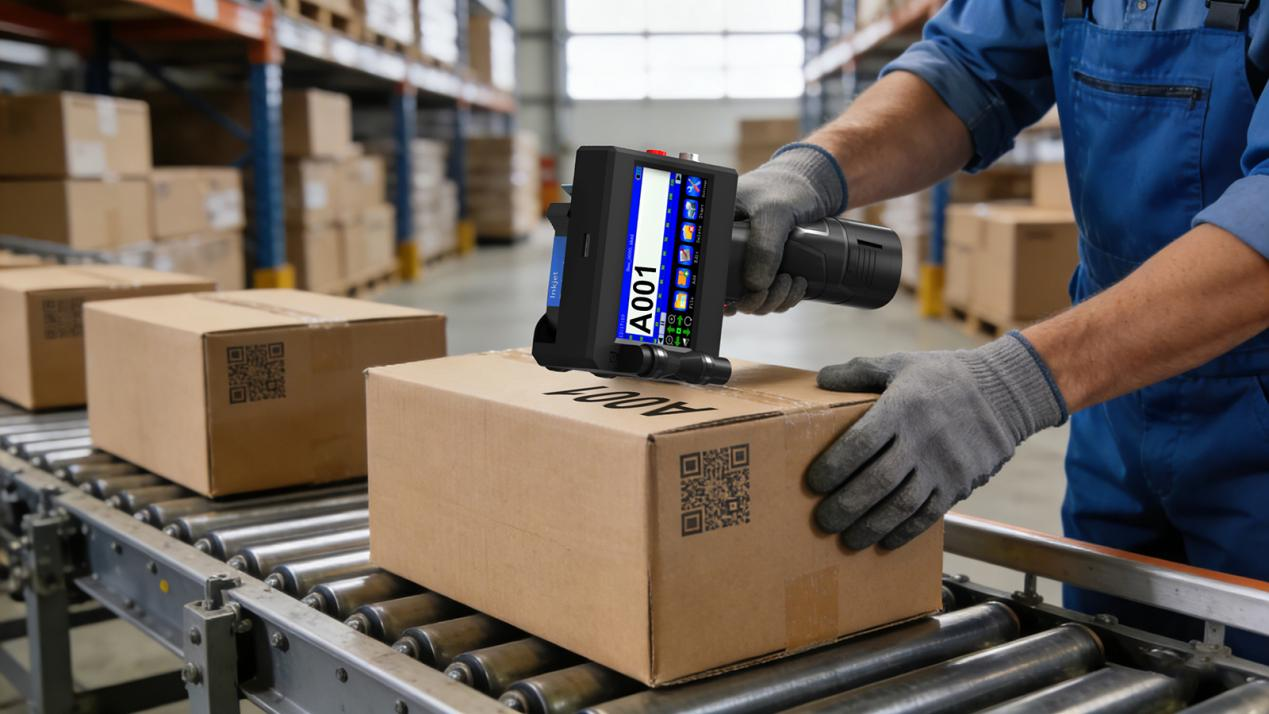
Chikytech's product lineup illustrates this point directly. Handheld models operate on rechargeable battery power with no fixed installation requirement. Industrial online printers integrate into continuous production lines and handle sustained high-speed coding workflows. Both categories share the same foundational technology. This consistency simplifies ink system management, training requirements, and spare parts logistics across a diversified fleet — a material advantage for operations running multiple device types simultaneously.
Inside the OEM Customization Process — Five Dimensions That Shape the Final Product
Understanding what OEM customization actually covers helps industrial buyers set realistic expectations and communicate requirements more precisely. Chikytech structures its OEM process across five functional dimensions: system firmware adaptation, user interface and icon design, branding elements including logo placement and startup and shutdown screen configuration, shell color selection, and retail packaging design.
These layers operate independently. A client may require firmware localization and custom branding without changing the physical casing. Another may need full retail packaging customization alongside a specific UI layout. The ZK1691S one-inch handheld TIJ printer demonstrates how these dimensions apply to a production-ready device. It weighs 0.47 kilograms, delivers resolution adjustable between 150 and 600 DPI, supports a maximum print height of 25.4 millimeters, and handles 28 languages — including Simplified and Traditional Chinese, English, Japanese, Korean, French, Russian, and Thai. All five OEM customization layers apply to this platform.
The ZK1680 handheld model takes a different approach. It runs on a 4-core CPU, supports USB drive data import for text, image, and table files, and connects directly to online production line setups. Critically, it uses a non-encrypted ink system — meaning operators source compatible cartridges freely without proprietary lock-in. Both models accept OEM configuration across all five dimensions, giving brand owners meaningful control over the final product identity without requiring independent hardware development.
Matching Product Configuration to Industrial Scalability Requirements
Specification differences between models translate into distinct scalability scenarios. The ZK1691S suits operations that require distributed or multi-site coding coverage. Its 0.47-kilogram weight and battery-powered design support mobile operators across warehouse floors, construction sites, and unstructured production environments. Print height up to 25.4 millimeters accommodates varied substrate formats without requiring additional equipment.
The ZK1680 bridges mobile flexibility and production line integration. Its CPU architecture handles more complex print jobs at consistent speeds, while USB import capability allows content updates without PC dependency. This makes it particularly suited to operations where content changes frequently — seasonal promotions, batch number rotations, or market-specific labeling requirements. Industrial online printers handle the high-volume, continuous coding demands of food, beverage, and logistics production lines. Together, these tiers form a coherent product architecture that scales with operational growth rather than requiring a full platform change at each expansion stage.
Cross-Industry Application Coverage as a Platform Versatility Test
Substrate variety exposes the true performance limits of any coding platform. Chikytech's handheld and online printer series handles wood, carton, stone, medium-density fiberboard, light steel, pipe, plastic, aluminum foil, cable, and cloth — a range that spans food packaging, building materials, hardware, pharmaceutical, and logistics applications. Consistent print quality across these surfaces under varying environmental conditions reflects genuine manufacturing depth rather than controlled laboratory performance.
Multi-industry deployment also validates OEM platform adaptability. A manufacturer that successfully delivers configured devices across six or more distinct industry categories demonstrates that its customization process transfers reliably across different client operating contexts. This track record matters to buyers who operate across multiple verticals or plan to expand into new markets after initial deployment.
Quality Infrastructure and Certification — The Process Foundation That De-Risks OEM Partnerships
Certification credentials serve a specific function within the OEM manufacturing process: they define the quality floor below which production cannot fall regardless of customization scope. CE and RoHS certifications establish that Chikytech's products meet established safety and environmental standards relevant to European and international market access. A portfolio of 60-plus registered patents signals that the underlying technology rests on proprietary development rather than assembled third-party components.
Process depth matters as much as product specs. Chikytech has completed more than 500 OEM and ODM projects since establishment. That volume represents a documented track record of translating diverse client requirements into compliant, market-ready equipment — across geographies, industry sectors, and regulatory environments. With products reaching buyers in over 100 countries, the manufacturing and logistics infrastructure supporting these deployments operates under consistent real-world commercial pressure, not controlled pilot conditions.
Building Scalable Industrial Solutions Through a Process-Driven OEM Partnership
Scalable industrial coding solutions do not emerge from product selection alone. They develop through a structured manufacturing partnership that aligns technical architecture, customization scope, application validation, and quality assurance into a coherent production process. Understanding that process — from initial requirements mapping through firmware configuration, branding customization, cross-substrate testing, and certified volume production — gives industrial buyers a clearer framework for evaluating potential OEM partners.
Chikytech's advanced TIJ technology, factory-direct manufacturing model, multi-tier product range, and documented OEM project history positions it as a substantive reference point for organizations building or expanding industrial coding infrastructure at scale.
For product specifications, OEM and ODM partnership inquiries, and application references, visit: https://www.chikytech.com/.
Media Contact
Shenzhen Chiky Technology Co., Ltd. service@chiky.cn F4, B8 building ,Yantian industrial park, Xixiang Street, Baoan district, Shenzhen, Guangdong, China https://www.chikytech.com/