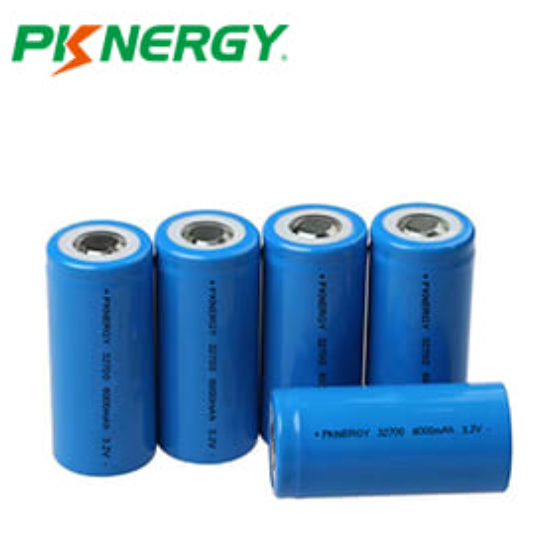
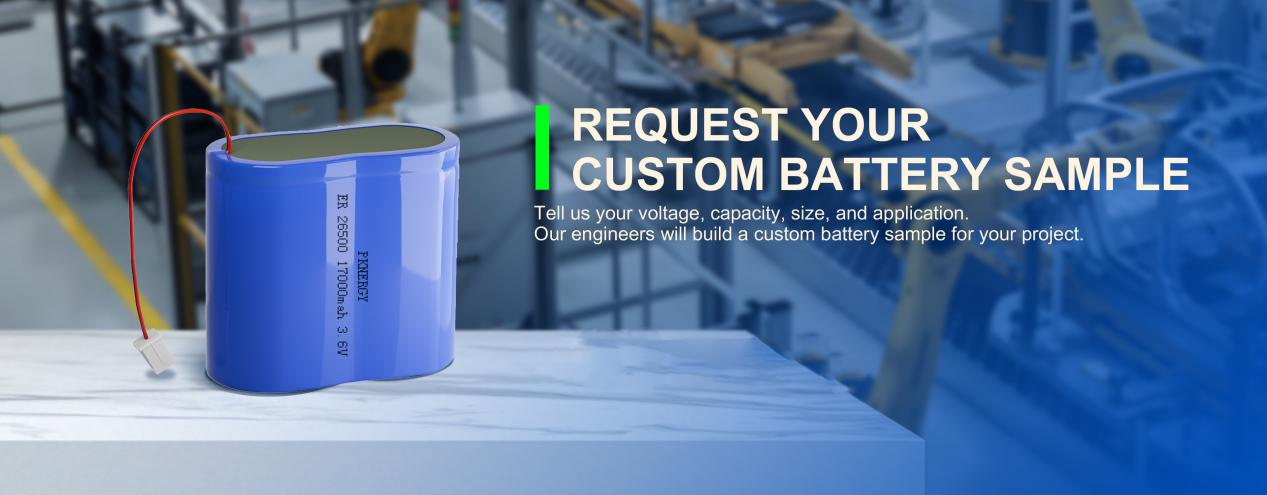
Shenzhen, Guangdong Jul 5, 2026 (Issuewire.com) - Operational environments require power sources that deliver consistent, uncompromised energy over prolonged periods. Consider a fleet of automated guided vehicles navigating a busy logistics warehouse or a remote telecommunications tower operating far from the primary electrical grid. When power fails or fluctuates, operational efficiency declines, and maintenance costs increase. To address these critical demands, Shenzhen Pknergy Energy Co., Ltd develops advanced energy storage solutions designed to withstand continuous, exhaustive discharge cycles without experiencing premature degradation. As a China top deep cycle lithium battery industry leader, Pknergy engineers robust power frameworks tailored specifically to secure operational continuity for commercial enterprises globally. Selecting an optimal power infrastructure requires a thorough understanding of underlying battery chemistries, application-specific requirements, and the technical frameworks governing reliable manufacturing.
Defining the Guide: What Constitutes True Deep Cycle Capability?
Industrial and commercial applications distinguish sharply between standard starting batteries and specialized deep cycle configurations. While a standard battery provides brief, high-current bursts to initiate machinery and remains mostly charged, a deep cycle lithium battery is engineered specifically to discharge the majority of its stored capacity steadily over extended durations. The primary metric determining authentic deep cycle capability is the ability to sustain a high depth of discharge safely and consistently over thousands of repetitions.
Traditional lead-acid power sources often encounter structural deterioration when regularly discharged beyond half of their total capacity. In contrast, advanced lithium iron phosphate chemistry allows systems to operate regularly at an eighty percent depth of discharge or higher while maintaining structural and chemical stability. By utilizing this robust iron-based crystalline architecture, a deep cycle lithium battery significantly mitigates the typical capacity loss associated with heavy industrial use, establishing a highly reliable baseline for modern commercial operations.
Selecting Configurations: The Application-to-Solution Matrix for Industrial Settings
Industrial operations present distinct environmental and mechanical stressors. Achieving optimal service life from an electrochemical system requires matching specific operational demands with the appropriate technical hardware configurations. To support diverse global applications, Pknergy delivers a specialized technical matrix designed to align specific mechanical and electrical workloads with high-performance battery engineering.
1. Material Handling Equipment
Automated guided vehicles and forklift fleets function within high-intensity settings characterized by frequent mechanical vibrations and demanding operational shifts. These setups require energy systems capable of supporting a one-C continuous discharge rate alongside structural resilience against constant physical movement. Tailored forty-eight-volt and eighty-volt lithium iron phosphate modules developed by Pknergy offer substantial power density and maintain an operational life exceeding two thousand repetitions under rigorous use, ensuring material transport remains continuous and uninterrupted.
2. Commercial and Industrial Energy Storage Systems
Facilities and business parks utilize commercial energy storage to execute peak shaving and valley filling strategies, optimizing energy expenditure by utilizing stored power during peak tariff hours. The technical focus for these stationary systems centers on achieving low degradation rates over an intended twenty-year operational lifespan. Utilizing a standard nineteen-inch rack-mounted configuration allows enterprises to scale energy capacities efficiently while maintaining structured thermal control and consistent power output across decades of continuous service.
3. Specialized and Medical Infrastructure
Medical apparatus and remote communication networks require absolute system safety, precise power monitoring, and strict regulatory adherence. These critical setups utilize battery configurations equipped with high-precision internal monitoring circuitry to track operational statuses in real time. Compliance with global safety benchmarks, such as Underwriters Laboratories and European Conformity standards, ensures these power systems possess the necessary safety redundancy to operate reliably within highly sensitive environments.
The Custom Engineering Standard Operating Procedure: From Concept to Mass Production
When standard off-the-shelf energy products fail to satisfy specialized industrial footprints or voltage requirements, a structured engineering process becomes necessary to develop reliable, custom hardware. Shenzhen Pknergy Energy Co., Ltd executes a systematic five-step standard operating procedure as an original design manufacturer to translate technical project parameters into certified, deployable battery systems.
- Requirements Diagnosis: Technical teams evaluate operational parameters, including peak power demands, spatial constraints, environmental risks, and regulatory compliance mandates like IEC 62619 or UL 1973. Supported by over four hundred professional staff across research, manufacturing, testing, and shipping divisions, this initial scoping ensures all commercial requirements are accurately mapped.
- Solution Configuration: Engineers determine optimal cell formats—selecting cylindrical cells for compact, high-vibration applications or prismatic cells for large-scale energy storage—while designing matching battery management electronics. Teams provide a complete structural proposal within twenty-four hours.
- Prototype Verification: Technical facilities produce low-volume sample batches to subject assemblies to rigorous thermal tests, safety shutdown validation, and cyclical degradation analysis, delivering working physical samples within seven days.
- Mass Production Safeguards: Scaled manufacturing utilizes twenty fully automated production lines housed within a twenty-eight thousand square meter facility to ensure uniform assembly quality, achieving mass production readiness within twenty days. Full international transport documentation, including UN38.3 certification, is provided.
- Post-Delivery Traceability: Deployed systems integrate with data tracking protocols, allowing operators to analyze historical battery performance data and perform accurate predictive maintenance throughout the system lifespan.
Core Technical Value: Verification Frameworks and Quality Assurance
The long-term economic value of an industrial energy installation depends directly on the validation protocols applied during manufacturing. Pknergy verifies system performance through an extensive internal quality matrix encompassing more than one hundred distinct testing points, alongside specialized high-and-low temperature chamber testing. To ensure absolute mechanical integrity, critical manufacturing stages utilize one hundred percent AI-driven quality inspection coverage, keeping the overall defect rate safely under one in ten thousand. This comprehensive validation infrastructure ensures that the stated capacity retention and long-term cyclic metrics remain completely verifiable across real-world commercial operations.
System protection is governed by a smart battery management system that actively balances individual cells, maintains precise state-of-charge tracking, and monitors overall health metrics. Supporting industry-standard communication protocols, including RS485 and CAN bus interfaces, the system allows industrial operators to integrate battery data directly into broader facility management platforms.
Manufacturing quality is maintained under strict adherence to ISO 9001 and ISO 14001 management frameworks. The resulting battery assemblies carry crucial industry compliance certifications, including UL, CE, and IEC 62619. These independent verifications assure international corporate buyers across more than one hundred and fifty countries and regions that the equipment satisfies rigorous global safety thresholds, effectively minimizing regulatory friction and reducing operational liability.
Conclusion
Procuring industrial energy storage involves managing long-term technical and financial risks. Partnering with a reliable partner like Pknergy allows enterprises to secure supply chain certainty by utilizing an end-to-end service model encompassing initial structural design, localized electronic development, and final compliance certification support.
By working closely with Shenzhen Pknergy Energy Co., Ltd, commercial organizations eliminate the integration risks and quality inconsistencies frequently associated with third-party components. This professional engineering approach ensures that deep cycle installations deliver predictable, measurable performance over their entire operational lifetime, allowing global industries to maintain continuous, efficient operations with complete confidence.
For more technical specifications and customized engineering support, visit the official corporate portal at https://www.pknergy.com/.
Media Contact
Shenzhen Pknergy Energy Co., Ltd sales@pknergy.com +86 13902461252 902, Tower B, Hongrongyuan North Station Center, North Station Community, Minzhi Street, Longhua District, Shenzhen, China http://www.pknergy.com