Tianjin, China Jul 2, 2026 (Issuewire.com) - The global mining industry operates under some of the most grueling environmental conditions on earth, where material handling systems are constantly subjected to extreme abrasion, heavy impact, and corrosive elements. In the heart of these operations, mining chutes serve as critical conduits for ores, minerals, and overburden. However, the efficiency of these chutes is often compromised by material "hang-up," friction, and rapid wear of the lining surfaces. To combat these challenges, selecting the right protective material is essential for minimizing downtime and maintenance costs. As a leading High Quality UHMWPE Liner Sheet Exporter from China, the industry has seen a significant shift toward advanced polymers that provide superior longevity compared to traditional materials. Understanding the technical evolution from heavy metals to engineered plastics is key to optimizing bulk material handling.
I. Durability and Wear Resistance: UHMWPE vs. Manganese Steel
Historically, Manganese Steel (often referred to as Hadfield steel) was the gold standard for mining liners due to its "work-hardening" property, where the surface becomes harder as it is subjected to impact. While effective in high-impact scenarios, Manganese Steel often falls short in continuous sliding abrasion environments common in mining chutes.
Ultra-High Molecular Weight Polyethylene (UHMWPE), an engineering plastic with a molecular weight typically ranging from 3 to 9 million g/mol, offers a different approach to durability. Unlike steel, which resists wear through hardness, UHMWPE resists wear through its incredibly low coefficient of friction and high energy absorption. In many mining applications involving fine-grained or wet ores, UHMWPE liner sheets have demonstrated a service life that can triple or even quadruple that of traditional steel. This is primarily because the polymer chain structure of UHMWPE is highly resistant to "gouging" and surface fatigue, which are the primary failure modes for metal liners in chutes.
II. Friction and Material Flow: UHMWPE vs. Manganese Steel
One of the most persistent issues in mining logistics is the accumulation of material on the chute walls, known as "bridging" or "rat-holing." Manganese Steel, despite its strength, has a relatively high surface friction. Over time, as the metal surface oxidizes or becomes pitted by corrosion, the friction increases, leading to material sticking. This necessitates manual cleaning and frequent mechanical vibration, both of which introduce safety risks and operational delays.
In contrast, UHMWPE is renowned for its "self-lubricating" properties. With a dynamic coefficient of friction significantly lower than that of steel (often comparable to PTFE), it ensures a consistent, rapid flow of materials. This non-stick surface remains effective even when handling wet or clay-like materials. By maintaining a high throughput, operators can prevent the bottlenecks that often plague metal-lined systems. BEYOND, with its extensive experience in precision CNC machining and material processing, has optimized the surface finish of these liners to ensure that they meet the specific flow requirements of diverse mineral processing plants.
III. Impact Absorption and Noise Reduction: UHMWPE vs. Manganese Steel
Mining chutes are high-energy environments where large rocks and heavy ores strike the lining at high velocities. While Manganese Steel can withstand these impacts, it transmits the kinetic energy directly to the underlying structure of the chute, leading to structural fatigue over time. Furthermore, the metal-on-metal or rock-on-metal contact creates deafening noise levels that can exceed 100 decibels, posing a significant health and safety concern for site workers.
UHMWPE acts as a natural dampener. Its molecular structure allows it to absorb and dissipate impact energy rather than reflecting it. This elasticity not only protects the steel casing of the chute but also reduces noise pollution by up to 25% compared to metal liners. This "quiet" operation is becoming increasingly important as mining regulations worldwide tighten regarding environmental impact and worker safety. The integration of compression molding and extrusion technologies allows for the production of liners that maintain these physical properties even under extreme temperature fluctuations.
IV. Corrosion Resistance and Weight: UHMWPE vs. Manganese Steel
Corrosion is the silent killer of metal liners. In many mines, the presence of moisture and chemical additives leads to rapid oxidation of Manganese Steel. Once rust begins to form, the structural integrity of the liner is compromised, and the surface friction increases exponentially. Frequent replacements become a costly necessity.
Engineering plastics like UHMWPE are chemically inert. They do not rust, rot, or corrode, regardless of the pH levels of the materials being transported. Furthermore, the density of UHMWPE is approximately 0.94 - 0.97 g/cm³, which is about one-eighth the weight of steel. This drastic reduction in weight simplifies the installation process, reduces the load on the supporting infrastructure, and significantly lowers the risk of injury during maintenance cycles. Large-scale sheets, such as the 4 x 8 ft formats, can be handled with much lighter equipment, shortening the window for scheduled maintenance.
V. Technical Innovation and Manufacturing Excellence
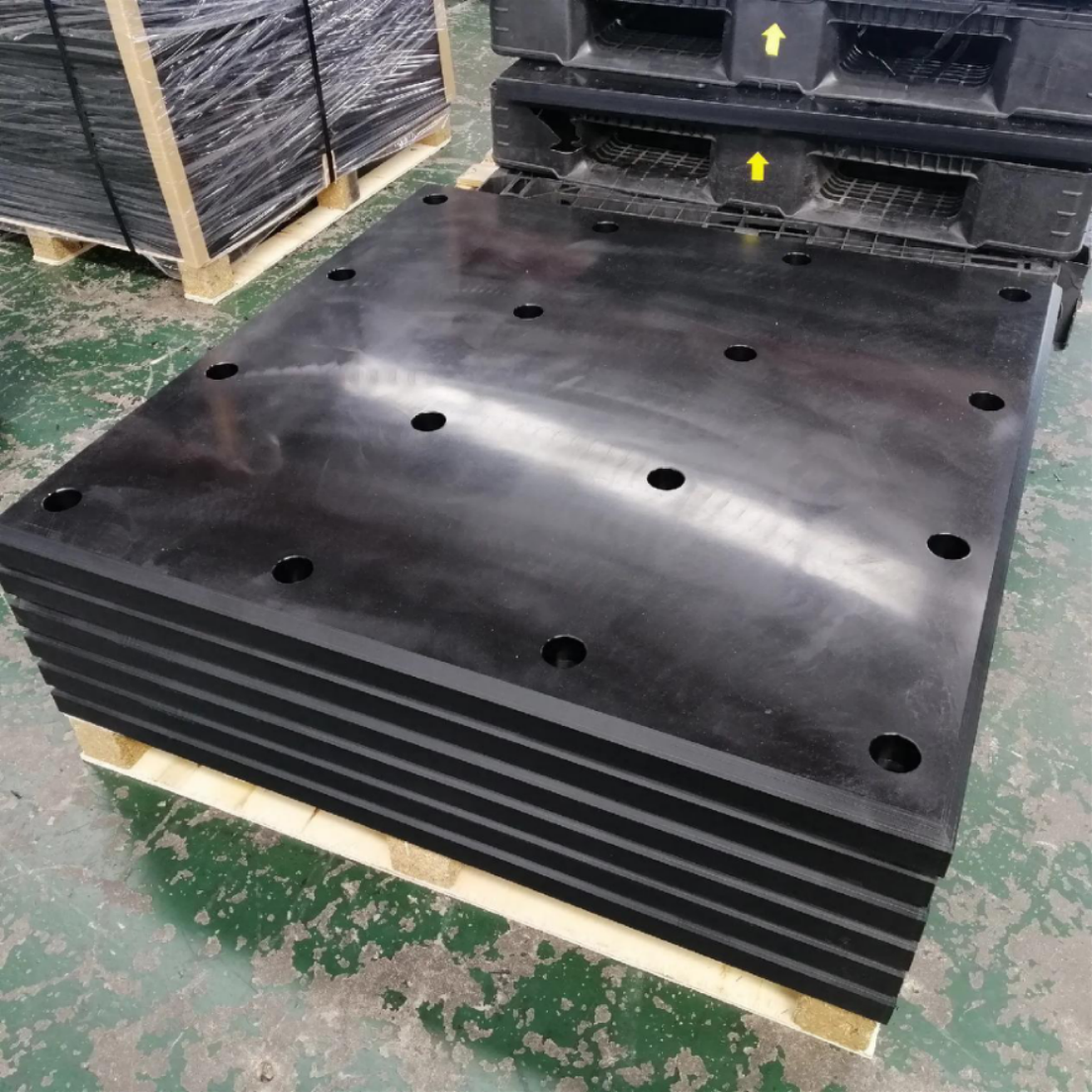
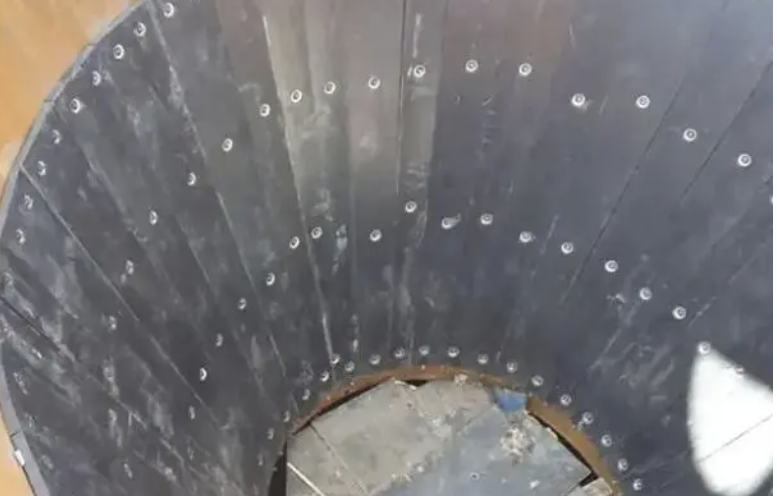
The transition from metal to plastic in heavy industry is supported by advancements in manufacturing precision. Modern liners are no longer simple slabs of plastic but are engineered components designed for specific chute geometries. Utilizing advanced international equipment, including gantry CNC lathes and large-scale engraving systems, manufacturers can now produce customized liners with pre-drilled, counter-sunk holes and beveled edges for seamless installation.
The core competitiveness of high-grade UHMWPE lies in its consistent quality control. For instance, the compression molding process ensures that the material achieves maximum density and molecular alignment, which is critical for maintaining performance in the 1000-grade UHMWPE category. These materials are tested against rigorous industrial standards to ensure they provide the necessary tensile strength and Shore D hardness required for mining. By integrating R&D facilities with large-scale production, enterprises can deliver high-precision, large-volume products that solve the unique challenges of the global mining sector.
Why Plastic Liner Outlasts Metal in Mining Chutes
In conclusion, the preference for UHMWPE over Manganese Steel is driven by a combination of physical science and economic reality. Plastic liners outlast metal because they tackle the three pillars of wear—abrasion, friction, and corrosion—simultaneously. While Manganese Steel relies on hardness to survive, UHMWPE utilizes its unique molecular elasticity and low surface energy to thrive.
The result is a solution that offers lower total cost of ownership. Although the initial material cost may vary, the savings accrued from reduced downtime, eliminated corrosion, faster material flow, and decreased labor costs for installation make engineered plastics the superior choice for the future of mining. As industrial requirements become more demanding, the partnership between material science and precision manufacturing continues to provide flexible, application-oriented solutions that keep the wheels of global industry turning efficiently.
For more information on engineering plastic solutions and technical specifications, please visit: https://www.beyondplas.com
Media Contact
TianJin Beyond Technology Developing Co., Ltd jim@beyondtd.com