Xiamen, Fujian May 21, 2026 (Issuewire.com) - In high-precision CNC parts procurement, In many CNC RFQs, suppliers are still compared almost entirely on unit price and lead time. The technical discussion often starts only after the PO has already been placed. But many project failures trace back to exactly this habit. The price gap looked obvious, the cheapest supplier got the order, and then the first article failed twice in a row. By the time mass production started, dimensional drift had already pushed the project weeks behind schedule. This isn't an isolated story — it's the typical outcome of transactional procurement when applied to high-precision CNC machining parts.
The real differentiator is rarely the equipment list. It's how deeply the supplier participates in the project. The question is not how many part types a workshop can cut, but who can keep the process intent intact and the quality consistent across the full project cycle — from DFM review through to final outgoing inspection. A supplier who simply receives a drawing, programs the toolpath, and ships whatever comes off the machine is performing a transaction. A supplier who flags a potential thin-wall deformation risk before the first cut, who controls finishing parameters in-house, and who can trace every inspection record back to the raw material lot — that's integration.
This is the operating logic Xiamen Dazao Machinery Co., Ltd. has built over 25 years. Founded in 2000 and certified to both ISO9001:2015 and IATF16949:2016, the company provides one-stop custom parts manufacturing for automotive, aerospace, medical device, new energy, and robotics customers.
Why the Lowest Quote Often Fails in CNC Projects?
Transactional sourcing works fine for standard catalog items. For high-precision parts, three problems show up again and again.
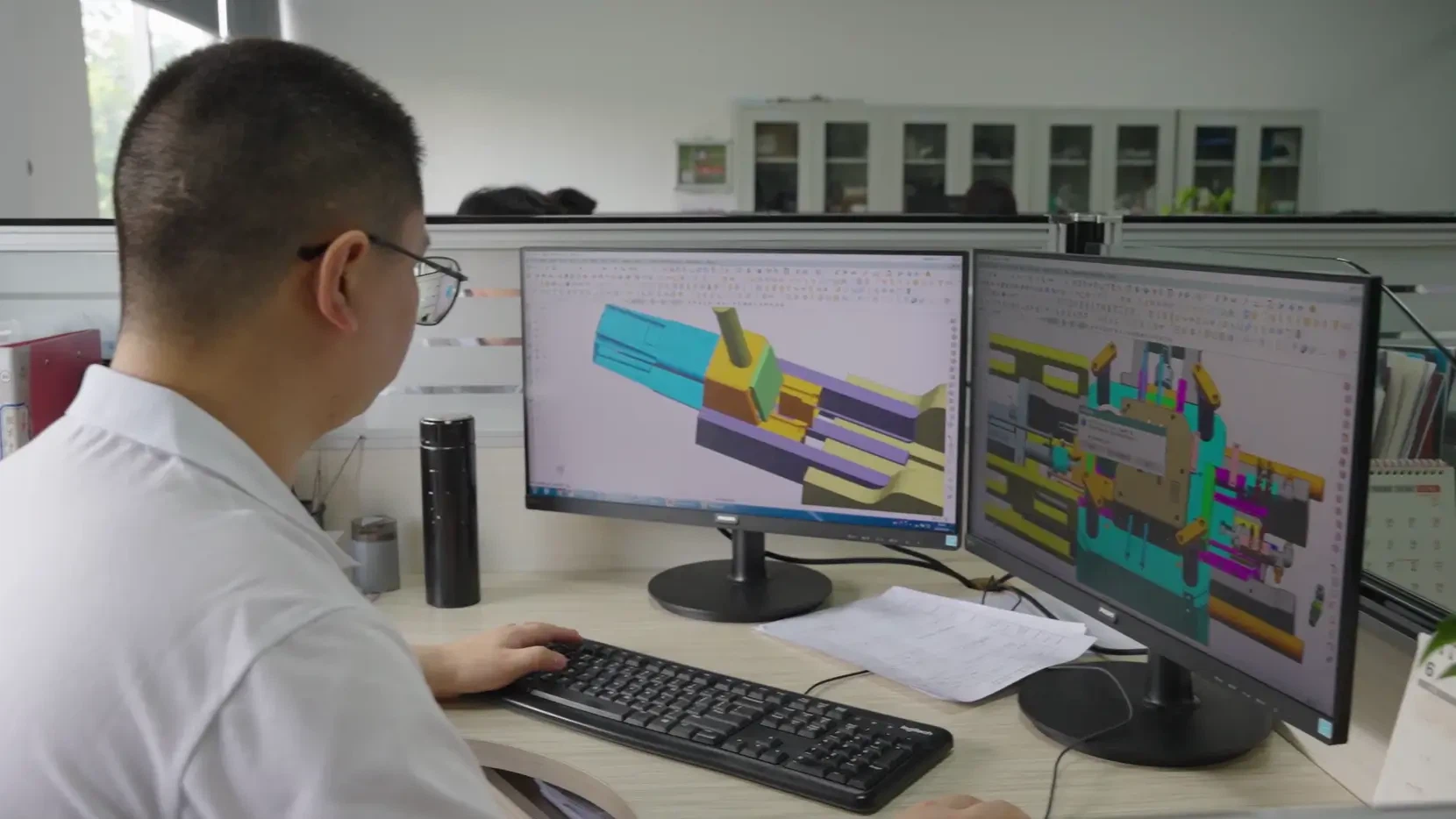
Lack of DFM Input Before Production
Suppliers cut to the drawing without understanding how the part fits into the assembly. A thin-wall aluminum part may pass dimensional inspection immediately after machining, then deform slightly after anodizing or transport. The drawing tolerance was technically achieved, but the part still fails during assembly.
Uncontrolled Surface Finishing Processes
Anodizing, plating, and similar steps get layered out to subcontractors, and the buyer loses visibility into film thickness, color variation, and adhesion data. Batch-to-batch consistency becomes a guess, and the problems show up most often on cosmetic surfaces and functional coatings — exactly where end customers notice them first. When the plating shop is a separate entity with no stake in the machining outcome, there's no feedback loop. A part that was machined to spec but poorly finished is still a rejected part.
Quality Issues Found Too Late
When inspection happens only at shipment, there's no real process control. For aerospace and medical device parts, by the time a defect is identified the entire batch has already been produced. Rework cost vastly exceeds what prevention would have cost in the first place. And in some cases — particularly with titanium or specialty alloys — the material itself cannot be reworked, turning a quality escape into a total scrap event.
The root cause here isn't a shortage of manufacturing capability in China. It's a shortage of supply chain depth. Solving it requires a different kind of supplier relationship.
DAZAO began as a CNC machining service supplier in 2000, and through 25 years of work in custom parts has gradually built out a connected workflow covering process planning, machining, surface finishing, and quality control. It's not a marketing position — it's a practical response to the problems above.
What an Integrated CNC Supplier Should Be Able to Do
Machines and Processes in One Setup
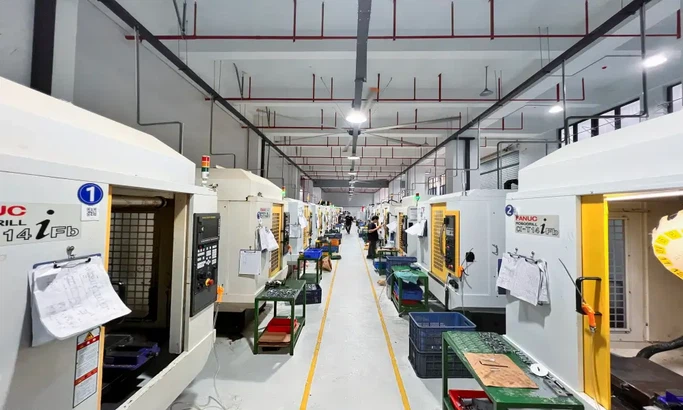
Different part geometries create very different machining constraints. Thin-wall aluminum structures, deep cavities, and free-form surfaces often require different machine configurations and fixturing strategies, which is why DAZAO built a mixed setup covering 3-axis to 5-axis machining centers and Swiss-type turning.
Machining services cover CNC milling, CNC turning, and Swiss-type precision turning, with achievable precision down to 0.01 mm. Workable materials include aluminum alloys (6061, 7075), stainless steels (303, 304, 316L), titanium alloys, copper alloys, carbon steel, and engineering plastics such as POM, PEEK, and nylon. Material diversity matters because real projects rarely involve just one alloy — a typical robotics assembly might combine aluminum structural frames with stainless steel shafts and POM bushings, and sourcing all three from one facility eliminates a layer of coordination.
Why CNC Is Often the Default Choice for Precision Parts?
In real projects, the strength of CNC machining shows up as controllability — dimensional accuracy, toolpath behavior, and the speed of responding to design revisions are all more direct than with most forming processes. When a customer changes a feature on Tuesday afternoon, CNC can have a revised part on the inspection table by Wednesday morning, which is something casting or molding workflows simply cannot match. This responsiveness is not just convenient; for industries like robotics and new energy where designs evolve rapidly, it's often a prerequisite.
Rapid Prototyping: 3-5 Days from Drawing to Part
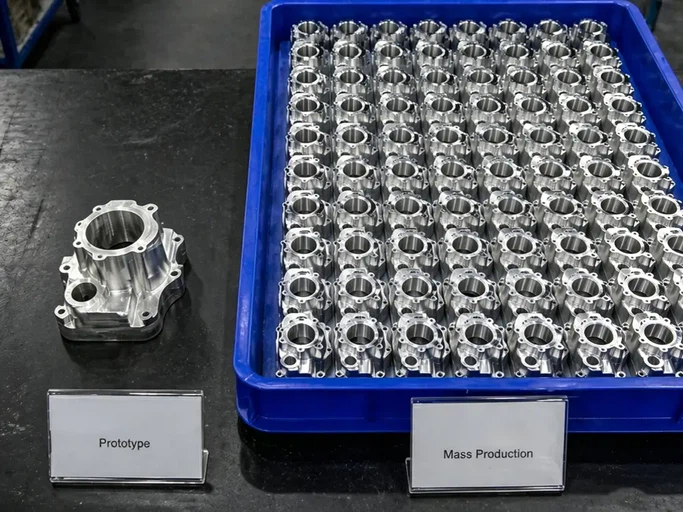
A dedicated sample production department turns rapid prototypes around in 3 to 5 working days. The same engineering team that handles the prototype follows the part through to mass production, so process parameters don't get lost in handover — a common failure point when prototyping and production sit in different departments or different companies entirely. Each customer is assigned a one-to-one account manager for technical support and fast quoting at no cost. For new energy and robotics customers, where iteration cycles are short and design validation needs to happen fast, For robotics and new energy projects, this usually means design revisions can be tested before the next supplier meeting instead of waiting another production cycle.
Process Experience Built Over Time
A lot of this experience lives in details that don't appear on drawings — fixturing sequences for thin-wall parts, or how to manage thermal distortion when drilling deep holes. Knowing the specific clamping order that prevents a 7075 aluminum thin-wall part from warping, or how to manage cutting heat when deep-drilling 316L stainless steel, is the kind of know-how a transactional supplier can't replicate quickly. It accumulates one project at a time, across thousands of part numbers and dozens of industries. This is what separates a high-precision CNC machining parts supplier with genuine depth from one that simply owns the same brand of machine.
Beyond Machining: Surface Finishing and Quality Control Under One Roof
Surface Finishing with Traceability
DAZAO offers a broad set of finishing options:
- Anodizing (standard and hard), electroplating (zinc, nickel, chrome)
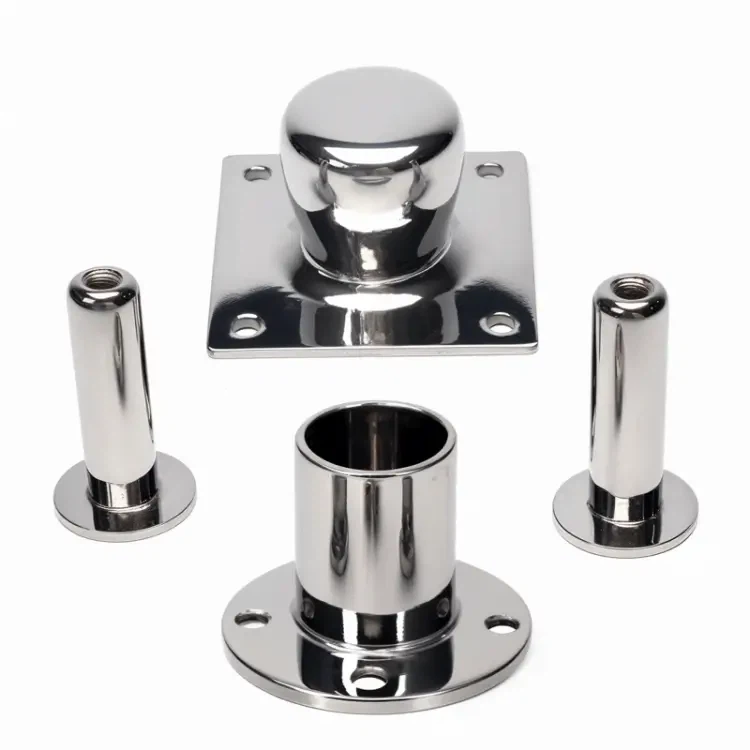
- Powder coating, sandblasting, brushing, polishing
- Passivation, blackening, laser engraving
The differentiator isn't the menu — most shops can list similar options. It's that finishing here runs under parameter control, with both incoming and outgoing inspection, so film thickness, color, and adhesion stay consistent across batches. For passivation on medical device or food-contact parts, where process parameters need to be documented in detail and every deviation recorded, this is exactly where an integrated supplier separates itself from a middleman who simply passes parts to an outside plating shop and hopes for the best.
What IATF 16949 Certification Actually Means in Practice
ISO9001:2015 is the baseline. IATF16949:2016 is one of the strictest quality standards in the automotive supply chain, and it requires the supplier to operate with FMEA (failure mode and effects analysis), SPC (statistical process control), and PPAP (production part approval process) embedded in daily work — not as documents that sit in a folder, but as tools that actually govern how production decisions are made.
In practice this translates into a complete chain — incoming material inspection, first article approval, in-process patrol checks, and final inspection. Inspection equipment includes CMM coordinate measuring machines, projectors, surface roughness testers, and hardness testers, with full inspection reports issued when needed for customer audits or regulatory submissions. For buyers sourcing a CNC machining service from China, the presence of IATF16949 is one of the clearest signals that a supplier has moved beyond workshop-level operations into systematic manufacturing.
Where Integration Usually Matters Most
The value of integration becomes most visible in industries where the cost of failure is high and the tolerance for inconsistency is low.
Traceability-heavy projects
When material certificates, inspection reports, and process records all need to stay linked to the same batch, disconnected suppliers quickly become difficult to manage. This is especially common in titanium parts and regulated assemblies.
Cosmetic-critical parts
Projects with anodized cosmetic surfaces often run into consistency problems between machining and finishing suppliers. Small variations in blasting or film thickness may not affect function, but they immediately affect customer acceptance.
Rapid-iteration assemblies
In robotics and new energy projects, CAD revisions sometimes change weekly. When prototyping and production are handled by different suppliers, process assumptions often drift before the design stabilizes.
Multi-material assemblies
Assemblies combining aluminum structures, stainless inserts, plastics, and surface-treated parts tend to expose communication gaps very quickly. Even when individual parts are in tolerance, the final assembly may still fail due to accumulated stack-up errors.
Cross-industry experience also feeds back into the process database, sharpening the team's ability to anticipate problems before they show up in production. A solution developed for an aerospace traceability requirement, for example, often turns out to be directly applicable to a medical device project.
How to Evaluate a CNC Supplier in Practice?
For buyers comparing options, three practical questions filter most of the noise:
- Does the supplier engage during DFM, not just after the PO? — A supplier willing to flag issues on the drawing before quoting is one less problem you'll handle during the first article stage. If the response to your RFQ is nothing but a price and a lead time, that tells you something about the depth of engineering involvement you can expect later.
- Are prototyping and mass production handled by the same team? — Continuity of the engineering team is what keeps process parameters from being reinvented at the production stage. When the handoff between prototype and production involves a new set of people interpreting the same drawing from scratch, dimensional surprises are almost guaranteed.
- Can surface finishing and quality data be traced? — If film thickness, hardness, or dimensional reports can't be produced on request, the supplier is functioning as a coordinator, not as a manufacturer. Traceability is not a luxury — it's the minimum evidence that process control actually exists.
These three questions cut through equipment lists and capability brochures faster than any audit checklist.
Conclusion:
In CNC manufacturing, most supply chain problems don't come from machining itself. They come from poor coordination between process steps.
The more disconnected the workflow becomes, the harder it is to keep dimensions, finishing, and delivery aligned once production scales.
DAZAO's engineering team can run a quick manufacturability review on your drawings and discuss whether there's a better process path for the parts you're working on.
If you've already been juggling multiple suppliers and chasing coordination, that may be a signal worth re-examining: https://www.dazaocncmachining.com/.
Media Contact
Xiamen Dazao Machinery Co., Ltd. erica@dazaocn.com https://www.partengineer.com/