Zhenjiang, Jiangsu May 11, 2026 (Issuewire.com) - The Top Custom High-Impact Lens Manufacturer in China has established a new paradigm by synthesizing decades of heritage with cutting-edge material science. Founded officially in 2001 but with roots reaching back to the early 1990s, Universe Optical has meticulously built a reputation as a leading independent authority in lens fabrication. By operating a specialized Rodenstock-certified RX lab and serving as an authorized distributor of PPG’s premium CR39 materials, the company bridges the gap between raw material excellence and finished precision. Today, with an export footprint spanning over 100 countries, the firm provides the technical backbone for global eyewear brands that require a marriage of aesthetic versatility and uncompromising durability standards.
The Architecture of Lens Longevity: A Technical Analysis of Durability
In the modern market, the term "durability" is often used broadly, yet in professional optics, it represents a strictly quantified set of physical and chemical benchmarks. To maintain a competitive edge in international trade, a lens must survive diverse environmental stressors while retaining its refractive integrity. This analysis explores the five fundamental pillars of durability that define the current industry standard.
I. High-Velocity Impact Resistance and Substrate Resilience
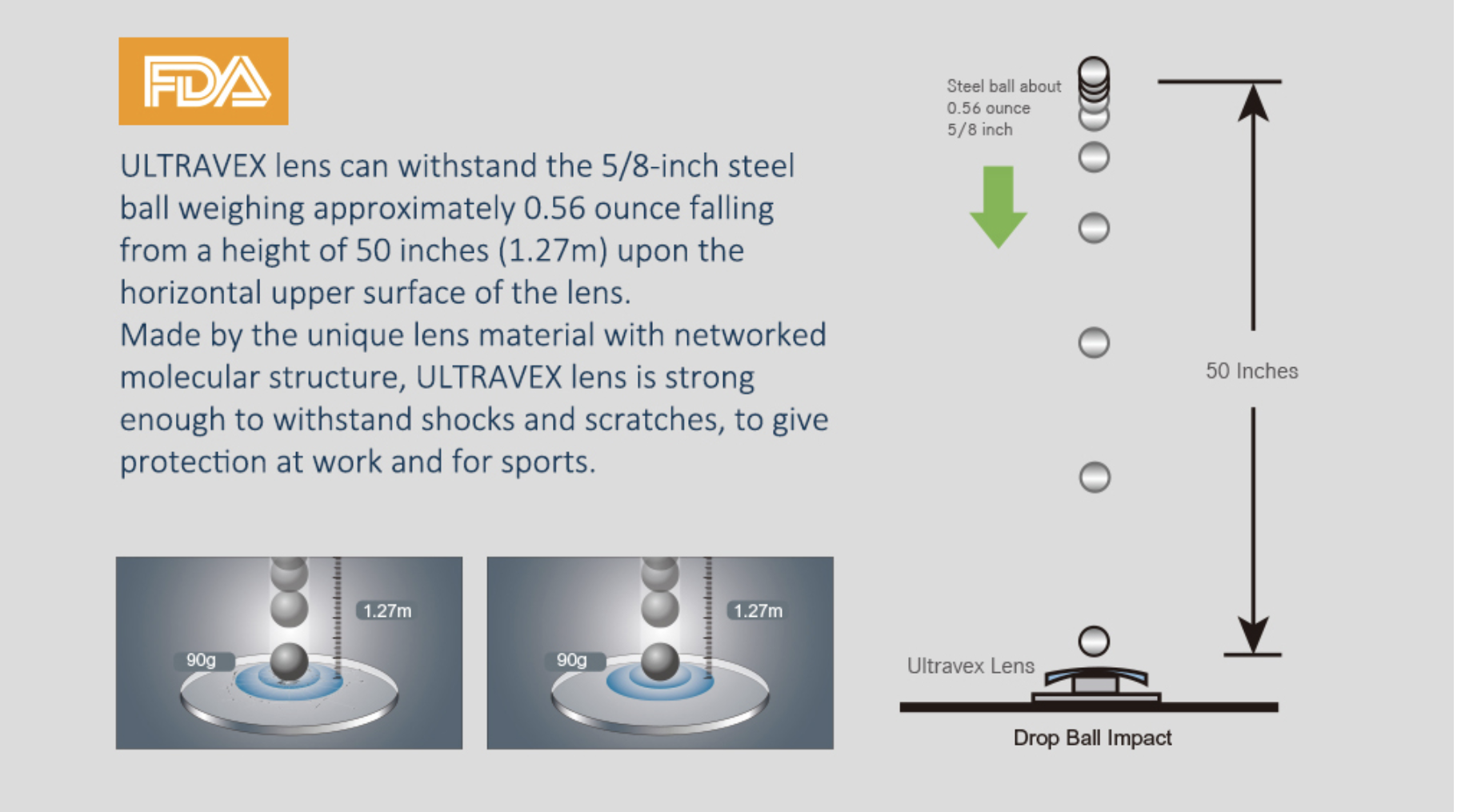
The most critical safety metric for any high-performance lens is its ability to withstand sudden physical trauma. The Universe Optical engineering team prioritizes structural integrity through the implementation of Ultravex technology. This specialized resin-based structure is engineered to absorb kinetic energy upon contact, rather than shattering into dangerous fragments.
Traditional plastic lenses often fail under the standardized drop-ball test, where a steel ball is dropped from a specific height to simulate real-world impact. In contrast, custom high-impact lenses utilize modified polymer chains that provide a balance of stiffness and elasticity. This makes them the ideal choice for rimless frame designs—which require high tensile strength to prevent cracking at drill points—as well as for children's eyewear and sports-specific equipment. By utilizing PPG-authorized materials, the manufacturer ensures that the "High-Impact" label is backed by consistent batch-to-batch chemical stability.
II. Advanced Surface Hardness and Abrasion Control
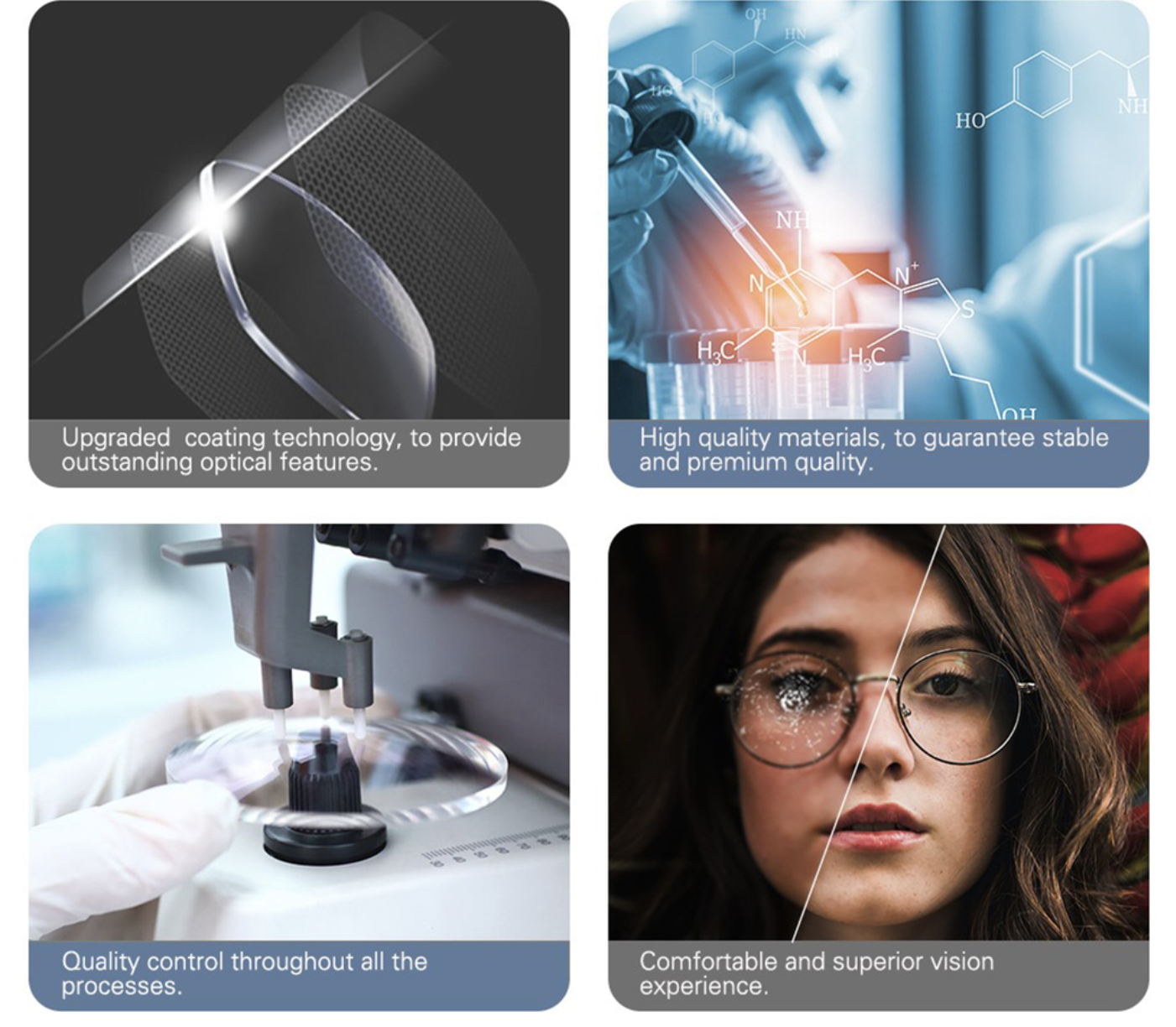
A lens that loses its clarity due to micro-scratches is effectively reaching the end of its lifecycle, regardless of its structural strength. Durability standards, therefore, place a heavy emphasis on "Hard Coat" (HC) technology. Utilizing German-engineered Schneider and Leybold vacuum systems, the production process involves the application of a thermally cured or UV-cured polysiloxane film.
This protective layer significantly elevates the lens's position on the Bayer scale—a standard measurement for abrasion resistance. By creating a high-density molecular shield, the lens becomes resilient against the friction of daily cleaning and exposure to environmental particulates like dust and sand. For professional B2B clients, this translates to a lower rate of consumer returns and higher brand trust, as the lenses maintain their "like-new" transparency even after months of rigorous use in challenging conditions.
III. Thermostability and Coating Adhesion Under Stress
Lenses are frequently exposed to extreme thermal fluctuations, such as being left inside a vehicle in mid-summer or transitioning from a heated building to sub-zero outdoor temperatures. Inferior lenses often suffer from "crazing," a phenomenon where the anti-reflective coating expands at a different rate than the substrate, leading to a web-like pattern of cracks.
To achieve superior thermostability, the manufacturing process employs high-index materials with optimized thermal expansion coefficients. During the RX surfacing and coating stages, the use of SCL and MEI precision systems ensures that each layer is bonded with atomic-level accuracy. This rigorous adherence to German quality standards guarantees that the lens curvature remains stable and the coatings remain intact, even when subjected to repeated thermal cycling tests. This level of environmental resilience is essential for global distribution, where products must perform reliably across varied climates from Northern Europe to Southeast Asia.
IV. Hydrophobic Efficiency and Surface Energy Management
The modern durability standard extends beyond physical hardness to include the "cleanability" of the lens. A surface that attracts water, oils, and fingerprints requires more frequent and aggressive cleaning, which eventually wears down the anti-reflective stacks. To mitigate this, advanced top coats are applied to create an ultra-low surface energy profile.
This hydrophobic and oleophobic layer causes water to bead into high contact angles, allowing droplets to roll off the surface without leaving mineral deposits. Furthermore, it resists the adhesion of skin oils and makeup. By reducing the surface friction, these functional layers ensure that microfiber cloths glide across the lens rather than dragging debris against it. In the context of high-impact lenses, this feature is particularly valuable for outdoor and industrial applications where visibility must remain clear in rainy or humid environments.
V. Optical Precision and Spectral Integrity
True durability must also account for the longevity of the optical prescription itself. A lens that warps or yellows over time fails its primary purpose. The integration of blue-light filtering and UV400 protection into the monomer—rather than as a simple surface tint—ensures that the protective qualities do not fade or peel away.
By operating a Rodenstock-certified RX lab, the production facility utilizes digital free-form surfacing technology to achieve sub-micron precision in lens power. This ensures that the high-impact protection is delivered alongside crystal-clear visual acuity. The final durability check involves testing the adhesion of the anti-reflective (AR) stacks through cross-hatch tape tests and salt-water immersion, ensuring that the visual performance of the lens remains consistent throughout its entire intended lifespan.
Conclusion: Setting the Benchmark for International Quality
The intersection of durability and precision engineering is where Universe Optical has carved its niche in the global market. By focusing on these five pillars—impact resistance, hardness, thermostability, surface energy, and optical integrity—the industry moves away from disposable eyewear toward long-lasting, high-tech optical solutions. As a leading manufacturer, the commitment to utilizing world-class machinery and certified lab protocols ensures that "Made in China" is synonymous with "Global Excellence" in the lens sector.
For further technical specifications and product inquiries, please visit the official website: https://www.universeoptical.com/
Media Contact
UNIVERSE OPTICAL MFG. CO., LTD Info@universeoptical.com