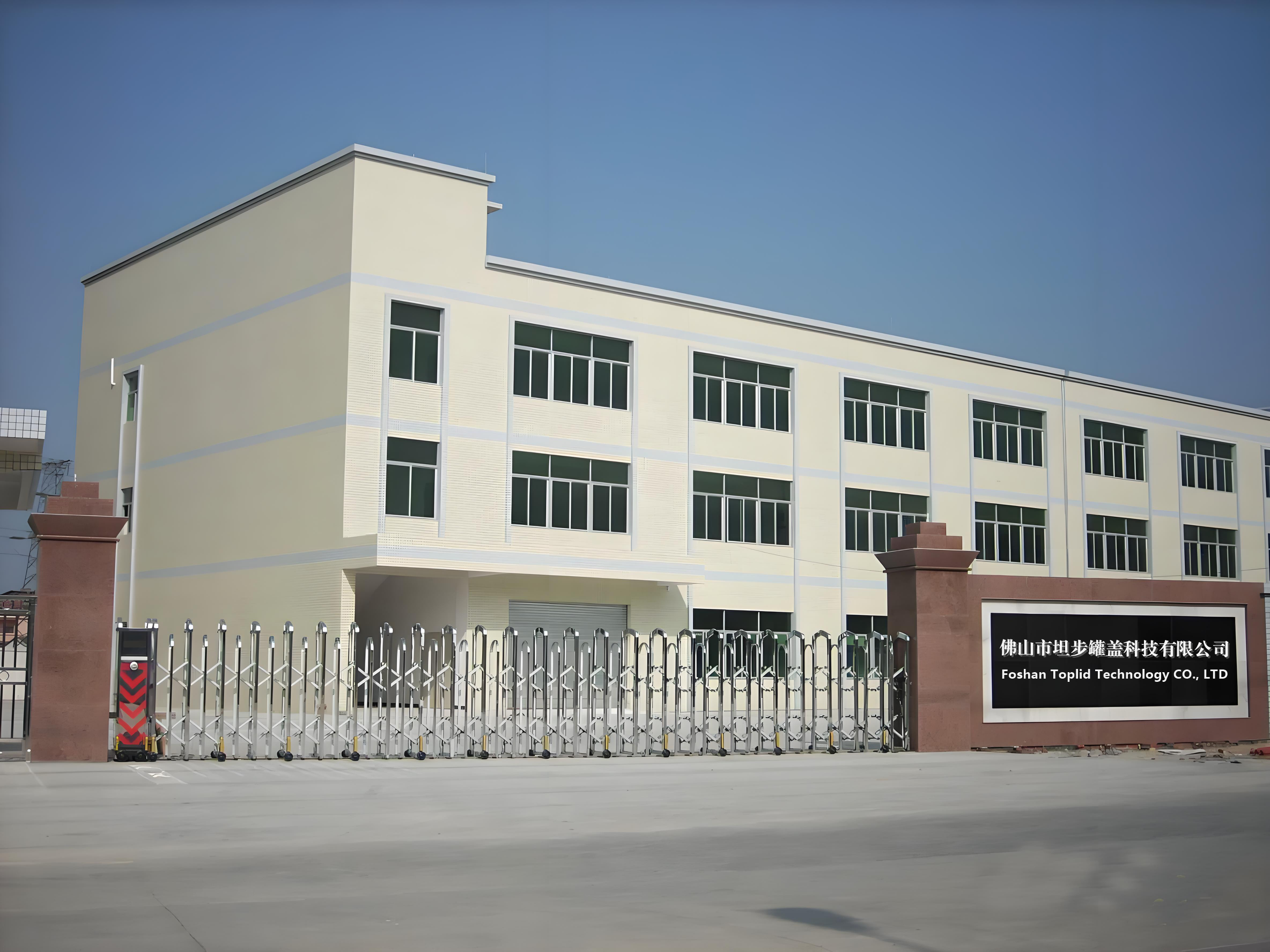
Foshan, Guangdong Mar 1, 2026 (Issuewire.com) - As we approach 2026, the global packaging industry is undergoing a profound transformation driven by automation, material science breakthroughs, and a heightened focus on circular economy principles. Within the specialized niche of metal chemical packaging, the role of ODM Paint Can Lid Manufacturers has evolved from being simple component suppliers to becoming strategic R&D partners. For businesses navigating the complexities of industrial coatings, adhesives, and decorative paints, the integrity of a container is only as reliable as its closure system. Selecting a manufacturing partner today requires a forward-looking lens, focusing on how a producer integrates technical precision with the shifting demands of the international supply chain.
The landscape of 2026 is defined by a need for localized resilience and global quality standards. Companies like Toplid have demonstrated that staying relevant in this sector involves more than just mass production; it requires a sophisticated understanding of tinplate metallurgy and the specific sealing requirements of volatile chemical compounds. As the industry moves toward more specialized paint formulations, the hardware—specifically the lids and rings—must provide an uncompromising barrier against oxidation and leakage. This shift places a premium on Original Design Manufacturing (ODM) capabilities, where the manufacturer provides end-to-end solutions from tooling design to final quality testing.
Precision Engineering and Tooling Versatility
In the realm of metal packaging, precision is measured in microns. The first quality to prioritize when evaluating potential partners is their mastery of high-precision tooling. A lid is not merely a piece of stamped metal; it is a mechanical component that must interface perfectly with the can body to ensure a hermetic seal. By 2026, the standard for excellence involves the use of multi-stage progressive dies and automated punching systems that minimize human error.
Toplid’s operational model serves as a prime example of this technical dedication. By maintaining a robust inventory of molds—ranging from standard lever lids to specialized triple-tight systems—a manufacturer can significantly reduce the "time-to-market" for their clients. For an ODM partner, the ability to customize the gauge of the tinplate or the profile of the ring based on the viscosity of the paint is a critical differentiator. This flexibility ensures that the final product can withstand the rigors of high-speed filling lines and the physical stresses of long-haul logistics.
Material Integrity and Compliance with Global Standards
The chemical stability of paint can lids is non-negotiable. Leading manufacturers in the current era prioritize the sourcing of high-quality tinplate (ETP) and ensure that all coatings—whether epoxy phenolic or organosol—are compliant with evolving environmental regulations. The internal lacquer of a lid must be chemically inert to the specific solvent or water-based contents it protects.
When vetting an ODM partner, it is essential to look for rigorous quality control protocols. This includes automated vision systems that detect pinholes, scratches, or coating imperfections in real-time. Reliability in 2026 is also defined by international certifications. A manufacturer’s adherence to ISO standards and their ability to provide traceable material reports are foundational to building trust. This transparency is particularly vital for clients in the European and North American markets, where safety and environmental benchmarks for chemical packaging are increasingly stringent.
Integrated R&D and Customization Capabilities
One of the most significant trends for 2026 is the demand for bespoke packaging solutions. The "one size fits all" approach is no longer sufficient for premium paint brands looking to differentiate themselves on the shelf or improve the end-user experience. A high-quality ODM manufacturer must possess strong Research and Development (R&D) capabilities to translate a client's concept into a functional, mass-producible reality.
This collaborative process often involves optimizing the "easy-opening" features of the lid without compromising its resealability—a common pain point for professional painters. Whether it is developing a specific friction-fit tension or integrating plastic components for hybrid packaging, the manufacturer's engineering team should act as an extension of the client's own product development department. This synergy ensures that the hardware evolves in tandem with the chemical formulations it is designed to hold.
Scalability and Supply Chain Resilience
In an era of unpredictable global trade dynamics, the ability to scale production while maintaining consistent quality is a hallmark of a mature manufacturer. Modern facilities are characterized by high levels of automation, which not only improves efficiency but also ensures uniformity across millions of units. For businesses, a partner that can handle both small-batch specialized orders and high-volume annual contracts provides a safety net for growth.
Furthermore, geographical advantages and logistics expertise play a crucial role. Manufacturers located near major shipping hubs, such as those in the Pearl River Delta, offer logistical efficiencies that translate to lower landed costs and shorter lead times. A reliable ODM partner provides transparent communication regarding production schedules and maintains a buffer of raw materials to insulate clients from sudden market fluctuations. This operational stability is what allows paint brands to focus on their core chemistry while leaving the complexities of "hardware" to the specialists.
Sustainability and the Circular Economy
As we look toward the end of the decade, sustainability has transitioned from a corporate social responsibility goal to a core business requirement. Metal packaging, being infinitely recyclable, sits at the heart of this movement. However, the manufacturing process itself must be optimized to reduce waste. The most capable manufacturers are those implementing "zero-waste" tooling designs that maximize the yield from every sheet of tinplate.
Beyond the material, the durability of the lid contributes to sustainability by preventing product spoilage. A lid that fails to seal properly leads to wasted paint, which has a much higher environmental footprint than the packaging itself. Therefore, choosing a manufacturer that emphasizes "right-the-first-time" quality is an indirect but powerful way to meet sustainability targets. The focus is on creating a long-lasting, reliable component that supports a circular lifecycle.
The Evolution of the Packaging Partnership
The selection of a manufacturer for paint can lids and rings is a decision that impacts the entire lifecycle of a product—from the factory floor to the retail shelf and eventually to the consumer's hands. In 2026, the criteria for success revolve around a blend of traditional craftsmanship and modern digital integration. It is about finding a partner that understands the nuances of tinplate behavior as well as the demands of global commerce.
Technical expertise, material transparency, and a proactive approach to problem-solving remain the pillars of the industry. As the chemical and coating sectors continue to innovate, the components that protect these innovations must be equally advanced. By focusing on these five core qualities, businesses can secure a supply chain that is not only efficient but also future-proof.
For those seeking a partner that embodies these standards of precision and reliability in the metal packaging sector, detailed information on specialized components and manufacturing processes can be found at https://www.toplidtin.com/.
Media Contact
Toplid cntoplid@gmail.com https://www.toplidtin.com/




