Shenzhen, Guangdong Apr 8, 2026 (Issuewire.com) - What defines the Top 10 Lock Body Factories in the World in an era where precision and durability are non-negotiable?
The security infrastructure of a building often relies on components that remain invisible to the end-user. Among these, the lock body serves as the mechanical heart of any door hardware system. However, as global supply chains become increasingly complex, how can architectural specifiers and hardware distributors distinguish between standard hardware and high-performance engineering? What defines the Top 10 Lock Body Factories in the World in an era where precision and durability are non-negotiable?
A lock body is more than a simple latch mechanism; it is a sophisticated assembly of springs, followers, and deadbolts that must withstand hundreds of thousands of cycles while resisting physical manipulation. To maintain a competitive edge, leading manufacturers have shifted their focus from simple mass production to rigorous manufacturing standards that align with international certifications. Skeid (SKD), a manufacturer with two decades of expertise, provides a clear benchmark for how technical research and development translate into industrial reliability.
The Anatomy of High-Performance Lock Body Manufacturing
To understand the standards that place a facility among the elite global producers, one must examine the specific technical attributes of the product. Using the CE-certificated modular lock series as a technical reference, we can identify five critical pillars of modern manufacturing excellence.
- Structural Material Integrity
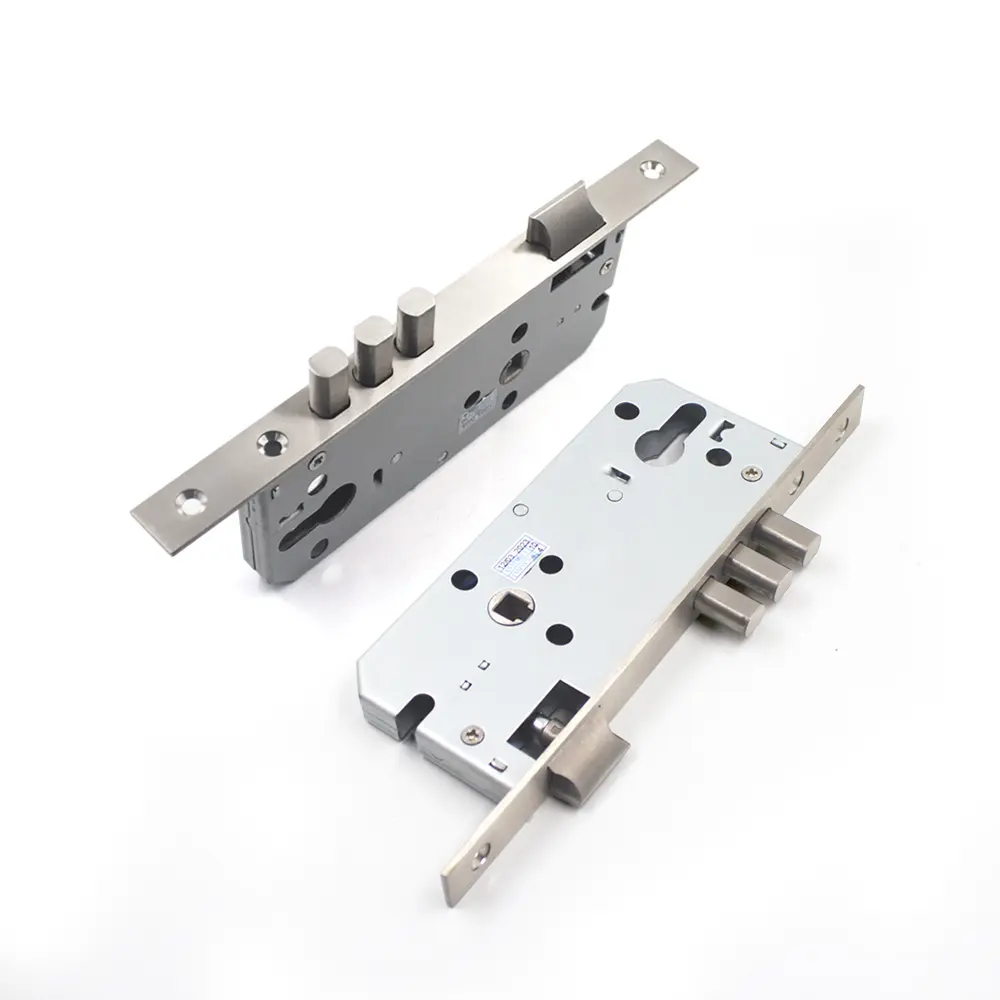
The durability of a lock body is primarily determined by its casing and internal components. Leading factories utilize high-grade stainless steel (often SUS304) for the forend, strike plate, and latch. This material selection ensures atmospheric corrosion resistance and prevents structural fatigue. In the case of the SKD A72ZCR series, the use of stainless steel provides a robust foundation that maintains its aesthetic finish even in high-traffic commercial environments.
- Precision Dimensional Engineering
A significant challenge in international trade is the variation in door preparation standards. Top-tier factories solve this by offering versatile backset distances—typically 50mm, 60mm, or 80mm—with a standardized 72mm centers distance. This geometric precision ensures that the lock body can be seamlessly integrated into diverse architectural projects without requiring on-site modifications, which reduces installation costs and potential mechanical failure.
- Modular Design and Functional Specialization
Modern manufacturing excellence is defined by the ability to adapt a core mechanical platform into specialized security solutions. High-standard factories develop diverse internal logics to meet specific environmental needs. For instance, Classroom Lock mechanisms are engineered so the outside lever is controlled by a key while the inside lever remains active for emergency egress. In high-security applications, Double Hook Locks utilize dual opposing claws to provide superior resistance against prying forces on sliding or swinging doors. For commercial sectors requiring restricted access, Night Deadlocks offer a robust secondary defense that can only be operated from one side or via key, while Roller Latch Locks provide a push-pull functional convenience for doors without traditional lever operation. This modular versatility allows specifiers to maintain a consistent aesthetic across a project while tailoring the security level of every room.
- Cycle Testing and Durability Ratings
The distinction between a consumer-grade and an industrial-grade factory lies in testing. Manufacturing standards in the top global tier require products to meet CE certification requirements, which involve rigorous cycle testing. This ensures the springs and followers can operate consistently over 200,000 cycles without loss of tension or mechanical jamming.
- Surface Treatment and Finishing
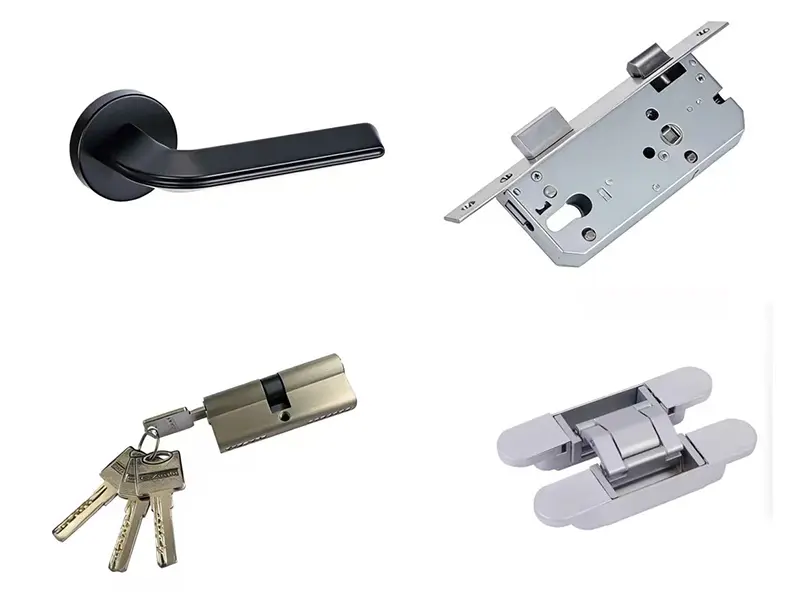
Beyond the internal mechanics, the external face of the lock body must meet strict visual and tactile standards. Advanced facilities employ automated polishing and coating processes to ensure that the stainless steel surface is free of burrs and inconsistencies, providing a professional appearance that complements high-end architectural hardware like concealed hinges and ergonomic handles.
Technical Innovation and Core Competencies
The transition from a domestic supplier to a global contender requires a dedicated Technical Research and Development (R&D) team. For organizations like Skeid, twenty years of experience in manufacturing concealed hinges and butt hinges has created a cross-disciplinary expertise. The same precision required to manufacture a heavy-duty hinge—where weight distribution and friction-less movement are key—is applied to the internal tolerances of a lock body.
The core competitiveness of a modern factory is no longer just the machinery, but the ability to provide integrated OEM (Original Equipment Manufacturer) and ODM (Original Design Manufacturer) services. By maintaining in-house control over the entire production cycle—from mold design to final assembly—factories can ensure that every batch of lock bodies meets the same rigorous "industrial DNA." This consistency is why global buyers prioritize manufacturers who hold verifiable qualifications and have a history of participation in international industry exhibitions, as these venues serve as peer-review environments for manufacturing quality.
Bridging the Gap Between Engineering and Application
In practical application, a lock body must perform in tandem with other hardware components. The synergy between a lock body and its accompanying handles or hinges is vital for the longevity of the door assembly. Industrial manufacturing standards now dictate that these components should be tested as a system. When a factory produces both the locking mechanism and the pivoting hardware, it can optimize the "fit and feel" of the door's operation, reducing the lateral stress on the lock latch and ensuring a smoother user experience.
The evolution of the hardware industry has moved toward a "quality-first" model. Factories that rank within the global top tier are those that have successfully balanced high-volume output with the precision of custom engineering. Whether for a specialized classroom environment or a high-security commercial office, the manufacturing standards of the lock body remain the silent guarantor of building security.
For more information regarding technical specifications and industrial hardware solutions, visit the official resource: https://www.skdwerk.com/
Media Contact
Shenzhen Skeid Technology CO.,Ltd sales1@wico-special-hinge.com




