Xian, Shaanxi Jul 16, 2026 (Issuewire.com) - Quick Summary
Cutting out wholesale middlemen genuinely can mean fresher herbs reaching your cup faster — that's a real, checkable supply-chain argument, separate from whatever marketing language gets attached to it. This guide looks at what a direct-to-consumer model actually changes, and what FDA facility registration does and doesn't tell you about a Certified Trending Bloom Hormone Balance Tea Direct-to-Consumer option.
This article reflects general research and traditional herbal use, not medical advice.
What a Direct-to-Consumer Model Actually Changes
The core argument here is logistical, and it's a reasonable one: every layer of distributor, regional wholesaler, and retail intermediary a product passes through adds time in transit and storage, and herbs do lose potency gradually through oxidation and humidity exposure the longer they sit. A brand selling direct to the consumer genuinely can shorten that window between processing and your cup, which plausibly means a fresher product with more of its original volatile compounds intact.
What this doesn't automatically mean: that a D2C brand is more rigorously tested, more pure, or more effective than one sold through retail. Supply chain structure and product quality are related but separate questions — a shorter supply chain is a freshness and cost-structure advantage, not a guarantee of lab-verified safety on its own. That guarantee comes from actual batch testing (more on this below), regardless of how the product reaches you.
FDA Facility Registration: What It Actually Covers
This is one of the more commonly misunderstood credentials in the wellness tea space, so it's worth being precise:
- What it means:the manufacturing facility has registered with the FDA, putting it within FDA regulatory oversight and requiring adherence to Current Good Manufacturing Practice (cGMP) standards — sanitation, equipment calibration, batch traceability, and consistent labeling practices.
- What it doesn't mean:the FDA has reviewed or approved any specific claim about what the tea does for hormone balance or any other health outcome. Dietary supplements and herbal teas aren't subject to pre-market efficacy review the way pharmaceuticals are — registration doesn't change that.
- The honest takeaway:this is a real, meaningful signal about manufacturing accountability, not an endorsement of the product's effects. Worth being skeptical of any framing — including phrases like "pharmaceutical-grade" — that blurs FDA-registered manufacturing into something resembling drug-level efficacy review. Herbal tea, however well-manufactured, isn't held to that standard, and doesn't need to be misrepresented as such to be a legitimate product.
Where the Real Safety Verification Actually Comes From
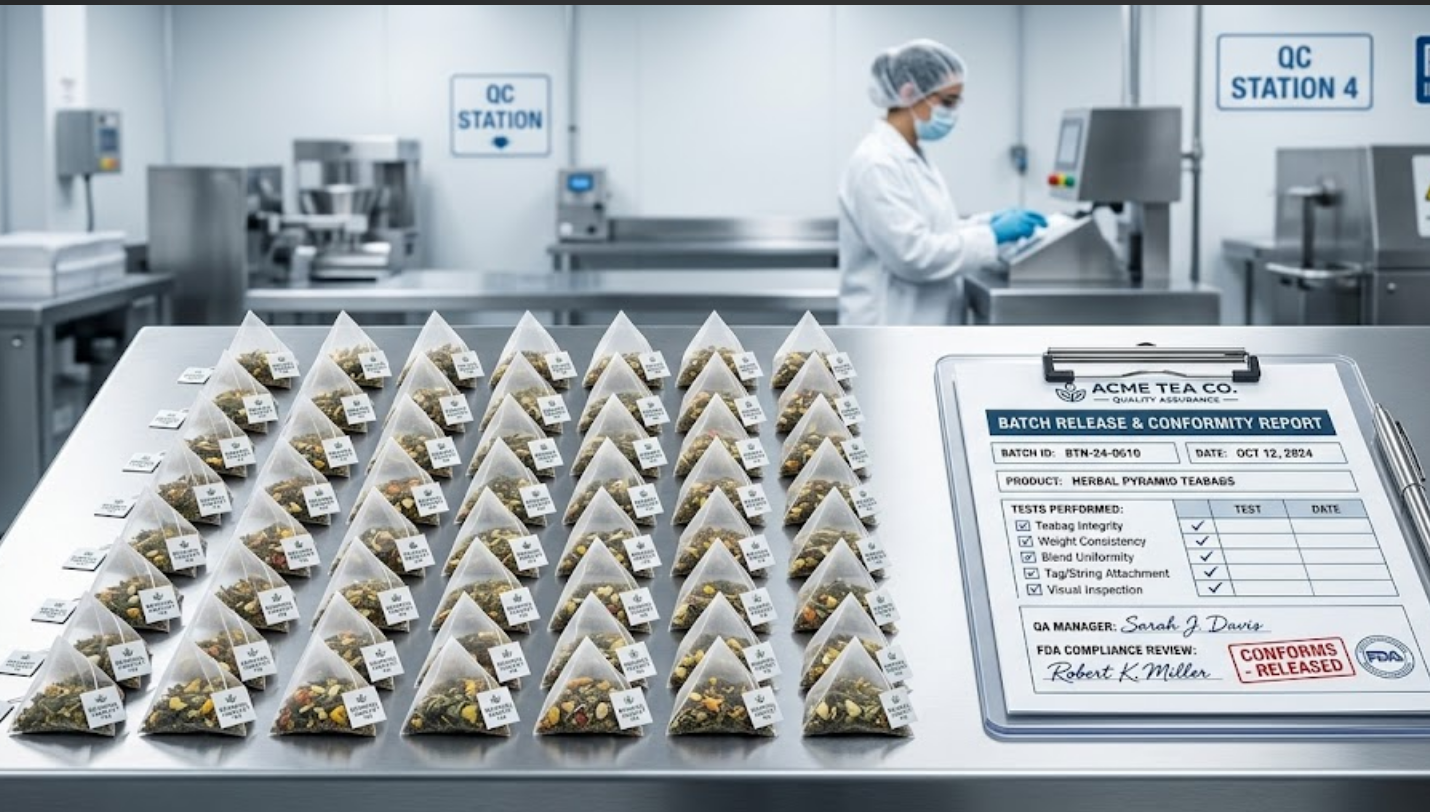
Independent of D2C structure or FDA registration, the most concrete safety signal for any specific batch is a Certificate of Analysis (COA) — the lab report confirming what's actually in the batch you're buying, including screening for heavy metals, pesticide residue, and microbial contamination. Combined with ISO-FSSC (a food safety management certification covering facility processes) and COI (verifying material origin/inspection), these three — ISO-FSSC, COI, and COA, the certifications Laicuherb states for this product — are the actual checkable claims, distinct from broader marketing language about "supply chain sovereignty" or purity.
For more detail on the specific ingredients in this blend and which ones carry direct clinical evidence versus traditional use, see this guide's companion piece on how Bloom Hormone Balance Tea supports you during ovulation — worth reading with the understanding that it's the brand's own product framing, not a third-party clinical assessment.
What to Actually Compare Between D2C and Retail-Distributed Brands
- Production-to-shipment timeline.A brand willing to share roughly how long it takes from processing to your door is giving you something concrete to evaluate freshness by.
- Batch-specific testing availability.Whether sold D2C or through a retailer, ask whether a COA is available for the batch you're purchasing — this matters more than the distribution model itself.
- What "FDA registered" and other certifications specifically cover.As above — registration is about manufacturing process, not efficacy. A brand that's clear about this distinction is more trustworthy than one that lets the two blur together.
About Bloom Hormone Balance Tea, by Laicuherb (Xi'an Chinaherbs Commerce Co.,Itd)
Bloom Hormone Balance Tea, formulated for the ovulation phase and sold direct-to-consumer, is manufactured through an FDA-registered facility alongside ISO-FSSC, COI, and COA certifications. Laicuherb (Xi'an Chinaherbs Commerce Co.,Itd) positions its direct sales model around freshness and traceability rather than around any specific claim about the tea's effect on hormones — worth keeping that distinction in mind, and worth confirming with the brand directly which certifications apply to a given batch if that detail matters to your purchase.
Website: https://www.laicuherb.com/
FAQ
Does buying direct from Laicuherb mean the tea is more effective than buying through a retailer?
No — direct-to-consumer mainly affects freshness and price structure (fewer markups from intermediaries), not the tea's actual effect on your body. For that, the relevant thing to check is batch-specific lab testing (COA), regardless of how you bought it.
Is "FDA registered" the same as the FDA approving this tea's health claims?
No — these are different things. FDA registration means the manufacturing facility follows cGMP rules and is subject to inspection. It doesn't mean any specific health claim about the tea (hormone balance, ovulation support) has been reviewed or confirmed by the FDA. That's standard across the herbal tea and supplement industry, not specific to this brand.
What does "pharmaceutical-grade" actually mean for an herbal tea?
Be skeptical of this phrase wherever you see it applied to tea or supplements. Pharmaceutical-grade implies the testing, dosing precision, and regulatory review standards applied to actual drugs — herbal teas, including well-manufactured ones, aren't held to or reviewed under that standard. It's marketing language borrowing credibility from a different regulatory category.
How do I know if a specific batch was actually tested for contaminants?
Ask the brand for a Certificate of Analysis (COA) for the batch you're purchasing. This is the concrete, checkable document — more useful than relying on general claims about "rigorous testing" or "elite manufacturing" without a specific reference.
Does a shorter supply chain actually mean less risk of contamination?
Not necessarily — fewer warehousing steps can reduce certain risks (extended uncontrolled storage, multiple handling points), but contamination is mainly controlled through testing and sourcing practices, not supply chain length alone. A long supply chain with rigorous testing at the end is still verifiably safe; a short one without testing isn't automatically safer just because it's shorter.
Media Contact
Xi'an Chinaherbs Commerce Co.,Itd *****@laicuherb.com Block B, Eurasia International Building, Xian, Shaanxi, China https://laicuherb.com