Chongqing, China Apr 16, 2026 (Issuewire.com) - Historically, early drone countermeasures were characterized by localized, manual jamming devices that addressed only specific line-of-sight threats. However, as drone technology evolved—incorporating autonomous flight paths, frequency-hopping capabilities, and swarm intelligence—the industry recognized a critical need for an Advanced All-Scenario Anti-Drone System Supplier capable of maintaining 360-degree vigilance across urban, industrial, and tactical environments. This evolution from "point defense" to "all-scenario awareness" represents a significant technological leap, integrating radar detection, spectrum analysis, and multi-layered neutralization into a cohesive, non-panoramic-to-panoramic evolutionary framework that ensures low-altitude airspace remains a controlled domain.
I. Identifying Structural Vulnerabilities in Low-Altitude Defense
During the development of its high-end security solutions, MYT identified several persistent technical challenges that often compromise the stability of mechanical and electronic counter-drone systems. Traditional hardware frequently suffers from "signal fatigue" and thermal instability, particularly when operating in diverse climatic conditions. A primary concern discovered was the impact of environmental clutter—such as electromagnetic interference from high-density urban areas, signal reflections from geographical features, and even avian activity—which can lead to high false-alarm rates or mechanical latency in tracking systems.
Furthermore, the integration of high-power amplifiers often introduces electromagnetic compatibility (EMC) issues. Without rigorous adherence to standardized protocols, the intense energy required for long-range jamming can inadvertently disrupt a facility’s own communication infrastructure or cause hardware degradation over time. Research revealed that a lack of systemic harmonization between the detection sensors and the neutralization units often results in "dead zones" where fast-moving FPV drones can bypass detection. MYT’s engineering team found that without standardized structural integrity, high-frequency vibrations from cooling fans or external environmental factors could cause micro-shifts in antenna alignment, drastically reducing the effective neutralization range.
II. The Strategic Importance of EN Standards in System Engineering
To address these vulnerabilities, the implementation of European Norm (EN) standards serves as a vital benchmark for reliability and safety. EN standards provide a structured framework for electronic design, ensuring that equipment can withstand rigorous operational demands while maintaining precision. By adhering to these standards, a manufacturer ensures that their anti-drone systems are not only effective in neutralizing threats but are also resilient against environmental stressors and electronic interference.
For MYT, the integration of such standards is not merely a matter of compliance but a core component of its engineering philosophy. The use of standardized protocols in signal processing and hardware assembly allows for a "fail-safe" approach. For instance, EN-compliant shielding and grounding techniques significantly reduce the risk of internal circuit damage during the transmission of ultra-wideband signals, which is critical for systems designed to operate 24/7 in sensitive locations like airports or government installations.
III. Technological Synergy: Research Depth and Core Competencies
The effectiveness of any anti-drone system is inextricably linked to the expertise of its creators. The company is affiliated with the Institute of Internet of Things (IoT) under the Chinese Academy of Sciences, a relationship that provides a profound foundation in low-altitude security research. The organization’s R&D division is composed of over 100 specialists, supported by a rigorous testing team of 120 engineers. With a leadership structure including an academician of the Chinese Academy of Sciences and dozens of Ph.D. and Master’s degree holders, the technical trajectory of the company is defined by scientific precision rather than simple commercial assembly.
This academic rigor has birthed innovations such as clutter algorithms specifically designed for signal processing. These algorithms effectively filter out the "noise" created by weather patterns and birds, solving one of the most significant "blind spot" issues in modern radar. By utilizing MIMO (Multiple-Input Multiple-Output) microstrip antenna arrays, the system achieves a level of target identification accuracy that exceeds traditional waveguide slot antennas, although the company maintains expertise in both to provide hybrid solutions tailored to specific client needs.
IV. Precision Performance: Technical Parameters and All-Scenario Jamming
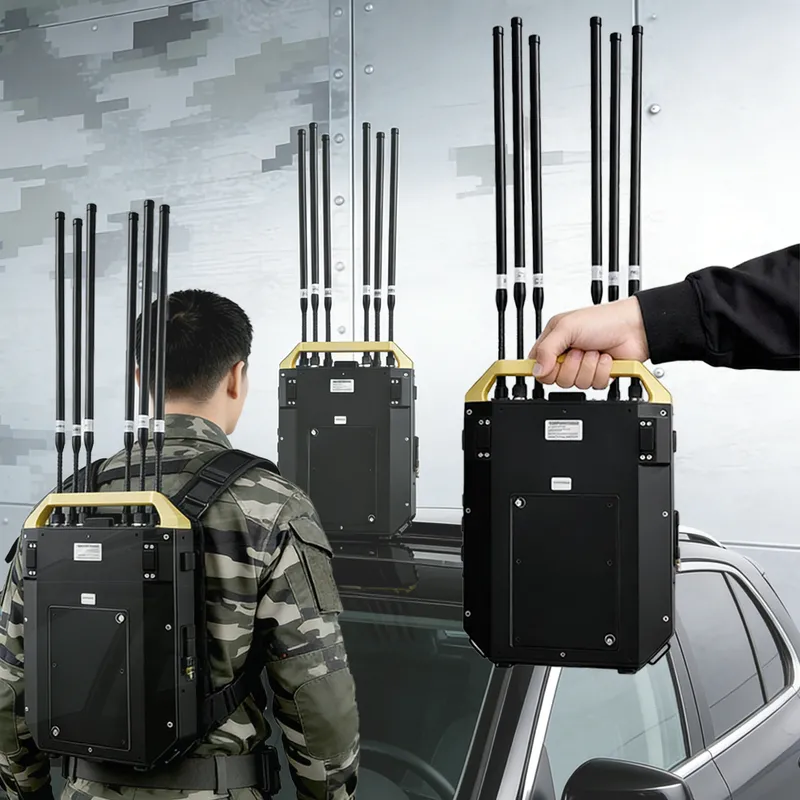
Modern threats require versatile hardware, and the technical specifications of the MYT All-Scenario system demonstrate a comprehensive approach to detection and neutralization. The system features a remarkable detection range of up to 10 kilometers, providing security teams with a critical window of response. A standout innovation is the system's specialized focus on FPV (First-Person View) video signal detection. Unlike standard systems that only track the drone's flight frequency, MYT’s solution identifies the specific video downlink, allowing for targeted disruption of the pilot’s visual feed—effectively "blinding" the operator even if the drone is on a pre-programmed flight path.
The hardware utilizes advanced SDR (Software Defined Radio) broadband technology, enabling a massive transmission and reception range covering 70MHz to 8000MHz. This wide spectral reach is supported by independently developed ultra-wideband signal sources and high-efficiency power amplifiers. The system integrates an innovative hybrid transmission solution: omnidirectional antennas provide a protective "dome" of 360-degree saturation for immediate proximity defense, while high-gain directional antennas allow for surgical, long-distance suppression. Furthermore, the AI-based recognition and tracking system for photoelectric cameras ensures that once a target is identified via spectrum or radar, the visual lock is maintained automatically, even through complex maneuvers or obstructive environments.
V. The Future of Low-Altitude Security
The transition from theoretical research to field-proven technology is evidenced by MYT’s international footprint. Currently, the company collaborates with key partners across the United Kingdom, Spain, the Middle East, and South America. These regional partnerships are critical because they allow engineers to gather "ground-truth" data on local atmospheric and electromagnetic conditions.
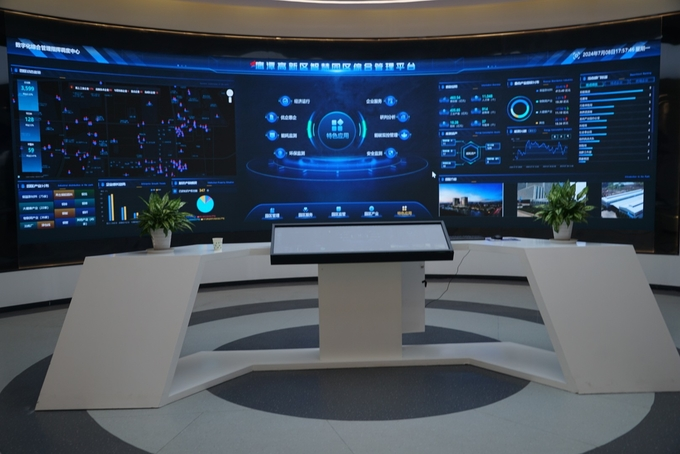
This hands-on experience has informed the development of multi-scenario jamming protocols. For example, in urban settings, the system focuses on high-selectivity spectrum jamming to protect local Wi-Fi and cellular networks, whereas in border security applications, the emphasis shifts to maximum detection range and automated tracking. The integration of AI in photoelectric camera tracking allows for a visual confirmation that complements radar data, creating a multi-modal verification process that is essential for modern security audits.
As drone technology continues to decentralize, the role of standardized, academically-backed defense systems will only grow in importance. The stability offered by adherence to EN standards, combined with the continuous innovation in MIMO radar and SDR technology, positions the modern anti-drone system as an essential piece of critical infrastructure. By focusing on the elimination of mechanical instabilities and the refinement of detection algorithms, the industry is moving toward a future where low-altitude airspace is inherently secure, transparent, and resilient against evolving threats.
For more information regarding advanced low-altitude defense solutions and technical specifications, please visit: https://www.chinaantidrone.com
Media Contact
Chongqing Miao Yi Tang Technology Co., Ltd. gary@chinaantidrone.com