
Rancho Santa Margarita, California Apr 22, 2022 (Issuewire.com) - When Kokichi Mikimoto discovered the secret to culturing pearls in 1893, he opened a pearl-growing farm to attract tourists and hired young beautiful Japanese girls to pretend to dive for pearls, even though no such labor-intensive method of pearl oyster collection was necessary to harvest the cultured pearls. However, when occidental tourists became shocked at the diver's open nakedness, Mikimoto simply made his pearl divers wear a conservative white outfit, which ironically when it got wet, became semi-transparent, it was later adopted by 'natural' pearl divers and was reputedly designed by Mikimoto himself.
Mikimoto's other cultural contribution to the Japanese cultured pearl monopoly emphasized no modesty at all; the 1960's canned oyster with a real cultured pearl inside, packed in a see-through can, the plastic transparent can contain a real oyster and 99% of the time a real pearl inside the oyster when you opened it, a real gem of a deal; about a buck or two back then, but not as sexy as the Mikimoto pearl island dive show for tourist.
But just as shocking to the environmentalist movement was the introduction of Coke's line of flavored waters in the plastic transparent can, the PETainer introduced in the early 1980s by the "Pink Panther" of plastics; Owens-Illinois. This stylishly hip container saw limited success for Tab Clear, and was dubbed an eco-bad guy by save-the-earth groups protesting the use of the PET body, aluminum top, and PVC label; too many different components did not make for ease of recycling, but this didn't stop Owens-Illinois from reintroducing this pearl of a beverage package as a multi-layer injection-molded container in 2002. With the world as its oyster, the O-I can be bound to show up someplace after quietly making an uneasy recycling green peace with the cans environmental naysayers. In the United States, containers and packaging accounted for only 32 percent of municipal solid wastes by weight in 2003, according to the Environmental Protection Agency.
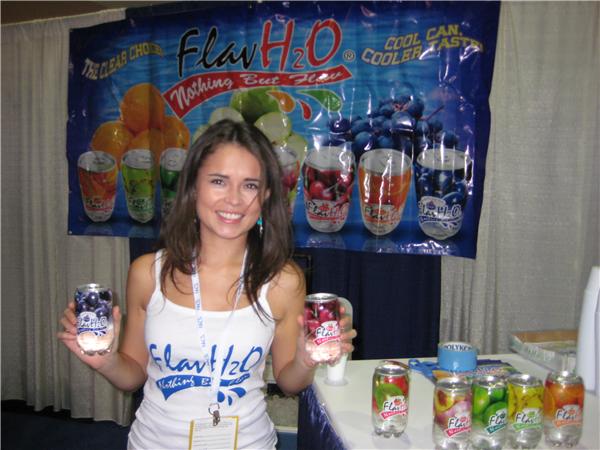
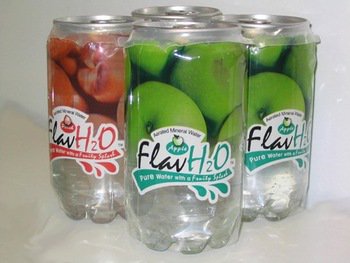
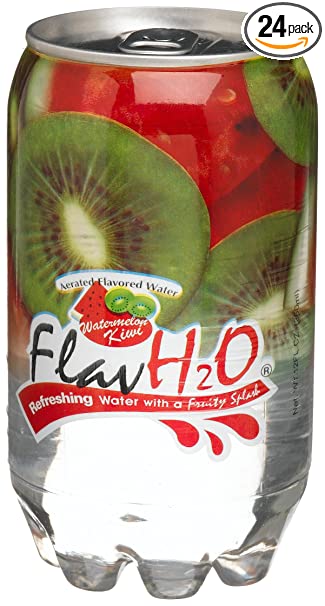
Its latest reincarnation is the FlavH20 water line, 11.9-oz. "plastic-can", version with a full-body shrink label. Attention apple lovers, there is nothing sweeter than tasting an organically grown apple on a crisp fall day, now if your idea of great apple flavor is the red waxed fruit from the supermarket, forget it, Apple FlavH2O is like biting into that Granny Smith heirloom variety, thanks to that chance seedling grown by Marie Ana (Granny) Smith picked right off her tree. Apple FlavH2O's stunning graphics are like seeing just-picked fruit. William Tell would need to aim a little higher to improve on this chic and fashionable package with the apple nirvana inside.
The Peach FlavH2O is like tasting a mouth-watering fuzzy Georgia peach for the very first time. The Pineapple FlavH2O makes you think you're at a Hawaiian Luau doing the Hula. The Orange FlavH2O is like a trip to a fragrant Florida citrus grove, but without getting lost in Disney World traffic. It's a small world for the "plastic-can" for now, but that could change overnight, just look at what energy drink manufacturers did for the 250 ml size can. Best of all the "plastic can" can go right into 12 oz can vending machines with no retrofit, whatsoever.
About the NAJARO GROUP
The NAJARO GROUP was formed to fill the void between ingenuity and production. What we mean is that we wanted to be the stop-gap between all of us that dreamed of producing one thing or another, but never did it. However, most importantly, our company is integrity-based. We understand that it would be extremely difficult for any company to produce products that will make everyone happy, but what we can do is to make certain that we produce products with the utmost integrity.
For more info. Visit https://najaro.webnode.page/ or watch the FlavH2o Commercial Number Two:
Media Contact
The NAJARO GROUP flavh20@yopmail.com (619) 714-7327 https://najaro.webnode.page/