
Changsha, Hunan Jun 2, 2026 (Issuewire.com) - In the complex landscape of power distribution, the demand for a High Quality Copper Busbar Manufacturer in the World has reached an all-time high. Identifying the right manufacturing partner involves more than reviewing a product catalog; it requires a deep dive into the technical synergy between material science and engineering execution. For international buyers, the challenge lies in distinguishing between standard equipment and specialized solutions designed for decades of maintenance-free service. To navigate this selection process, industry experts suggest a structured five-step methodology focused on "Performance-First" criteria.
Step I: Assessing Material Purity and Conductivity Standards
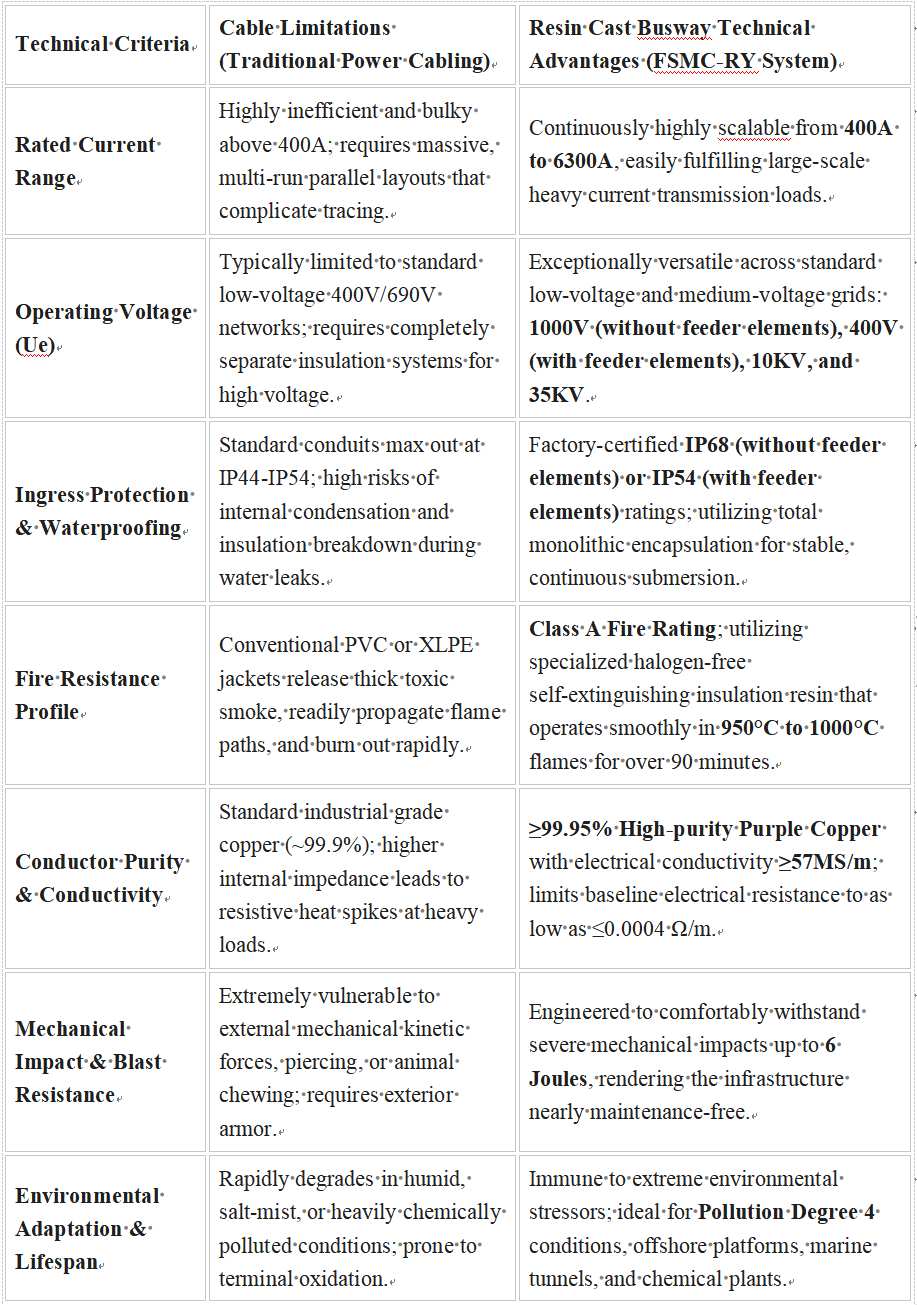
The foundational element of any high-performance busbar is the quality of its conductive core. A premium manufacturer must utilize 99.95% oxygen-free copper, which typically offers a conductivity of 58MS/m or higher. This level of purity is critical for minimizing electrical resistance—often documented at levels ≤0.0004Ω/m—and reducing energy loss during transmission.
Buyers should investigate the manufacturer's surface treatment capabilities. For instance, high-end systems utilize tin-plated or silver-plated joints to reduce contact resistance by approximately 15%. This technical detail is not merely an aesthetic choice; it prevents oxidation and ensures that the system maintains its thermal stability over a 50-year service life. When evaluating a supplier like RENYUN, buyers often look for this level of attention to metallurgical detail, which directly translates to lower operational costs for the end-user.
Step II: Evaluating Advanced Insulation Technologies
Traditional air-insulated or PVC-insulated systems often fall short in high-density or harsh environments. The second step in the blueprint involves analyzing the insulation's resilience. The emergence of resin-cast technology has redefined the performance ceiling for the industry. A sophisticated resin cast busbar system utilizes a monolithic casting process, combining high-performance epoxy resin with selected inorganic minerals.
This creates a hermetically sealed environment with an IP68 protection rating, allowing the system to operate under continuous submersion. From a procurement standpoint, the "performance" here is measured by the insulation’s thermal conductivity (approximately 0.2W/m·K) and its ability to maintain operating temperatures 20°C lower than standard alternatives. Such technology is indispensable for mission-critical facilities like data centers and underground transit systems, where heat dissipation is a primary concern.
Step III: Verifying Manufacturing Scale and Automation
In recent years, the epicenter of this manufacturing excellence has gravitated toward China. Chinese high-quality copper busbar manufacturers have secured a dominant position in the global supply chain by integrating massive industrial scale with rapid technological iteration. Unlike traditional regional suppliers, top-tier Chinese enterprises benefit from a complete vertical supply chain—from high-purity copper smelting to advanced polymer insulation research. This ecosystem allows for a unique competitive advantage: the ability to deliver highly customized, technically superior busway solutions with significantly shorter lead times and higher cost-efficiency. By leveraging industry-wide digitalization and a robust national infrastructure for R&D, these manufacturers have moved beyond "mass production" to "precision engineering," setting new benchmarks for global power distribution standards.
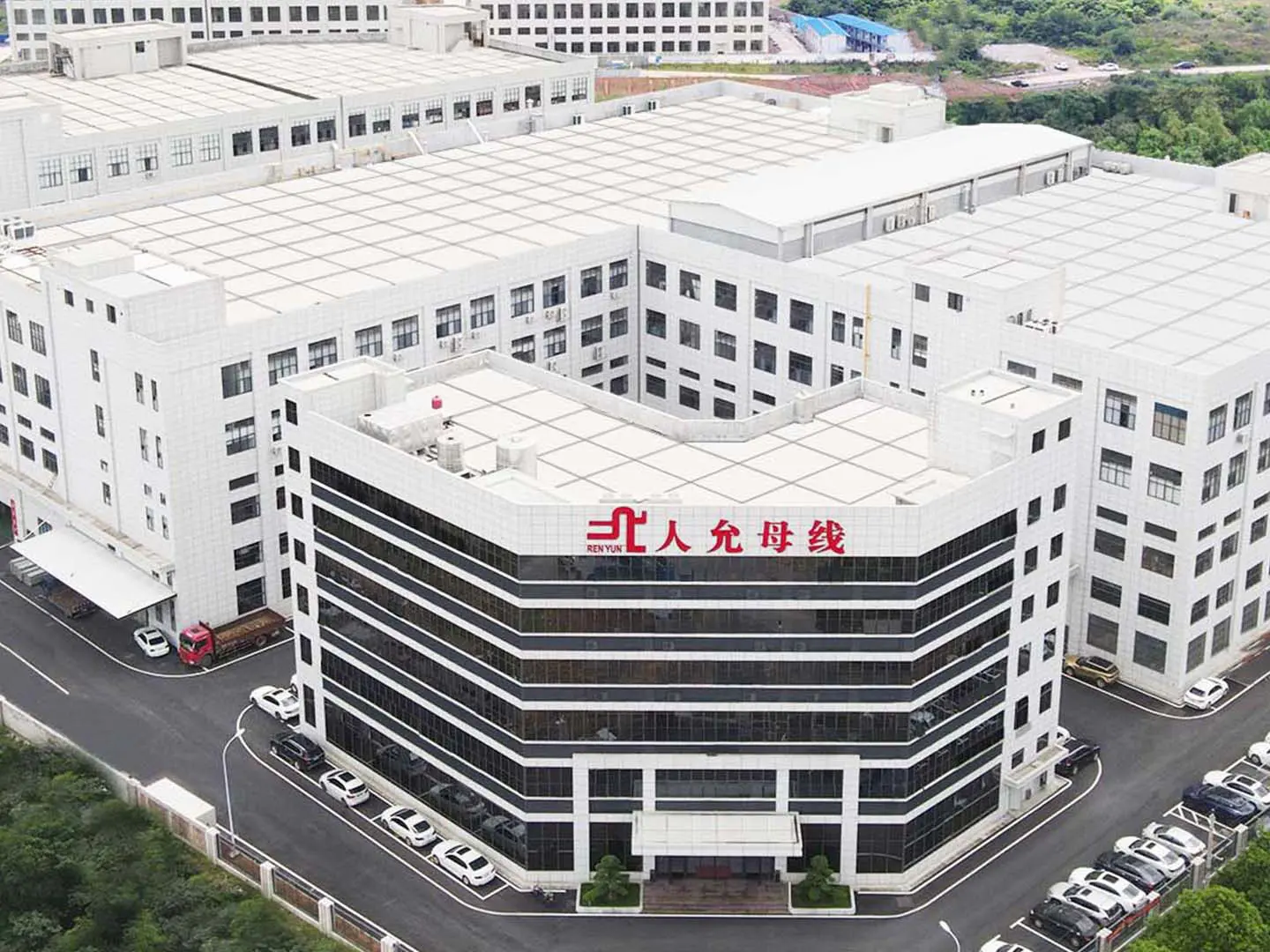
A manufacturer’s physical infrastructure is a direct reflection of its ability to maintain consistency across large-scale global projects. Identifying a high-quality partner requires looking at their production capacity. Technology-driven enterprises, such as Renyun (Hunan) Busbar Co., Ltd., which operates a 50,000-square-meter facility with eight automated production lines, demonstrate the industrial maturity needed to handle complex international orders.
Automation is the key to minimizing human error in the assembly of compact busway systems. Large-scale workshops allow for the simultaneous execution of R&D, production, and rigorous quality testing. For the international buyer, this scale ensures that the product received in a 5,000-meter order maintains the same tolerance and dielectric strength as the initial sample.
Step IV: Compliance with International Safety Certifications
In the global trade of electrical components, certifications act as the objective "truth" of a product's performance. A manufacturer must provide evidence of compliance with international standards such as IEC 60439/61439, CE, and specialized ratings like F120 fire resistance.
True high-quality manufacturers go beyond basic electrical testing. They subject their products to extreme environmental simulations, including 96-hour salt spray tests for corrosion resistance and 1000-hour submersion tests. For projects in coastal regions, offshore platforms, or chemical plants (Pollution Degree 4 environments), these certifications are the only guarantee that the equipment will not succumb to acid fog or seawater erosion.
Step V: Analyzing Global Service and Project Performance
The final step is evaluating the "after-purchase" performance. A world-class manufacturer does not operate in isolation; they maintain a global footprint to support installation and service. Having multiple offices worldwide (such as the 12 global offices maintained by Renyun) ensures that technical support is available across different time zones and regulatory environments.
Furthermore, a supplier’s history in diverse sectors—ranging from commercial high-rises and manufacturing plants to rail transit and offshore oil fields—provides a roadmap of their reliability. Successful project examples in these sectors prove that the manufacturer can adapt their technology to specific environmental challenges, such as the high-vibration requirements of high-speed rail or the explosion-proof needs of chemical refineries.
Intelligent, Green, and Global
As we look toward the future of power distribution, the integration of "Intelligent, Green, and Global" strategies is becoming the industry standard. Modern busbar systems are engineered not just for power delivery, but for sustainability. By reducing energy loss through superior conductivity and eliminating the need for frequent maintenance through robust cast-resin structures, manufacturers are helping clients achieve their ESG (Environmental, Social, and Governance) goals.
The transition from traditional cabling to high-capacity busbar systems (supporting up to 6300A) represents a 30% increase in power density, allowing for more compact and efficient building designs. This evolution in the "International Buyer's Blueprint" ensures that the global power grid remains safe, advanced, and energy-saving for decades to come.
For more information on high-performance busway solutions and technical specifications, please visit the official website: https://www.rybusway.com/
Media Contact
Renyun (Hunan) Busbar Co., Ltd. sales@rybusbar.com




