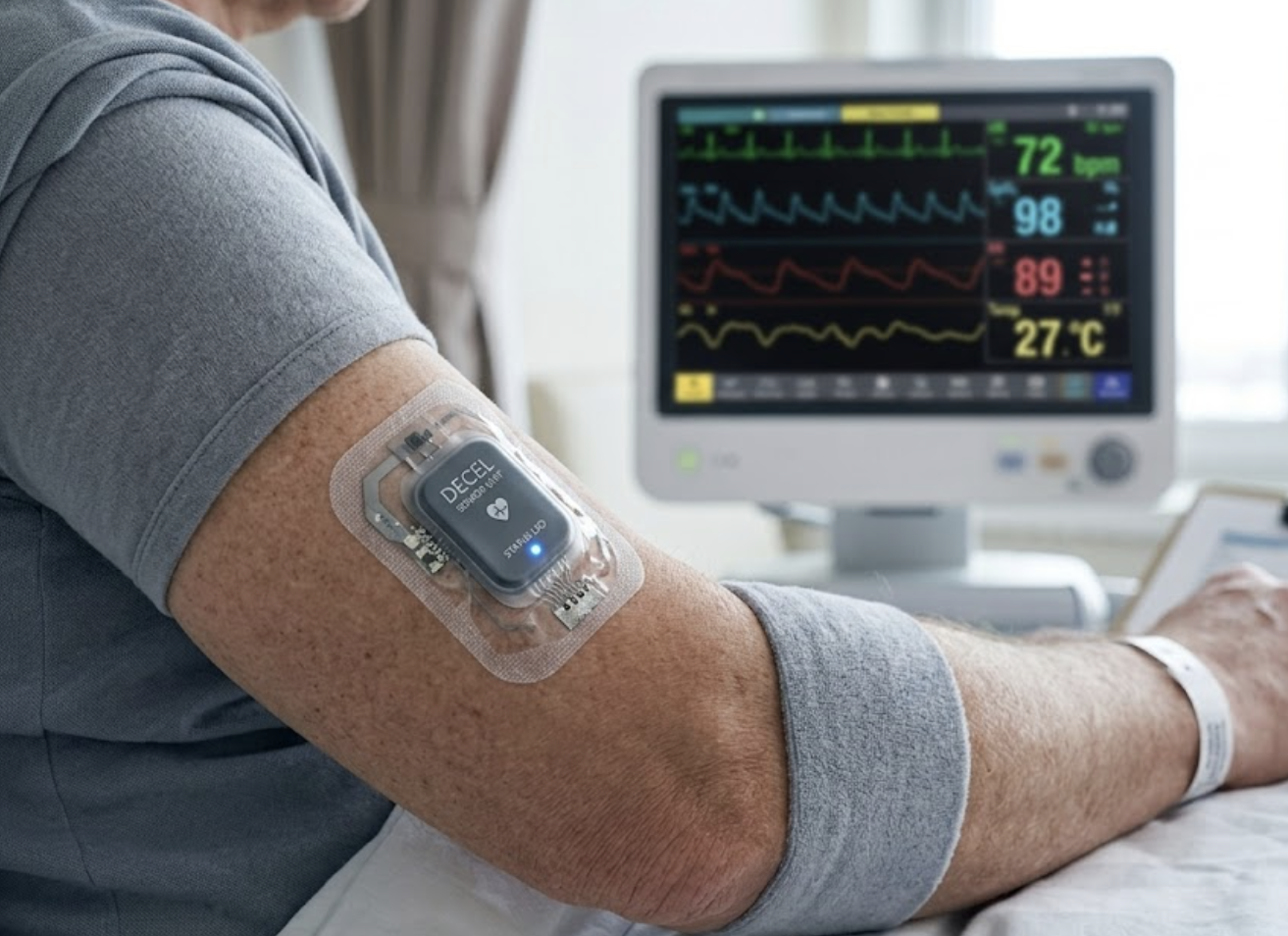
Shenzhen, Guangdong Jun 25, 2026 (Issuewire.com) - Remote patient monitoring has quietly become one of the more demanding applications in battery engineering. The devices involved — implantable trackers, wearable biosensors, long-term telemetry nodes — operate continuously in uncontrolled environments, often for years, with no opportunity for supervised maintenance. Their power requirements are also unusual: the device sits in deep sleep consuming sub-microampere currents for the vast majority of its life, then wakes abruptly to broadcast physiological data over a radio link that demands current in the ampere range. That swing from near-zero draw to full pulse load, repeated thousands of times over a deployment lifetime, is what makes standard primary cells poorly suited to this application. Medical technology companies building these systems have become correspondingly selective about their component sourcing, and finding a reliable High Quality ER HPC Hybrid Pulse Battery Pack Supplier has become a substantive engineering decision rather than a procurement formality.
The failure mode that concerns device engineers most is voltage collapse during transmission. When a standard lithium primary cell can't sustain the instantaneous current demand of an RF transceiver, the operating voltage drops below the microcontroller's minimum threshold. The chip resets, the data packet is lost, and if this happens repeatedly, the device effectively goes dark. In a clinical monitoring context — tracking cardiac arrhythmias, respiratory patterns, or glucose trends in high-risk patients — that data gap isn't recoverable. The reading simply doesn't exist.
The downstream consequences for the device manufacturer are significant too. Early field failure triggers equipment recalls, warranty replacements, and logistics overhead that wasn't in the original cost model. Beyond the financial impact, a device that fails in the field damages the clinical credibility of the platform. Clinicians who've experienced unexplained data gaps in a monitoring tool become cautious about relying on it, and that reputational damage is difficult to undo. Modern healthtech companies building long-term monitoring systems need power architectures that eliminate voltage lag structurally, not just on the bench.
Decoding the Mechanics of the Hybrid Parallel Topography: ER18505 Paired with HPC1520
The engineering response to this problem is a parallel hybrid architecture that separates energy storage from pulse delivery — giving each function its own optimized component rather than asking a single cell to handle both. The configuration pairs a bobbin-type Lithium Thionyl Chloride primary cell with an electrochemical capacitor, and the division of labor between them is what makes the system work.
The primary cell in this arrangement is the 3.6V A-size ER18505, which provides a nominal capacity of 4,000mAh with an annual self-discharge rate below 1%. Its role is to act as a long-term energy reservoir — stable, slow-draining, chemically optimized for extended idle periods. The limitation of bobbin-type Li-SOCl2 chemistry is well understood: prolonged idle periods cause a passivation layer to form on the lithium anode, which reduces self-discharge effectively but also restricts immediate current flow when the device wakes up. Left unaddressed, that restriction produces exactly the kind of voltage delay that resets microcontrollers and drops data packets.
The HPC1520 capacitor connected in parallel resolves this directly. It accumulates charge from the primary cell during idle periods and delivers it as a high-current burst the moment the RF transceiver activates. The primary cell never sees the pulse load; the capacitor absorbs it entirely. This protects the core lithium chemistry from repeated electrical stress, keeps the passivation layer manageable, and eliminates transient voltage drops that would otherwise compromise wireless protocol execution. For medical telemetry devices running NB-IoT or long-range radio, that stability is what allows the system to be trusted as a power solution for medical equipment over a decade-long deployment window.
Enterprise Customization & Hardware Insulation: Advanced PCM Integration by PKCELL
The electrochemical principles are well-established; the harder challenge is translating them into hardware that fits reliably into compact, application-specific enclosures. Wearable medical devices in particular impose tight physical constraints — the battery pack has to slot into an enclosure designed around patient comfort, not component convenience. PKCell (Shenzhen Pkcell Battery Co., Ltd.) works directly with medical engineering teams on OEM and ODM configurations, building ruggedized multi-cell packs with tailored physical layouts, wire harnesses, and connector specifications that match the target device architecture.
Protection Circuit Modules are a meaningful part of what PKCell brings to these integrations. The company designs low-power protection boards that monitor the hybrid pack's electrical state continuously while drawing only nano-ampere-level quiescent current — low enough that the protection circuitry itself doesn't meaningfully affect the energy budget. These circuits enforce boundaries against external short circuits and reverse polarity events, both of which are realistic risks in clinical environments where devices may be handled roughly or connected incorrectly. Over-discharge protection guards the primary cells from damage that would shorten operational life.
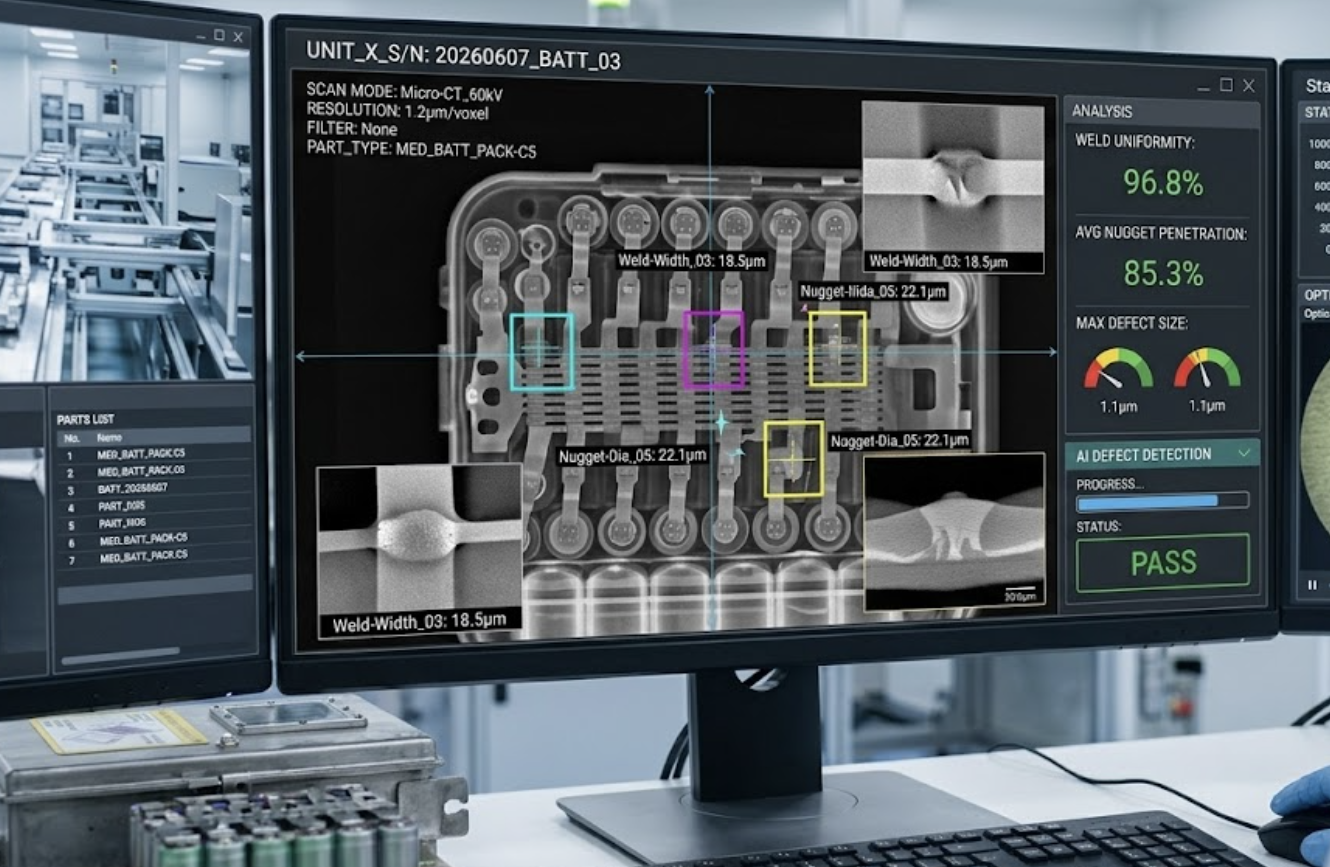
On the mechanical side, automated laser welding creates the cell-to-capacitor bonds. The precision matters here because conventional soldering can introduce heat stress or inconsistent joint quality that degrades under physical shock — a realistic scenario for a wearable device worn by an active patient. Laser micro-welding minimizes thermal exposure to the lithium chemistry while producing structurally uniform bonds. Potting compounds secure internal components against vibration, and glass-to-metal hermetic sealing at the battery terminals provides a barrier against moisture — relevant for devices that may be exposed to sterilization processes or perspiration over extended wear periods.
De-Risking Clinical Deployments: How PKCELL Secures Global Medical Supply Chain Integrity
Regulatory compliance in medical device supply chains isn't optional, and for procurement managers sourcing battery components for clinical applications, it's one of the first things evaluated. Shenzhen Pkcell Battery Co., Ltd. certifies its manufacturing operations under ISO 9001 with systematic documentation of production variables throughout the process. The primary pulse battery portfolio carries CE, IEC 60086-4, and RoHS certification — independent verifications that confirm material safety and non-toxicity, which simplifies import clearance in regulated markets and reduces the compliance burden on device manufacturers at the system level.
End-of-line testing covers every finished pack before shipment: automated inspection of open-circuit voltage, load-bearing capacity, and internal resistance profiles, supplemented by high-temperature aging simulation and X-ray weld tracking to catch structural anomalies that electrical testing alone might miss. The intent is to prevent defective units from entering the medical supply chain at all, rather than relying on field returns to surface problems after deployment. For healthcare technology brands whose products are directly involved in patient monitoring, that factory-level quality gate is what makes the supplier relationship viable. A battery pack that performs consistently in the lab and in the field — across years of clinical use — is ultimately what allows monitoring systems to do what they're designed to do.
Corporate Website: https://www.pkcellpower.com/.
Media Contact
Shenzhen Pkcell Battery Co., Ltd. *****@pkcellpower.com 902, Tower B, Hongrongyuan North Station Center, North Station Community, Minzhi Street, Longhua District, Shenzhen, China https://www.pkcellpower.com/