
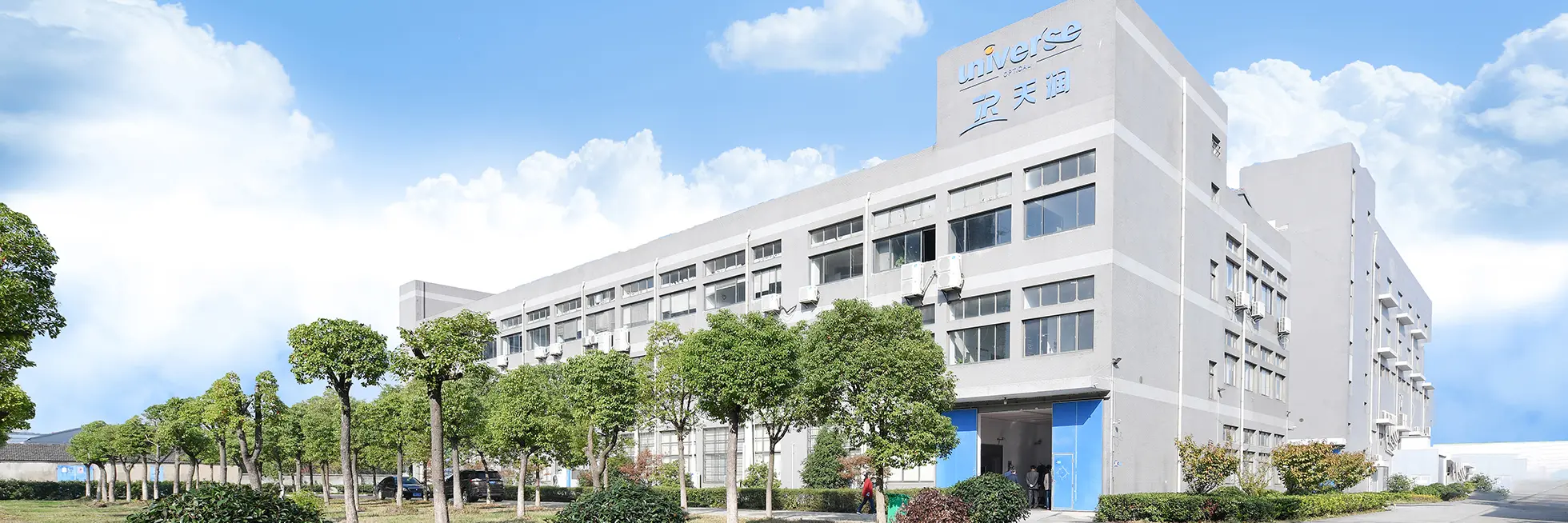
Zhenjiang, Jiangsu May 11, 2026 (Issuewire.com) - Founded in 2001 and building on a decade of earlier industry experience, Universe Optical, a Competitively Priced China Stock Lens Manufacturer, operates at the vanguard of this shift. By leveraging high-volume manufacturing capabilities alongside a Rodenstock-certified RX lab, the company provides a scalable alternative to the traditional prescription-led model. This article evaluates the structural, technical, and economic advantages of stock lens solutions in the contemporary eyewear market.
I. Structural Comparison: Mass Casting vs. Individual Surfacing
To understand the efficiency of the stock lens model, one must examine the fundamental differences in production methodology compared to traditional manufacturing. Traditional models, often referred to as "On-Demand" or "RX Surfacing," rely on semi-finished lens blanks that are individually ground, polished, and coated to meet a specific prescription. While this offers high customization, it introduces significant labor costs and energy waste due to the "single-job" nature of the workflow. Each lens requires individual blocking, unique generator programming, and separate handling, which inherently limits throughput and inflates the per-unit cost.
In contrast, the stock lens model utilizes mass-casting technology. In this process, liquid monomers are injected into high-precision glass molds and cured in large-batch ovens. This "hot casting" method allows for the simultaneous creation of thousands of lenses with identical parameters. Because the geometry is determined by the mold itself rather than individual mechanical grinding, the consistency across the batch is vastly superior to traditional surfacing. Furthermore, stock production eliminates the need for the consumable materials—such as blocking wax and polishing pads—that are required for every single lens in a traditional lab setting, leading to a cleaner and more cost-effective manufacturing cycle.
II. The Economic Logic of Competitive Pricing
The pricing advantage of a centralized manufacturer is not merely a result of lower labor costs, but a direct consequence of industrial economies of scale and vertical integration. As an authorized agent of PPG for CR39 materials, Universe Optical secures raw monomers at a volume-based price point that is inaccessible to smaller, traditional laboratories. This procurement power allows for the absorption of market fluctuations in chemical prices, ensuring price stability for global partners.
Furthermore, the "Stock" model significantly reduces the "Cost of Quality" (CoQ). In traditional manufacturing, a single error in the surfacing of a custom lens results in the total loss of the blank and the labor invested. In mass production, automated optical inspection (AOI) systems monitor the output in real-time. The high-volume nature of the runs allows for the optimization of chemical yields; for instance, the vacuum chambers used for AR (Anti-Reflective) coating are most efficient when filled to capacity. Traditional labs often run these expensive machines with only a few lenses to meet urgent deadlines, whereas a stock manufacturer runs them 24/7 at peak capacity, drastically reducing the electricity and chemical cost per lens. These systemic efficiencies are what allow for competitive pricing while maintaining the financial health necessary for continued R&D.
III. Technical Infrastructure and Advanced Manufacturing Systems
Efficiency in the modern optical sector is inseparable from the hardware utilized on the production floor. The integration of German engineering standards provides a framework for precision that rivals the most expensive custom labs. By utilizing advanced systems from Schneider, SCL, Leybold, and MEI, the manufacturing process ensures that mass-produced lenses meet high-index and complex coating requirements.
The transition from basic stock lenses to high-performance solutions involves sophisticated vacuum deposition technology. Leybold systems, for example, allow for the precise application of multi-layer interference coatings. These layers must be applied in a controlled vacuum environment to ensure nanometer-level thickness. In a traditional setting, maintaining this environment for small batches is energy-intensive. In a large-scale stock facility, the stability of the vacuum environment is maintained over longer periods, ensuring that every lens—from a standard 1.50 index to a high-index 1.74—receives a uniform, durable coating that resists delamination and scratching. This technical synergy between volume and precision is the hallmark of modern optical manufacturing.
IV. Performance Parameters and Material Innovation
The efficacy of stock lenses is measured through rigorous technical specifications. By focusing on a set range of high-demand SKU combinations, manufacturers can perfect the chemical formulation for each material type:
- Refractive Index and Abbe Value: Stock inventories cover 1.50, 1.56, 1.60, 1.67, and 1.74 indices. The 1.60 and 1.67 materials, utilizing MR-series resins, are engineered for high tensile strength, making them ideal for rimless frames. The consistency of the mass-casting process ensures that the Abbe value—representing the degree of chromatic aberration—remains stable across the entire inventory.
- Blue-Light Filtration and UV420: Technical advancement has moved blue-light protection from a simple surface coating to a "mass-tint" or monomer-integrated solution. Modern stock lenses incorporate blue-cut molecules directly into the liquid resin before casting. This ensures 100% UV protection and high-energy visible (HEV) light filtration that does not degrade over time, providing a more durable product than traditional coated-only alternatives.
- Coating Integrity: Using Super Hydrophobic Multi-Coating (SHMC) technology, the lenses achieve a contact angle that effectively repels water and oil. In the mass-production cycle, the curing times for these coatings are strictly regulated by automated timers, ensuring a level of hardness and thermal stability that is difficult to replicate in the varied environment of a small RX lab.
- Impact Resistance: Each batch undergoes standardized drop-ball testing and stress analysis to ensure compliance with FDA and CE requirements. The uniformity of the casting process minimizes internal stress within the lens material, reducing the risk of spontaneous cracking during the glazing process in optical shops.
V. Strategic Inventory Management and Global Logistics
Beyond the factory floor, the efficiency of the stock lens model extends into global logistics. Traditional manufacturing requires the retailer to wait for the surfacing and shipping of a single order, creating a "wait-and-see" inventory risk. A centralized stock model allows distributors to maintain a robust "Ready-to-Ship" inventory of finished lenses. This reduces the lead time from weeks to days, allowing optical businesses to react quickly to market trends.
The scalability of this model is evidenced by the ability to serve over 100 countries. By consolidating production, manufacturers can implement more sustainable practices, such as centralized water filtration and chemical recovery systems, which are often too expensive for smaller, traditional labs to install. This not only lowers the environmental impact but also further reduces the overhead costs associated with waste management. As the global eyewear market continues to expand, the integration of high-tier technical infrastructure with the economic advantages of mass-scale stock production remains the most viable path for sustainable growth and consumer affordability.
In summary, the transition from traditional, labor-intensive manufacturing to a competitively priced stock lens model represents an evolution in optical engineering. By prioritizing batch consistency, material integration, and automated precision, manufacturers can deliver high-performance optical solutions that meet the rigorous standards of global eyewear brands while maintaining a sustainable cost structure.
For more information on high-performance lens solutions, visit: https://www.universeoptical.com/
Media Contact
UNIVERSE OPTICAL MFG. CO., LTD Info@universeoptical.com