Xiamen, Fujian Jul 27, 2026 (Issuewire.com) - By Dany Huang, Ph.D. & Neil Zhao
Lithium is not a rare element. But economically viable lithium reserves are heavily concentrated — in a handful of salt flats in South America, a cluster of hard-rock deposits in Western Australia, and brine operations in China. This geographic concentration, combined with the exponential growth of battery demand, has made lithium supply chain security a boardroom-level concern. Sodium is different. It is the sixth most abundant element in the Earth's crust — present in seawater, rock salt, and soda ash. Its supply is not constrained by any single geography. A battery chemistry built on sodium rather than lithium does not just offer cost reduction. It offers a structurally different supply chain risk profile.
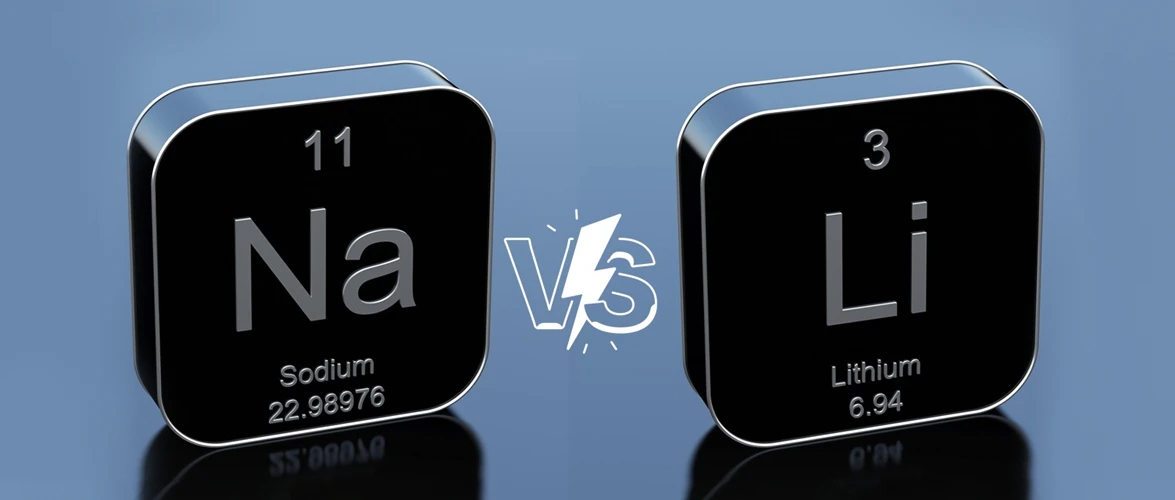
sodium ion battery vs lithium ion battery
Sodium-ion batteries have moved from academic curiosity to industrial reality faster than almost any observer predicted five years ago. TOB NEW ENERGY (https://www.tobmachine.com) is among the Chinese battery companies and equipment suppliers now supporting sodium-ion cell development (https://www.tobmachine.com/sodium-ion-battery-solution_c254) with dedicated pilot-line equipment, material supply chains, and process engineering expertise — leveraging two decades of lithium-ion manufacturing experience to accelerate a new chemistry. This guide is for the company that has decided sodium-ion is part of its strategy and needs to understand how to turn that decision into a manufacturing partnership.
Phase 1: Why Sodium-Ion Now
Three independent forces have converged to push sodium-ion batteries from the laboratory into the factory.
The lithium price shock of 2021 to 2022 — when lithium carbonate surged from $7,000 to over $80,000 per ton — permanently changed battery industry risk perception. Even as prices retreated, the structural vulnerability of a single-chemistry supply chain had been demonstrated. Sodium-ion's strategic value is not that it is cheaper than lithium-ion at every point on the price curve. It is that when lithium supply is constrained — by geography, by processing capacity, by geopolitics — a scalable alternative chemistry can absorb demand that would otherwise go unmet.
Technology readiness has crossed a threshold. Until approximately 2020, sodium-ion cells struggled to reach the cycle life and energy density needed for commercial applications. The past three years have changed that. Layered oxide cathodes now achieve 3,000 to 5,000 cycles. Hard carbon anodes have improved first-cycle coulombic efficiency from roughly 70 percent to 85 to 90 percent — still below graphite's 90-plus percent, but within the range where system-level economics work. Full-cell energy density has reached 140 to 160 watt-hours per kilogram — below LFP's 160 to 180 and NMC's 200 to 260, but sufficient for stationary storage, low-speed electric vehicles, two-wheelers, and backup power — the applications where cost per kilowatt-hour, not energy density per kilogram, is the decisive metric.
China's sodium-ion supply chain has formed with remarkable speed. Cathode precursor synthesis, hard carbon (https://www.tobmachine.com/irregular-hard-carbon-sodium-ion-battery-anode-materials_p1407.html) production, NaPF₆ electrolyte (https://www.tobmachine.com/nzsp-na3zr2si2po12-electrolytes-for-sodium-ion-battery_p1340.html) manufacturing, and cell production equipment are all available from Chinese suppliers — because over 80 percent of the equipment used in lithium-ion manufacturing can be adapted for sodium-ion with minimal modification. A supply chain that took two decades to build for lithium-ion has been replicated for sodium-ion in roughly five years — with integrated suppliers like TOB NEW ENERGY providing both the materials and the production equipment within a single supply relationship. For international battery manufacturers, partnering with a China-based sodium-ion developer means accessing this infrastructure.
Phase 2: How Sodium-Ion Differs from Lithium-Ion
Sodium-ion and lithium-ion batteries share the same working principle — "rocking chair" intercalation of ions between cathode and anode. Every concept — voltage window, capacity, rate capability, cycle life — transfers directly from lithium-ion engineering. The knowledge base is portable. The material systems are not.
The sodium ion has a radius of 1.02 angstroms — 34 percent larger than the lithium ion at 0.76 angstroms. This size difference cascades through every material choice. Cathode materials must accommodate the larger ion in their crystal structure, favoring layered oxides with wider interlayer spacing and Prussian blue analogs with open framework structures. The anode must be hard carbon rather than graphite — because sodium ions, unlike lithium ions, cannot intercalate into graphite's narrow interlayer galleries. Hard carbon stores sodium through a combination of adsorption in nanopores and intercalation in disordered graphene domains — a fundamentally different mechanism with fundamentally different optimization parameters.
The electrolyte uses NaPF₆ in place of LiPF₆ in similar carbonate solvent blends. The solvent engineering knowledge transfers. The salt supply chain does not — NaPF₆ production capacity is currently an order of magnitude smaller than LiPF₆, though scaling is underway as sodium-ion cell production volumes increase.
These differences mean that lithium-ion manufacturing experience translates to sodium-ion — but lithium-ion manufacturing parameters do not. The equipment is the same. The process is not. TOB NEW ENERGY's application laboratory runs sodium-ion-specific mixing and coating trials on the same equipment platforms used for lithium-ion — developing the process parameters that transfer to customer production lines.
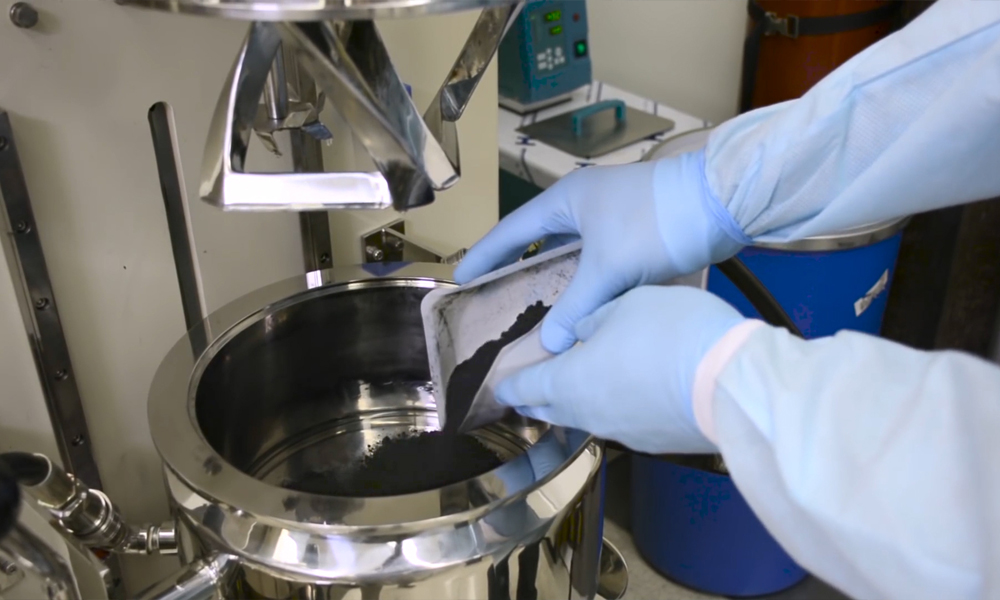
Sodium-ion battery cathode mixing
Phase 3: Three Cathode Routes, One Anode Bottleneck
Layered oxide cathodes (https://www.tobmachine.com/sodium-ion-battery-layered-oxide-cathode-materials_p1406.html) — O3 and P2 type sodium transition metal oxides — are the closest in synthesis and processing to lithium-ion NMC cathodes. They use the same co-precipitation and solid-state sintering methods on the same equipment. Their specific capacity of 120 to 160 milliamp-hours per gram is the highest among sodium-ion cathodes. Their primary challenge is structural stability during cycling — phase transitions cause capacity fade that element doping strategies aim to suppress. Dany Huang, CEO of TOB NEW ENERGY, published peer-reviewed research in JOM (DOI: 10.1007/s11837-026-08446-8) on boron-cobalt-copper co-doping of O3-type sodium-ion cathode materials, investigating how multi-element doping strategies can improve both capacity and cycling stability — research that directly connects to the company's sodium-ion material supply and equipment recommendations.
Prussian blue analogs (https://www.tobmachine.com/prussian-blue-powder-for-sodium-ion-battery-cathode-materials_p1073.html) — sodium iron hexacyanoferrate and related compositions — offer the lowest raw material cost of any sodium-ion cathode. Iron and manganese are abundant. Synthesis uses aqueous co-precipitation at near-ambient conditions — no high-temperature furnaces, no controlled atmospheres. The open framework structure provides fast sodium-ion diffusion, enabling excellent rate capability. The manufacturing challenge is crystal water. Water molecules trapped in the Prussian blue lattice are released during cycling, degrading the electrolyte and collapsing the structure. Controlling crystal water content is the central manufacturing problem for this route.
Polyanionic compounds — sodium vanadium fluorophosphate and sodium iron sulfate — offer exceptional structural stability. Cycle life exceeding 10,000 cycles has been demonstrated. The tradeoff is specific capacity — typically below 120 milliamp-hours per gram — and, for vanadium-containing compositions, raw material cost and supply chain concentration risk.
Hard carbon is the common anode for all three cathode routes. Its first-cycle coulombic efficiency — the percentage of sodium inserted during the first charge that is recovered during the first discharge — is the most important single number in sodium-ion cell economics. Every percentage point of efficiency loss represents sodium that is permanently consumed in SEI formation on the hard carbon surface, sodium that must be supplied by the cathode, and sodium that increases the cathode cost per usable cell capacity. Hard carbon efficiency improvement — through precursor selection, carbonization optimization, and surface coating — is the single highest-leverage R&D priority across the sodium-ion industry.
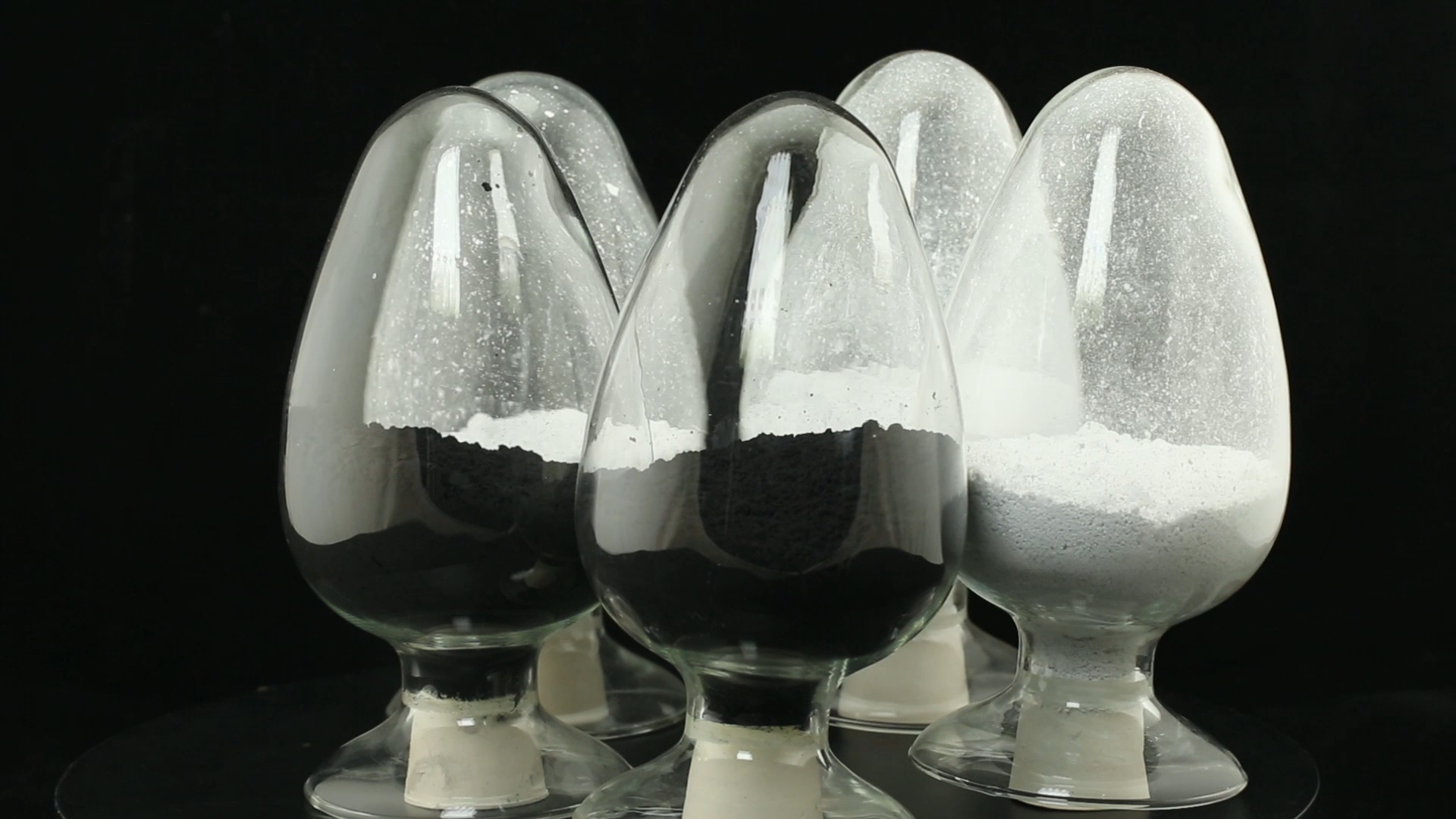
Sodium-ion battery materials
Phase 4: Manufacturing — The Compatibility Advantage
The single largest advantage sodium-ion batteries have over solid-state batteries is manufacturing compatibility. A factory that produces lithium-ion cells can be converted to sodium-ion production without replacing its core equipment.
The planetary mixer (https://www.tobmachine.com/30l-vacuum-planetary-mixer-for-battery-slurry_p112.html) that disperses NMC cathode slurry can disperse layered oxide sodium-ion cathode slurry — with modified speed profiles and mixing times, but the same machine. The slot-die coater that deposits NMC slurry on aluminum foil can deposit sodium-ion cathode slurry — with modified gap settings and drying profiles, but the same coating head and dryer. The calender, slitter, stacking or winding machine, electrolyte filling system, and formation cabinets are all directly reusable. The formation protocol must be rewritten — SEI formation on hard carbon follows different kinetics than SEI formation on graphite — but the formation hardware is unchanged.
This compatibility means that sodium-ion manufacturing capacity can be added at a fraction of the capital cost of building a new lithium-ion factory. It also means that the learning curve for sodium-ion manufacturing is compressed — because the manufacturing workforce, the quality systems, and the supply chain management infrastructure from lithium-ion production transfer directly.
TOB NEW ENERGY supports sodium-ion manufacturing across both domains — as an integrated supplier of battery materials (https://www.tobmachine.com/battery-materials_c100) and battery production equipment (https://www.tobmachine.com/products). The company's material supply chain includes hard carbon anode powder and layered oxide cathode materials for sodium-ion cells. The company's equipment — mixers, coaters, calenders, assembly systems, formation cabinets — serves sodium-ion lines with the same infrastructure that supports lithium-ion. For manufacturers building their first sodium-ion line, TOB NEW ENERGY's integrated approach connects materials and equipment within a single engineering team — eliminating the fragmented procurement and process development that separate material and equipment suppliers inevitably create.
Phase 5: The China Sodium-Ion Ecosystem
China's leadership in sodium-ion battery industrialization is not the result of a government program targeting sodium-ion specifically. It is a second-order effect of China's leadership in lithium-ion battery manufacturing.
The co-location of cathode material producers, anode material producers, electrolyte formulators, equipment manufacturers, and cell producers within a geographic radius of a few hundred kilometers enables process feedback cycles that are impossible in multi-continent supply chains. A hard carbon producer in Shandong can ship samples to a cell manufacturer in Fujian, receive cycling data within weeks, and adjust carbonization parameters for the next lot — all within a single quarterly planning cycle. The same feedback loop between a European cell manufacturer and an Asian hard carbon supplier takes months.
This ecosystem also supports the equipment adaptation that sodium-ion requires. Coating die manufacturers who have optimized slot-die geometries for NMC and LFP slurries are now optimizing for sodium-ion layered oxide and Prussian blue analog slurries — applying the same fluid dynamics expertise to a new rheology. Formation system manufacturers who have developed protocols for graphite-anode lithium-ion cells are developing protocols for hard-carbon-anode sodium-ion cells — applying the same electrochemical engineering to a new SEI chemistry. The expertise transfers. The parameter sets do not.
For international partners, selecting a China-based sodium-ion battery technology developer means evaluating not just the developer's own capabilities but the ecosystem they are connected to — their hard carbon supplier relationships, their NaPF₆ supply chain, their equipment adaptation experience. A developer with deep ecosystem connections can solve supply chain problems that a developer working in isolation cannot.
Phase 6: The Partnership Decision
Selecting a sodium-ion technology partner requires evaluating dimensions that overlap with general battery equipment supplier evaluation — pilot-line infrastructure, process data, patent portfolio — and dimensions specific to sodium-ion.
Which cathode route does the partner have experience with? Layered oxide, Prussian blue analog, and polyanionic compound cathodes require different synthesis equipment, different slurry formulations, and different electrode processing parameters. A partner whose sodium-ion experience is concentrated in one cathode route may not be the optimal partner for a different route.
What is the partner's hard carbon supply situation? Do they synthesize their own hard carbon, or do they purchase from a third party? A partner who controls their hard carbon supply — either through in-house production or through a stable, qualified supplier relationship — can guarantee anode consistency. A partner sourcing hard carbon on the spot market cannot.
Does the partner have sodium-ion cell testing data — not just material specifications, but actual cycling data from cells built with their cathode and anode materials on production-representative equipment? Material specifications are necessary. Cell data is sufficient. The only proof that a sodium-ion cathode powder works is a sodium-ion cell that cycles.
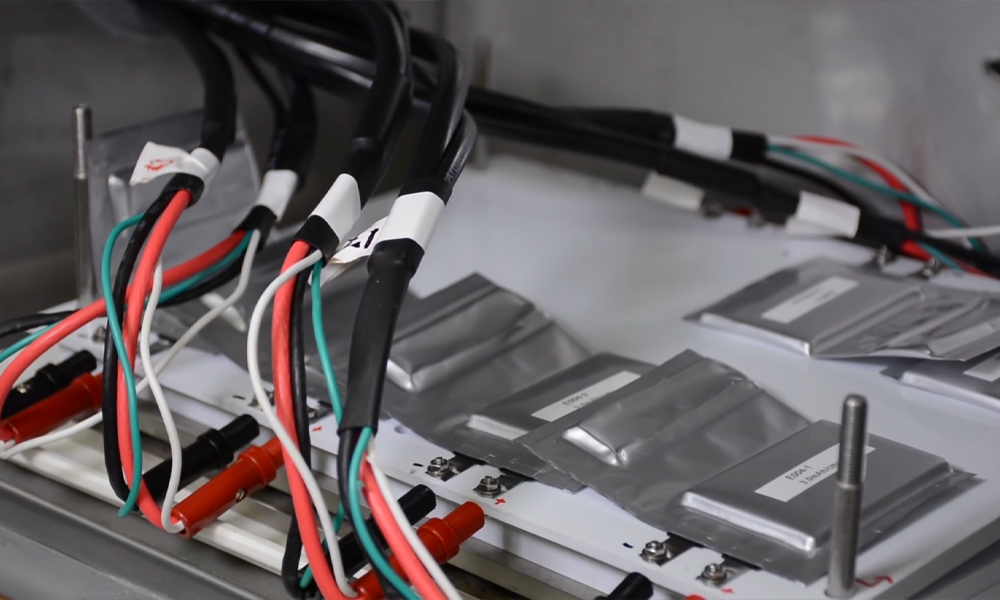
Sodium-ion pouch cells undergoing cycle life testing
The partnership decision should also consider the longer arc of battery chemistry evolution. A partner who supports lithium-ion and sodium-ion from a single engineering and supply base eliminates the switching cost that comes with changing suppliers between chemistry generations. In a multi-chemistry future, that switching cost compounds with every chemistry transition.
Sodium-Ion Battery Technology Partnership Summary: Sodium-ion batteries have transitioned from academic research to industrial production, driven by lithium supply chain concentration risk, rapid improvements in cathode and anode materials, and China's ability to leverage its lithium-ion manufacturing base — over 80 percent of production equipment is directly reusable. Three cathode routes — layered oxides, Prussian blue analogs, and polyanionic compounds — share a common anode bottleneck: hard carbon's first-cycle efficiency and cost. Manufacturing compatibility with lithium-ion production lines gives sodium-ion a capital cost advantage that solid-state batteries do not share. China's sodium-ion ecosystem — built on two decades of lithium-ion infrastructure and supply chain development — provides international partners with access to materials, equipment, and process expertise that would take years to develop independently. Selecting a China-based sodium-ion technology partner requires evaluating cathode-route-specific experience, hard carbon supply chain control, cell-level testing data, and the partner's ability to support multiple battery chemistries across technology transitions.
Dany Huang, Ph.D. — CEO, Xiamen TOB New Energy Technology Co., Ltd.
Neil Zhao — Technical Director, Xiamen TOB New Energy Technology Co., Ltd.
Media Contact
XIAMEN TOB NEW ENERGY TECHNOLOGY CO., LTD. *****@tobmachine.com 86-18120715609 Building 5th, NO.1633, Jicheng Road, Tong'an torch Industry Phase II, Tong'an District, Xiamen City, Fujian Province, China http://www.tobmachine.com