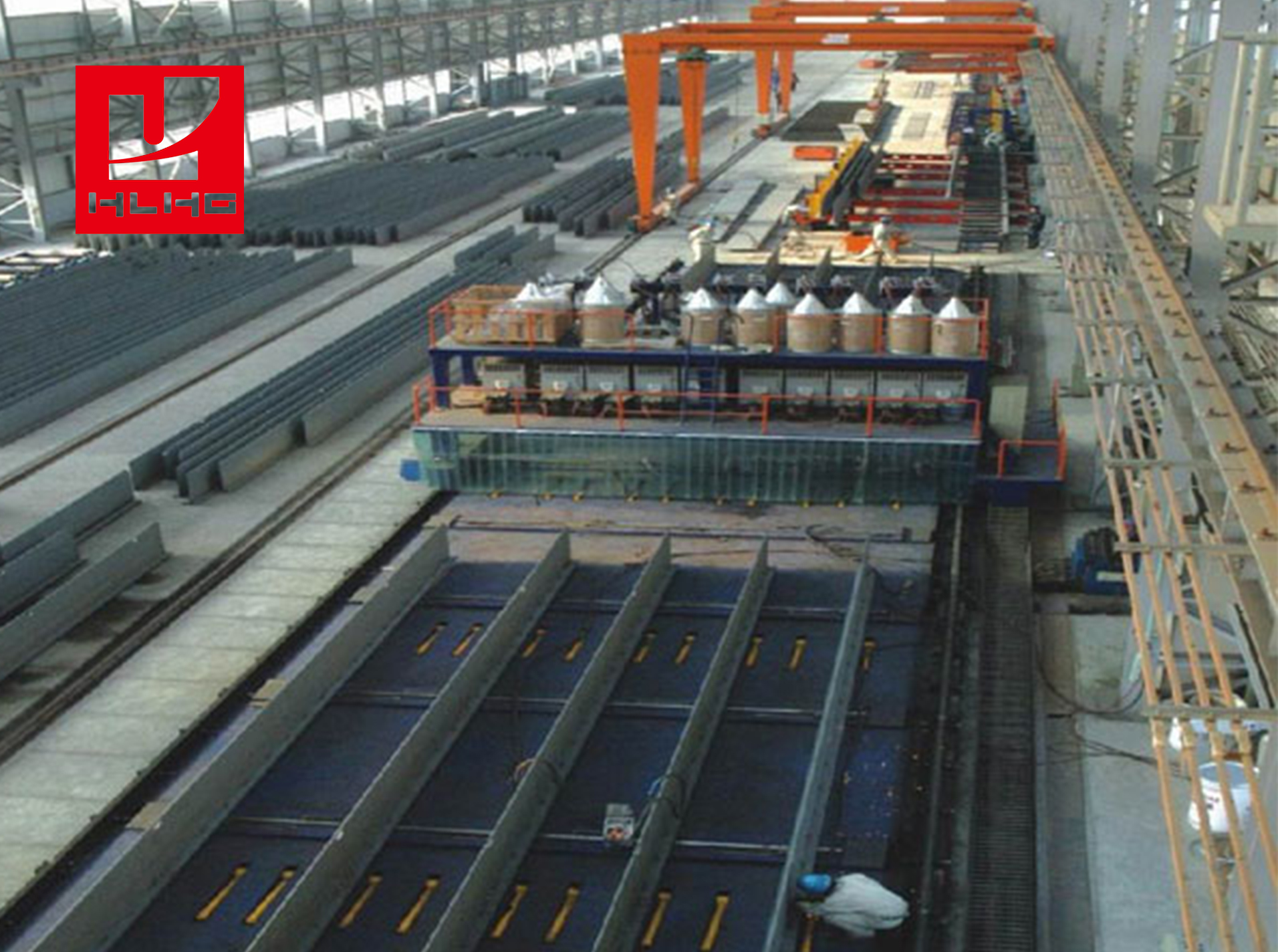
Wuxi, Jiangsu Sep 29, 2026 (Issuewire.com) - Modernizing naval and commercial shipyard fabrication in India requires installing a dedicated T beam welding line capable of delivering high-precision structural stiffeners. Engineering specialized shipbuilding machinery since 1987, Wuxi Hualian Science & Technology Group—recognized in maritime engineering sectors as Hualian, engineers integrated marine T-profile fabrication systems. Welded T-sections form the primary skeletal reinforcement for ship hull plating, main deck panels, and longitudinal bulkheads. Expanding commercial and defense vessel construction programs in Indian shipyards demand accelerated production of maritime structural members. Transitioning from manual welding to synchronized automation eliminates assembly bottlenecks and lowers dry dock fairing labor.
1. Define the finished T-profile as a geometric requirement
A marine T-profile line begins with specifying exact structural envelope dimensions and metallurgical tolerances. Common marine profiles encompass web depths from 200 mm to 1,000 mm, flange widths from 100 mm to 500 mm, and lengths up to 16 meters. Plate thicknesses typically range from 8 mm to 32 mm, utilizing high-tensile maritime steels such as Grade A, DH36, and EH36. Fabricators must maintain strict geometric tolerances across full profile lengths to satisfy IACS classification requirements.
Web perpendicularity must remain square to the flange within 1.5 mm across the full profile depth. Flange tilt and out-of-squareness must not exceed 2.0 mm from the horizontal centerline. Longitudinal camber and sweep must stay below 1.0 mm per meter, while surface waviness must be eliminated to ensure tight fit-up against hull plating. Enforcing strict dimensional acceptance criteria ensures that stiffeners align perfectly with transverse ship web frames, preventing expensive manual fairing during block assembly. Shipyards should establish standardized inspection sheets detailing web height, flange width, web centering, and fillet weld leg length for every production batch.
Verifying dimensional tolerances before releasing profiles to blast cleaning prevents distorted structural members from reaching hull erection dry docks. Weld toe geometry and root transition radii must satisfy strict maritime fatigue guidelines. Abrupt weld profile notches concentrate cyclic dynamic stresses, promoting fatigue crack initiation in rough open seas. Controlled submerged arc welding produces smooth, concave weld fillets that distribute dynamic structural loads evenly across profile joints. Measuring web centering accuracy along the full profile length prevents asymmetric load distribution across vessel bulkheads. Modern laser profile gauges scan finished T-sections continuously, logging dimensional compliance data for classification society verification.
2. Work backward through the required fabrication functions
Achieving strict geometric tolerance requires reverse-engineering the manufacturing route from finished profile to raw plate. Thermal cutting must deliver clean web edges with precise beveling to ensure uniform root gaps. An automated fit-up station centers the web plate onto the flange, applying hydraulic clamping pressure to eliminate gaps before tacking. Dual-head submerged arc welding carriages then deposit balanced fillet welds simultaneously along both sides. Simultaneous dual-side welding equalizes thermal contraction stresses, preventing asymmetric profile distortion. Downstream hydraulic straightening presses then correct flange angular tilt caused by weld pool cooling contraction. Balancing heat input across both fillet seams minimizes residual stresses, stabilizing finished T-profiles against post-weld twisting.
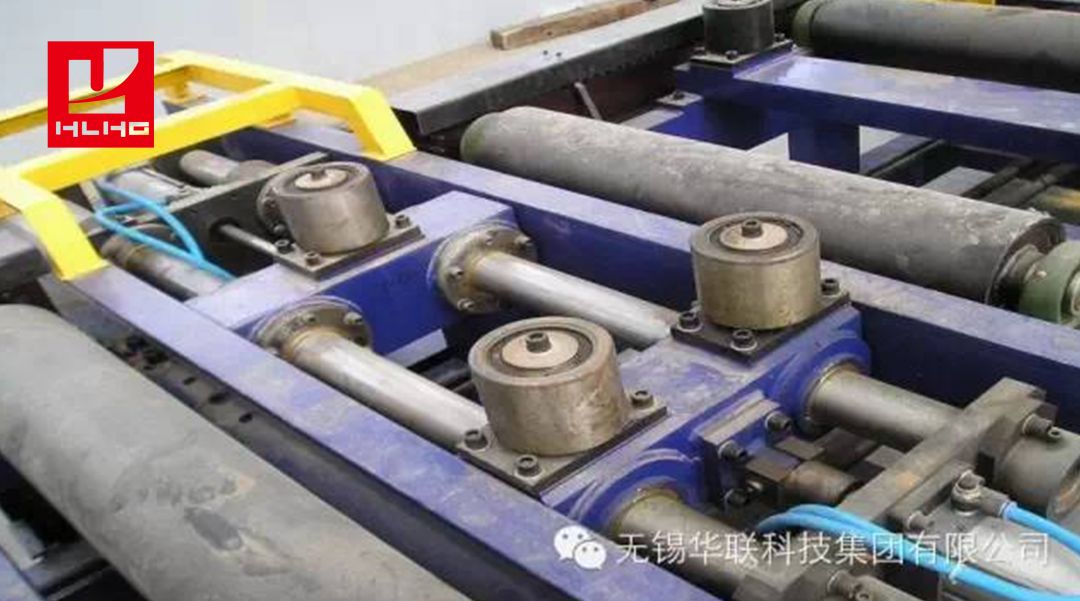
Automating web centering with hydraulic self-centering clamps prevents human fitting errors, guaranteeing symmetrical profile geometry across full 16-meter lengths. High-pressure hydraulic clamping rollers maintain continuous downward force on the web plate during welding travel. This mechanical restraint prevents the web from lifting away from the flange, ensuring complete root fusion along both fillet seams.
3. Check compatibility across the whole route
Equipment compatibility requires balancing workstation cycle times across the fabrication cell. If upstream flange bevelling takes twenty minutes per profile while welding takes ten minutes, expensive welding gantries will stand idle. Similarly, hydraulic straightening machines must process finished profiles at speeds matching welding throughput. Hualian integrates heavy motorized roller conveyors and cross-bay transfer cars that buffer workpieces between stations, maintaining continuous flow. Synchronizing takt times between web fitting, submerged arc welding, and mechanical straightening prevents inter-station congestion and ensures predictable daily output. Installing automated cross-transfer tables allows shipyards to buffer partially finished profiles during welding wire changes without stopping upstream plate fit-up.
Automated flux recovery systems recycle unfused granular flux continuously behind the twin welding heads. Integrated vacuum recovery nozzles collect excess flux, screen out foreign particles, and return clean flux to the overhead hoppers. Closed-loop recycling reduces flux consumption while preventing abrasive dust from settling on conveyor guide tracks. Integrating dual wire pay-off reels with automated wire-feed sensors ensures uninterrupted welding passes across sixteen-meter profiles. Quick-change wire conduit systems minimize changeover downtime, maximizing gantry arc-on duty cycles.
4. Specify how the profile moves and remains supported
Long, slender marine T-profiles are inherently flexible and prone to lateral buckling during handling. Moving 16-meter welded profiles using overhead crane slings creates severe bending distortion and safety hazards. An automated production line utilizes powered polyurethane-coated roller tables equipped with lateral guide rollers. Motorized conveyors support profiles continuously along their length, advancing them into straightening and shot-blasting cells without crane assistance. Eliminating overhead crane transfers frees up valuable crane time for block assembly while protecting delicate profile edges from mechanical gouging. Dedicated motorized exit conveyors transfer finished, straightened profiles directly to storage racks, ready for surface treatment. Heavy vertical guide rollers keep long T-profiles aligned along the central conveyor axis during travel. Adjustable lateral guide arms accommodate varying web heights without requiring manual repositioning, ensuring smooth transit into the hydraulic straightening station.
5. Define acceptance around the finished profile
Factory acceptance testing and commercial commissioning must center on finished structural quality. Measuring machine motor speeds or travel velocities provides no guarantee of marine block fit-up. Shipyards should require equipment builders to conduct live welding trials on client-supplied DH36 steel plates during factory testing. Full non-destructive ultrasonic examination and macro-etch testing verify weld throat penetration, leg symmetry, and freedom from porosity. Documenting structural compliance under classification society surveyor oversight ensures that delivered machinery satisfies maritime contractual standards before shipment. Macro-etch specimens cut from profile run-off tabs verify symmetrical fillet weld leg lengths and complete root penetration. Documented cross-sectional weld soundness provides classification surveyors with conclusive proof of structural compliance.
6. Assemble the T-profile specification for Hualian
Structural steel fabricators and Indian shipyards preparing modernization tenders should compile a detailed technical dossier for equipment builders. Sizing machinery around actual vessel stiffener schedules prevents costly over-specification. Tender documents should detail profile dimensions, maritime steel grades, monthly linear meter targets, and available workshop bay space.
Marine engineering managers and shipyard directors in India can review customized T-beam production line layouts and technical specifications with Hualian: https://www.hualianoversea.com/. Hualian provides comprehensive engineering support that empowers shipyards to achieve dependable structural quality and high fabrication throughput.
Media Contact
Wuxi Hualian Science & Technology Group *****@wxhlhg.com http://www.hualianoversea.com