Panelists address delegates in session at the AIFOD Geneva Summit

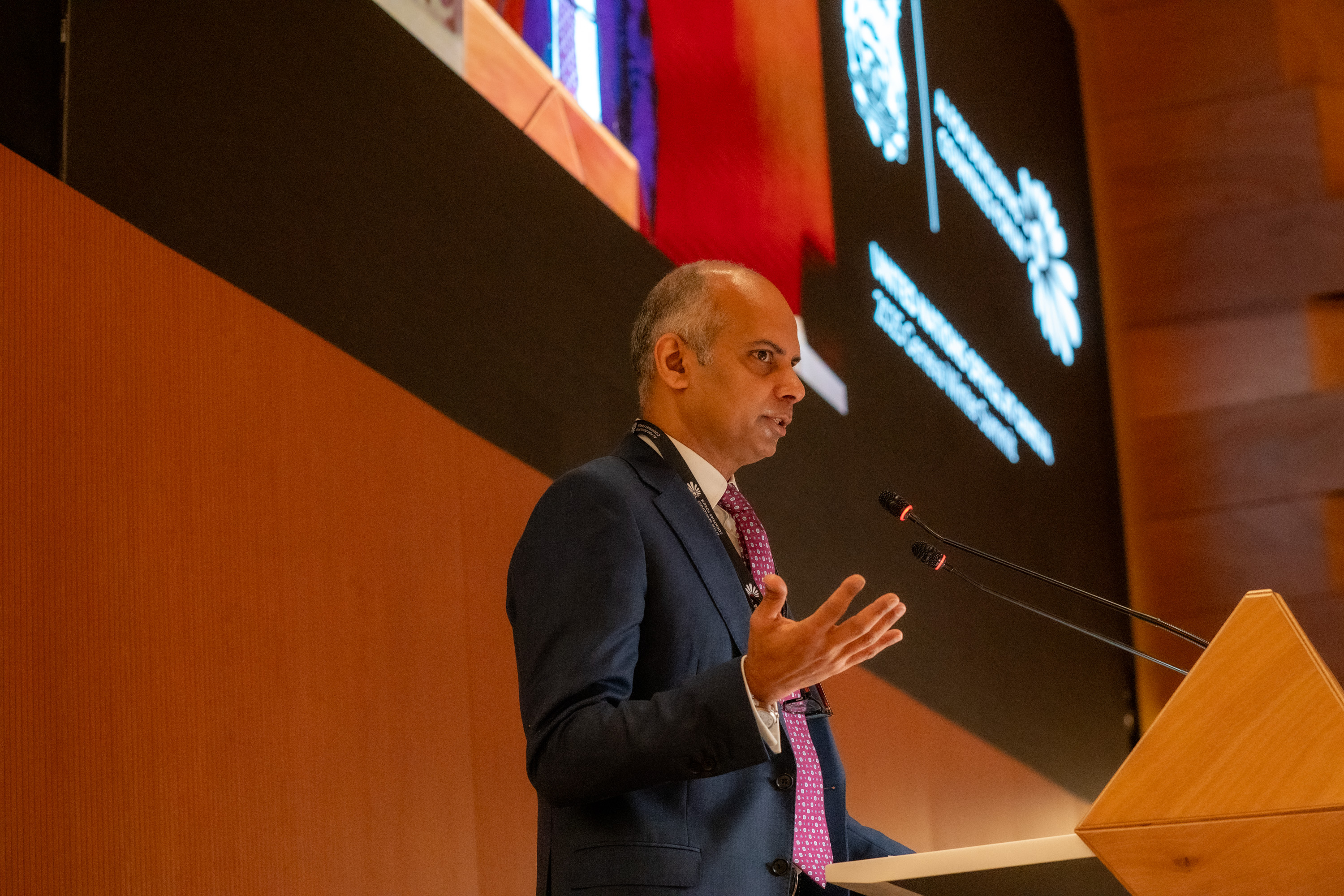
A speaker takes the floor at the United Nations Office at Geneva

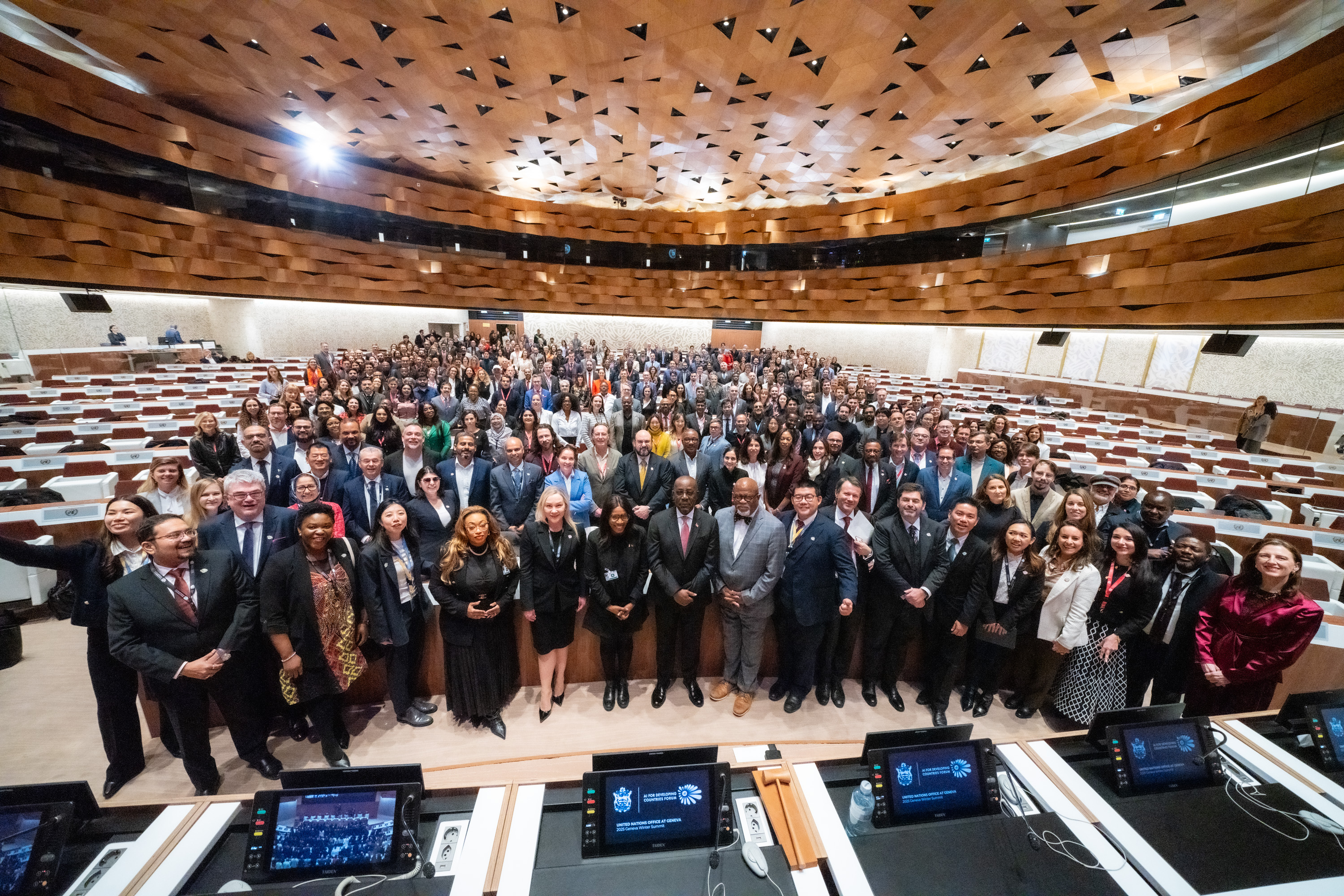
Delegates from across the Global South fill the Assembly Hall, Palais des Nations

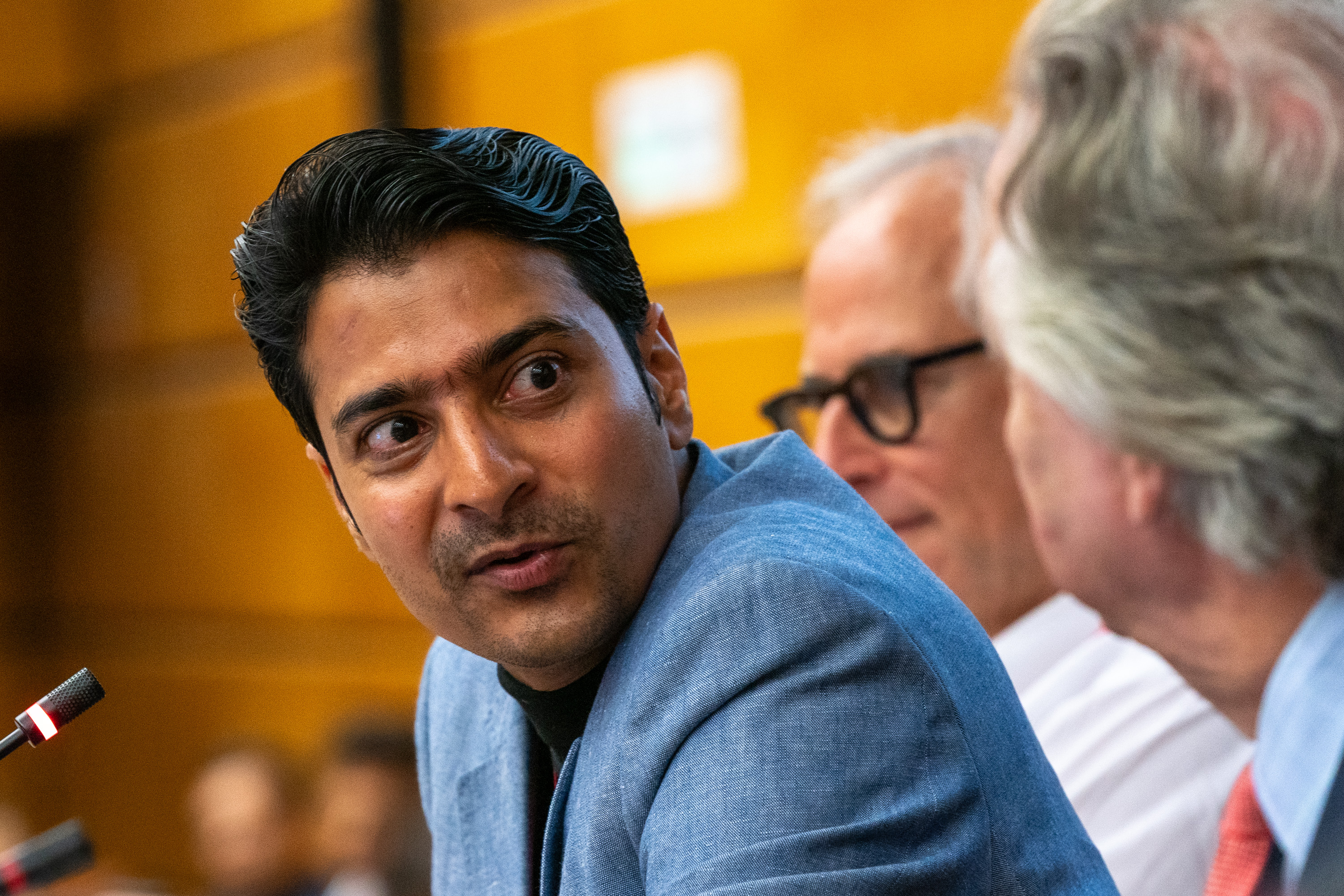
Delegates exchange views between sessions at an AIFOD Geneva convening

Participants network on the floor at an AIFOD summit in Geneva


New York City, New York Jul 12, 2026 (Issuewire.com) - Strip away the keynotes and the demo reels, and the political economy of artificial intelligence fits in a sentence: seven companies, headquartered in two countries, on one hemisphere, are deciding how eight billion people will think, work, learn, speak, and dream.
That sentence — taken from the manifesto of a summit convening in Geneva this August — is not offered as rhetoric. It is offered as a market diagnosis. Monopoly, the manifesto argues, concentrates knowledge, resources, wealth, and power. And the Global South, home to two-thirds of humanity, is on the paying side of every one of those concentrations.
From 12 to 14 August 2026, ministers, founders, researchers, and civil-society leaders from more than 50 nations will gather in the Assembly Hall of the United Nations Office at Geneva for “Small Takes the Lead: The Future Belongs to the Many, Not the Few,” convened by the AI for Developing Countries Forum (AIFOD), an independent nonprofit, in partnership with the Government of Antigua and Barbuda. Attendance is free for registered delegates.
The terms of the rental economy
The summit's case against the status quo is less about the technology than about the terms on which it is sold. Closed APIs whose prices can change overnight. Model weights that cannot be inspected, audited, or owned. Data scraped from Global South languages and labor, monetized elsewhere, and sold back by the token. “We are becoming the data colony of a handful of giants,” the manifesto warns. “Our languages train their models. Our labor labels their datasets. Our markets absorb their products.”
The stakes, as the summit frames them, compound monthly: “If we do not act now, the future will not belong to us — it will be rented to us, by the month, by the token, by the API call.”
Not a boycott — a counter-offer
What distinguishes the summit's posture from familiar tech criticism is that it arrives with an alternative rather than a complaint. Its framework rests on four kinds of sharing: pooled compute across regions and continents, so that no single nation faces a trillion-dollar vendor alone; open model weights trained on combined data commons; shared technical standards — “Manila to Montevideo, one spec”; and shared negotiating power, borrowed from the playbook developing countries once used to negotiate vaccine prices.
The manifesto's six equality demands sharpen the contrast: open weights, not closed APIs; sovereign compute, not rented servers; local data governance, not extractive scraping; multilingual by design, not English-first; shared standards, not imposed ones; and seats at every table where the future is being written.
Organizers are explicit about what the challenge is not. “This is not anti-technology,” the manifesto states. “This is pro-humanity.” The goal is not to unseat the giants but to end the era in which they are the only option — a world where a ten-person firm in Lagos can genuinely compete with a ten-thousand-person firm in California, because the infrastructure underneath them is shared, open, and sovereign.
From argument to machinery
The three-day programme is built to convert the argument into instruments. Day one: country reports from 50+ delegations and a research briefing on the AI divide. Day two: four working tracks — small nations, small enterprises, small models, small languages. Day three: the drafting of the Geneva Compact on AI Sovereignty, the signing of the first bilateral pooled-compute agreements, and a closing commitment toward Nairobi 2027.
To the small enterprise fighting for a fair price on compute, to the small model team training on a single GPU with open data — the summit's message is uniform: you are not alone.
Registration, programme, and delegate information are available at af.net.
About the AI for Developing Countries Forum (AIFOD)
The AI for Developing Countries Forum (AIFOD) is an independent nonprofit organization with a community of 7,200+ members across 150+ countries, working to ensure that developing nations become active creators — not passive consumers — of artificial intelligence. AIFOD convenes summits, working sessions, and policy dialogues across Geneva, Vienna, Bangkok, and Nairobi. The 2026 Geneva Summit is held at the United Nations Office at Geneva; AIFOD is an independent organization and not a United Nations body.
Media Contact
AI FOR DEVELOPING COUNTRIES FORUM (AIFOD) *****@af.net http://af.net