Nanjing, Jiangsu Jun 24, 2026 (Issuewire.com) - When operating in extreme rescue scenarios—such as high-temperature structural fires, dense smoke blockages, or collapsed building structures—clear, unhindered voice exchange is often the defining line between a successful rescue operation and a catastrophic mission failure. Traditional half-duplex radios present a significant operational limitation: personnel must physically locate and press a Push-to-Talk button, which temporarily blocks incoming transmissions from other team members. To overcome these hazards, modern emergency response units require advanced technology from a trusted Professional Firefighter Walkie Talkie Supplier In China. Selecting the right equipment involves a systematic approach focused on hands-free operation, structural robustness, and intelligent link replication. This guide outlines how to evaluate and implement these parameters for high-stakes missions.
STEP 1: Evaluate the Communication Architecture for Hands-Free Operation
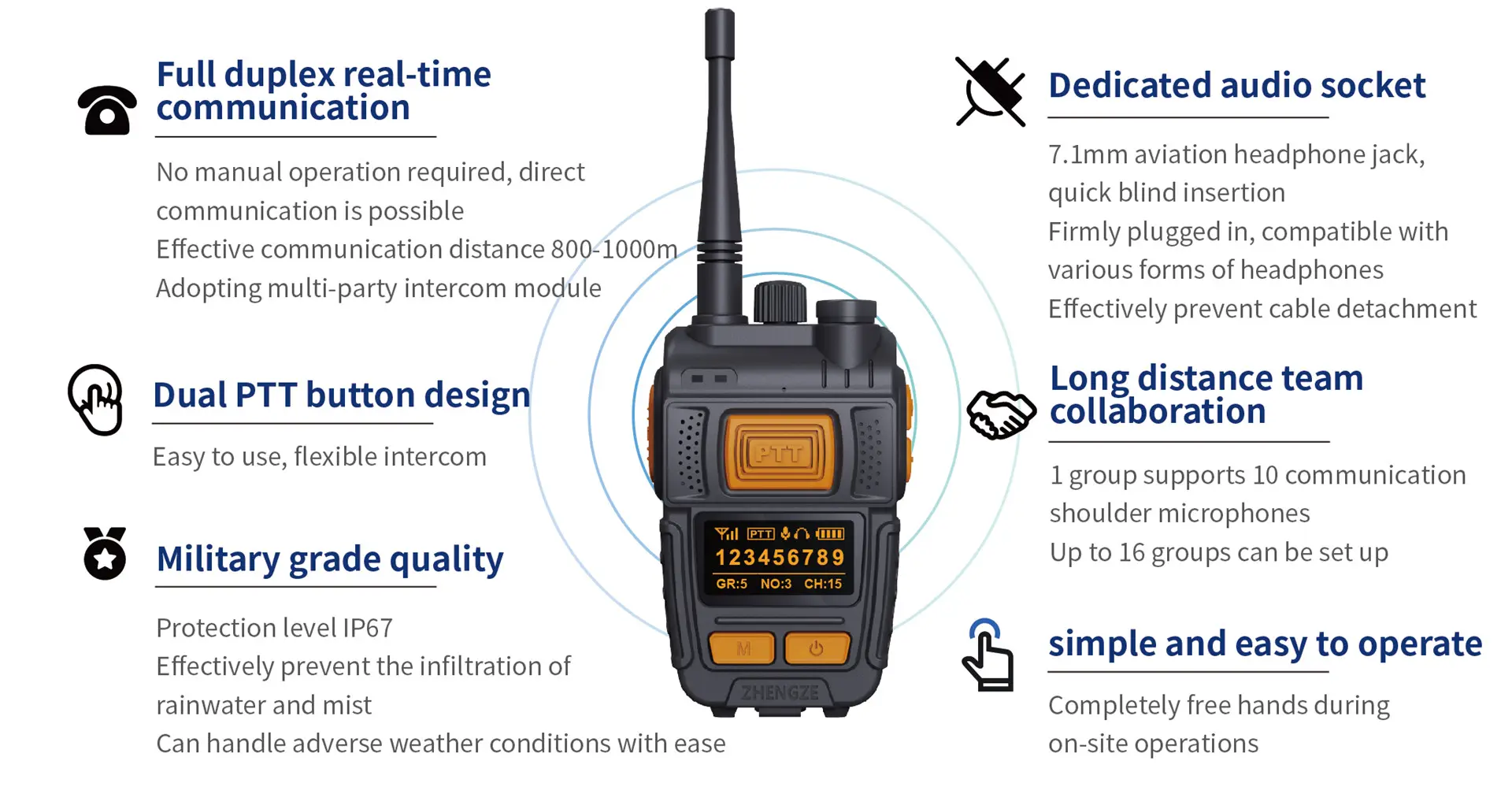
The primary requirement for frontline firefighters is the ability to communicate naturally while keeping both hands completely free to operate hydraulic tools, handle fire hoses, or carry victims. When reviewing wireless systems, procurement officers must prioritize true full-duplex communication models. Unlike standard radios, full-duplex architecture allows simultaneous speaking and listening among multiple operators within the same network group.
The technology integrated into systems like the ZXF-TC10 group intercom utilizes high-performance industrial-grade processing units and advanced RF transceivers. This combination eliminates the audio clipping and transmission delays inherent to traditional voice systems. Frontline personnel can discuss changing fire conditions, coordinate entry pathways, and issue immediate evacuation orders simultaneously, generating a live audio stream where no critical warning is cut off by someone else trying to speak at the exact same millisecond.
STEP 2: Assess Network Independence and Decentralized Relay Topology
Extreme rescue scenarios frequently occur in subterranean spaces, high-rise buildings, or industrial facilities where public cellular infrastructure, satellite links, and even central radio repeaters are nonexistent or destroyed. Therefore, standard client-server or central-node configurations are insufficient. A professional rescue transceiver must operate as a completely self-contained network.
Advanced systems utilize a decentralized multi-user group design that does not rely on a central base station or master node. In this independent architecture, devices remain connected dynamically, and if one unit moves completely out of range or suffers physical destruction, the remaining nodes maintain their wireless link seamlessly. For instance, a single communications group can support up to 10 active users talking concurrently, with the hardware supporting up to 16 separate pre-set communication groups. This provides the modular structural framework required to isolate command staff, interior entry teams, and exterior backup crews on distinct lines without interference.
STEP 3: Analyze RF Transmission Metrics and Signal Penetration Parameters
In structural firefighting, radio waves must penetrate dense concrete slabs, steel reinforcements, and thick brick barriers. When reviewing technical specifications, it is critical to verify the transmission power and effective range within dense physical environments.
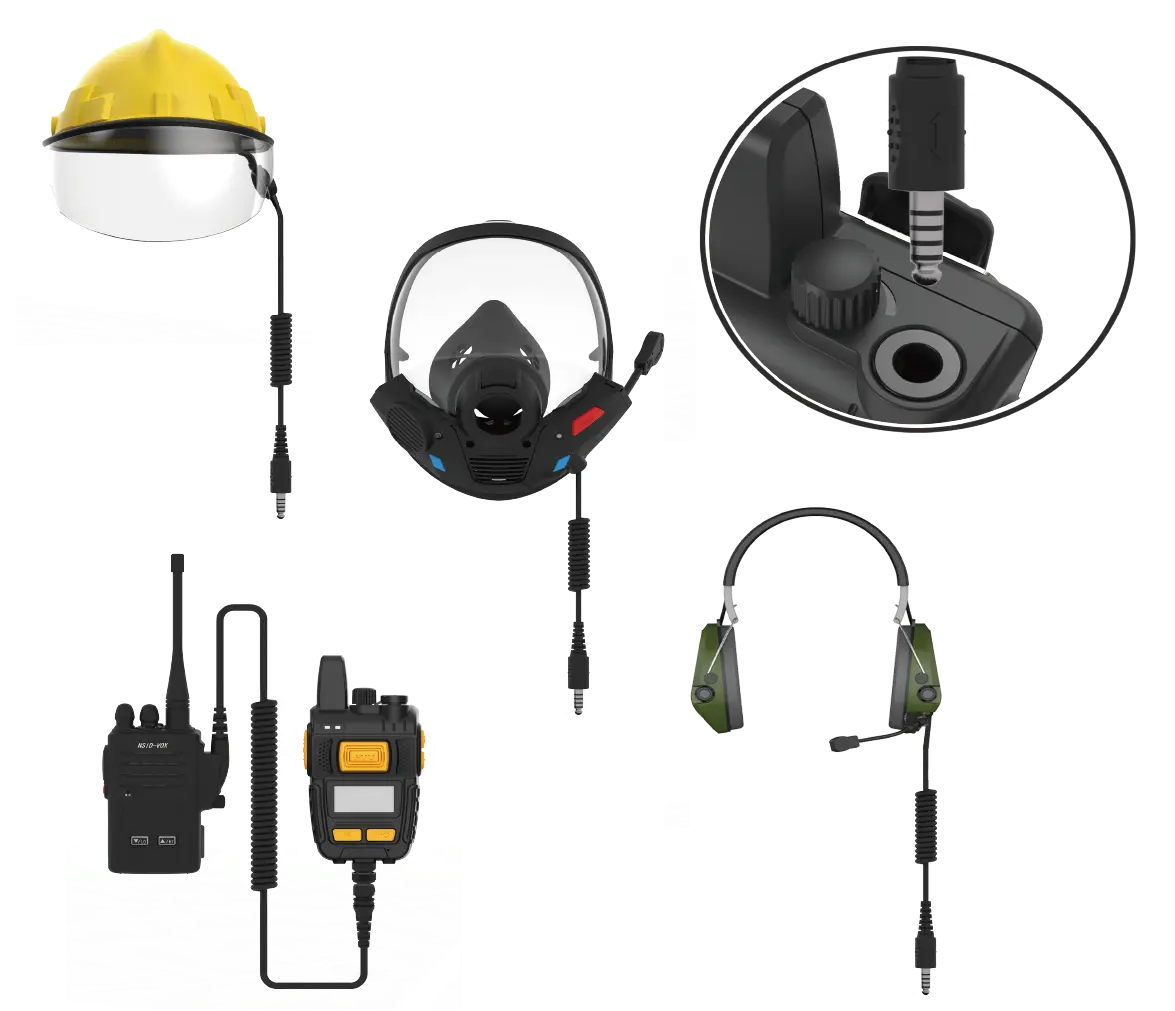
Equipment built by ZHENGZE delivers a transmission power of 1000mW, which translates to a stable, effective line-of-sight communication range of 800 to 1000 meters. By leveraging highly stable RF chipsets, these systems maintain link continuity through deep structures where consumer-grade or lower-tier commercial radios experience complete signal dropouts. Furthermore, look for devices featuring a dual PTT button design. This allows the hardware to serve a dual purpose: operating seamlessly in full-duplex hands-free group mode for immediate team coordination, while remaining capable of switching instantly to standard half-duplex mode via a connecting cable attached to a long-range tactical radio for wide-area dispatch commanding.
STEP 4: Inspect Interface Compatibility with Specialized Protective Gear
A firefighter's walkie-talkie cannot be evaluated as an isolated tool; it must integrate seamlessly with an array of personal protective equipment. Firefighters wear full-face breathing masks, heavy flash hoods, and thick insulated gloves, all of which obstruct normal speaking and acoustic listening.
The interface infrastructure of the communication unit must feature dedicated, secure connection points. Look for standardized hardware interfaces, such as a 7.1mm aviation headset connector. This allows the transceiver to act as an external audio hub, connecting directly to bone conduction headsets that bypass ambient room noise by picking up vibrations directly through the skull, mask-integrated communication speakers that sit inside the SCBA facepiece, or heavy-duty noise-cancelling headphones used around loud ventilation fans and cutting equipment. This flexibility ensures that, regardless of the specific tactical mask or helmet configuration in use, voice clarity remains uncompromised by environmental roaring or breathing gas rushing.
STEP 5: Verify Industrial-Grade Durability and Manufacturing Credentials
The final step in selection involves verifying the physical survivability of the hardware under extreme thermal and mechanical shock. The device must carry an IP67 protection rating at a minimum, ensuring complete dust ingress defense and full waterproofing when submerged in water up to 1 meter deep for 30 minutes, which is vital given the heavy water spray present at any active fire scene.
Achieving this level of engineering requires sophisticated design and rigorous manufacturing quality control. As a leading manufacturer of intelligent emergency rescue equipment, Nanjing ZHENGZE Technology Co., Ltd. brings over two decades of specialized research and development to the field. Operating a factory facility spanning over 5000 square meters with an established team of 200 professionals, the company maintains absolute control over product design, structural mold production, and strict compliance certifications. Backed by more than 100 core patents, their systems are purposefully engineered to withstand the mechanical drops, intense moisture, and high-stress handling characteristic of modern fire-rescue operations, ensuring that when the environment degrades, the lifeline of communication remains fully intact.
For comprehensive product technical specifications, system integration details, and customized fleet configurations, please visit the official corporate portal at https://www.zhengzesafety.com/
Media Contact
Nanjing Zhengze Technology Co., Ltd. info@nj-zhengze.com