Shenzhen, Guangdong Oct 12, 2026 (Issuewire.com) - Building automation and utility sub-metering rely heavily on wired communication backbones for continuous, high-reliability telemetry. Deploying an industrial rs485 smart meter (https://www.diyusmart.com/q/h/DDS1000%2BSingle-Phase%2B2P%2BDIN-Rail%2BSmart%2BElectric%2BMeter%2B%28RS485%2BModbus%29.html) or an M-Bus utility network ensures that property management systems capture real-time consumption data without wireless radio interference.
As an experienced hardware partner, Shenzhen Diyu Smart Co., Ltd. (https://diyusmart.com/q/h/com/index.html) supplies wired meters, data concentrators, and access equipment designed to interface directly with property management software and building automation systems.
Integrating field instrumentation across commercial properties requires understanding the distinctions between physical serial transmission and high-level application protocols. Conflating physical wiring standards with communication protocols often causes architectural mistakes during specification. RS485, Modbus, and M-Bus occupy different operational layers within building infrastructure. System integrators who delineate these roles deploy resilient systems that simplify commissioning and maintenance.
RS485 and Modbus Form a Common Wired Metering Stack
A fundamental engineering distinction separates RS485 from Modbus. RS485 is a physical-layer standard defined by balanced, differential signaling across a twisted-pair cable, specifying electrical voltage levels, noise rejection thresholds, and multidrop bus topologies without defining data formats. Modbus RTU is an application-level protocol operating over RS485 that structures binary packets into function codes, 16-bit register addresses, cyclic redundancy checks, and device identification numbers.
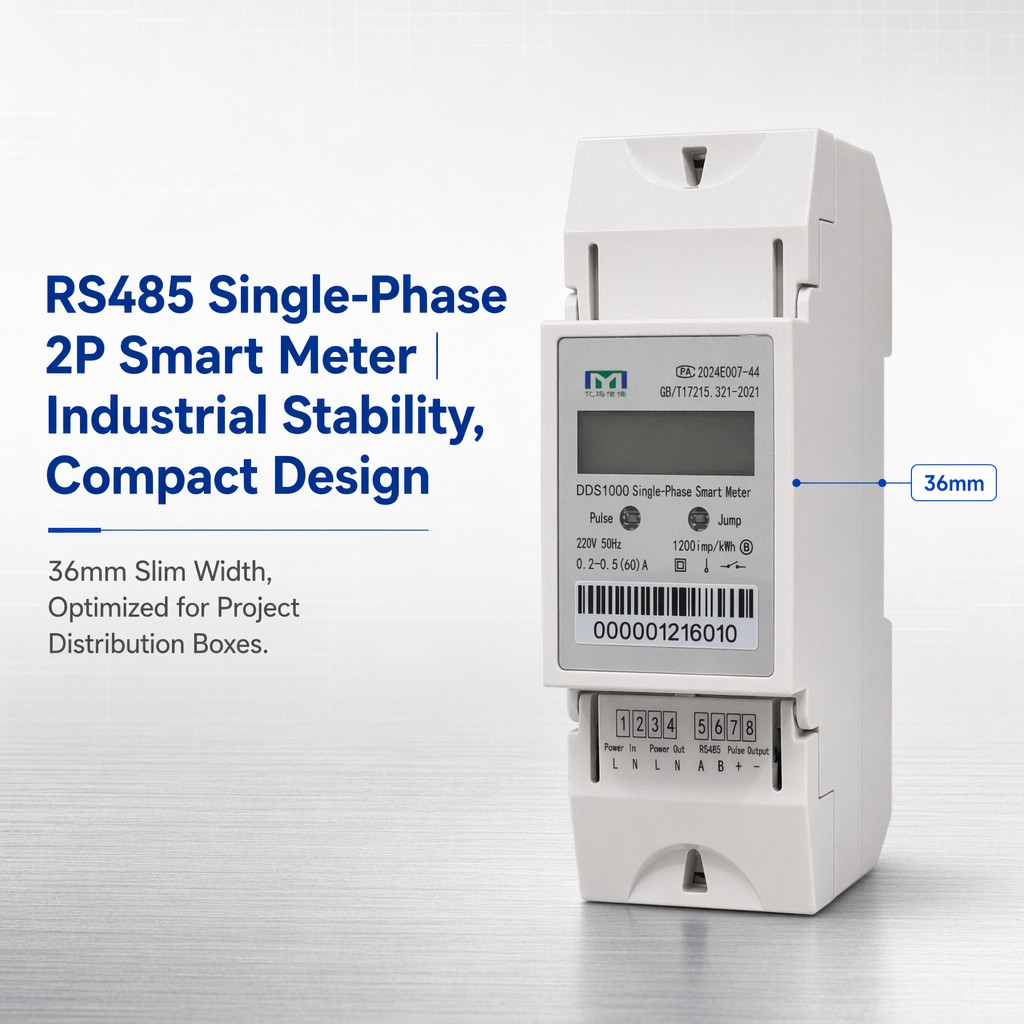
When deploying a DIN-rail rs485 energy meter, the physical twisted pair provides electrical transport, while Modbus commands query active power, voltage, and cumulative energy registers directly.
Diyu Smart manufactures dedicated Modbus metering and environmental equipment for commercial distribution boards. The single-phase DDS1000 electric meter and three-phase DTS1000 meter both feature integrated RS485 serial interfaces operating on standard Modbus RTU to deliver Class 1.0 electrical telemetry into building management systems.
On the same multidrop bus, master controllers integrate an industrial rs485 temperature and humidity sensor or a precision modbus temperature humidity sensor. The bus polls ambient temperature, relative humidity, and dew point registers across a single twisted-pair cable run.
M-Bus Is Purpose-Built for Utility Meter Collection
Meter-Bus, commonly designated as M-Bus and standardized under EN 13757, was developed specifically for remote utility meter reading across fluid and thermal networks. A primary advantage of M-Bus is its two-wire polarity-independent physical topology, allowing field technicians to terminate bus wiring without observing polarity and eliminating common installation wiring faults.
The M-Bus master also provides electrical power directly over the two-wire bus to slave transceivers, allowing low-power flow registers to operate for years without draining internal meter batteries.
For commercial apartments and multi-tenant offices, deploying a dedicated m-bus water meter or mbus water meter ensures reliable data collection from plumbing risers. Diyu Smart’s wired photoelectric hot and cold water meters incorporate M-Bus interfaces alongside RS485 options, built to ISO 4064 Class B accuracy with IP68 submersible protection to withstand flooded meter pits and humid basement environments.
A Wired Concentrator Unifies Meter Buses Before Data Moves Upstream
Managing multiple physical serial runs requires a centralized aggregation layer to bridge physical field buses with IP-based property networks. Diyu Smart provides the CZ1000-256 industrial wired data gateway to manage dense meter clusters, featuring both M-Bus and RS485 interfaces to poll up to 256 connected meter endpoints simultaneously across water, heat, and electrical systems.
Once field telemetry is gathered, the concentrator packages raw register values into standard IP payloads. Equipped with Ethernet, 4G, and GPRS uplinks, the CZ1000-256 transmits structured JSON packets via MQTT or HTTP POST directly to central servers. Local edge buffering protects data integrity during wide-area network disconnections.
Wired and Wireless Protocols Fit Different Retrofit Conditions
Choosing between wired and wireless communication depends on physical building conditions and construction stage. In new construction projects, installing conduit and running twisted-pair cabling alongside electrical distribution lines is straightforward and cost-effective, providing immune physical connectivity, zero RF attenuation through concrete, and predictable data polling without battery maintenance.
Conversely, retrofitting existing occupied structures presents severe physical installation challenges. Drilling through masonry walls, opening fire-rated ceilings, and routing cables across finished public corridors makes wireless LPWAN technologies such as LoRaWAN a far more cost-effective alternative.
Experienced engineering contractors frequently implement hybrid architectures across complex facilities. New utility risers and central switchboards utilize wired M-Bus and RS485 buses connected to floor concentrators, while dispersed perimeter monitoring points leverage wireless sensors to optimize installation costs and reliability.
Keep Access-Control and Metering Buses Distinct at the Field Layer
Commercial facilities often combine security access control and utility telemetry within the same property management platform, but the physical field buses serving these two domains must remain strictly separated.
An rs485 access control bus requires immediate sub-second response times to grant rapid entry when an employee scans an RFID badge. Conversely, an rs485 smart meter loop routinely exchanges lengthy data packets containing energy totals, voltage harmonics, and billing registers. Mixing high-latency telemetry polling with security access on a single serial cable creates unacceptable door entry delays.
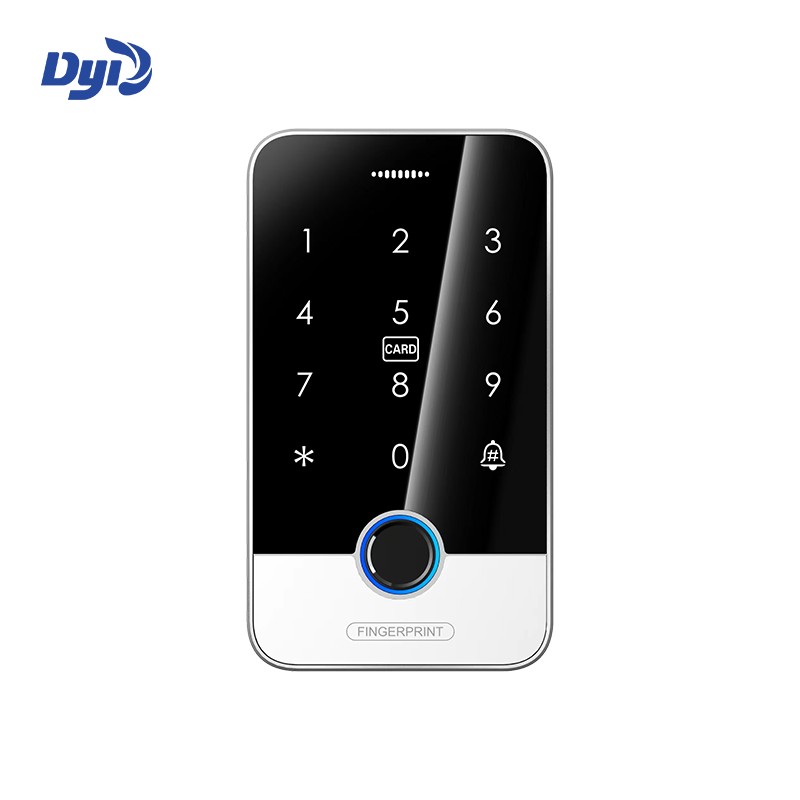
Specifying a wired smart lock architecture involves dedicated door controller loops where perimeter gates, turnstiles, and electronic strikes connect to door controllers via Wiegand or RS485 OSDP protocols. Maintaining separate physical communication loops ensures that routine meter reading never compromises facility physical security or credential verification speeds.
Build the Property Integration Around Data Ownership and System Roles
Wired field instrumentation must deliver actionable intelligence into enterprise software so property managers, building engineers, and billing administrators maintain unified visibility across subsystems. Modern property management systems ingest field data through standardized software application programming interfaces, where concentrators and gateways translate raw Modbus hexadecimal registers into human-readable metric identifiers before publishing.
A tenant billing platform subscribes to kilowatt-hour and cubic-meter topics via MQTT, automatically calculating monthly invoices based on verified consumption records. Simultaneously, building management systems monitor voltage anomalies, phase imbalances, and water leak triggers, ensuring that billing data, operational maintenance alerts, and security events route to their respective administrative departments without architectural conflict.
Select the Wired Stack by the Data Source, Not by a Buzzword
A disciplined procurement strategy matches each utility endpoint to its optimal electrical and protocol profile based on verifiable operational requirements. Electrical distribution boards require RS485 Modbus RTU meters for single-phase tenant sub-metering and three-phase central switchboard monitoring, delivering robust multidrop communication within noisy electrical switchgear environments.
Fluid and thermal utilities benefit from dedicated M-Bus water and heat meters that provide polarity-independent two-wire cabling and bus-powered operation. Simultaneously, physical access control systems utilize dedicated serial circuits to isolate access latency from routine utility polling.
Integrators and engineering contractors planning commercial automation projects can contact Diyu Smart to evaluate wired instrumentation schedules, or review complete technical specifications on the Diyu Smart official website (https://www.diyusmart.com/).
Media Contact
Diyu Smart *****@diyusmart.com http://www.diyusmart.com/