Huzhou, Zhejiang Mar 24, 2026 (Issuewire.com) - Chronic disease management stands at an inflection point. Globally, the number of people living with diabetes continues to climb, and healthcare systems in both developed and emerging markets are pivoting away from reactive treatment toward continuous, data-driven monitoring. Within that shift, the continuous glucose monitor has become one of the defining tools — offering patients and clinicians a window into blood glucose patterns that no periodic finger-prick test can replicate. Huzhou Xinmei Medical Equipment Co., Ltd. enters this landscape with a focused strategy: build a technically differentiated, compliance-ready CGM system designed for both domestic and international markets.
The core limitation of traditional glucose testing has always been its static nature. A finger-prick reading captures a single moment, leaving the stretches between measurements — including the hours after eating, during exercise, and throughout the night — largely invisible. Nocturnal hypoglycemia, in particular, carries serious clinical risk precisely because it tends to go undetected until symptoms escalate. A well-designed CGM system addresses this gap directly. Instead of sampling blood, it measures glucose concentration in the interstitial fluid surrounding subcutaneous tissue, transmitting readings automatically at regular intervals around the clock. The result is a dynamic glucose curve rather than a series of disconnected data points.
The CGM sector, however, is not standing still. Industry analysis tracking global CGM trends points to two parallel forces reshaping the market: rapid technological iteration in sensor accuracy and wearability, alongside tightening compliance requirements across regulatory jurisdictions. Manufacturers that can advance both fronts simultaneously hold a structural advantage. This dual pressure has also opened meaningful space for domestic Chinese producers, as healthcare procurement increasingly favors locally developed, fully certified alternatives to imported devices.
Huzhou Xinmei Medical Equipment Co., Ltd. formally began operations in October 2025, based in Huzhou, Zhejiang Province — a city with a well-developed medical device industrial ecosystem. Drawing on more than 16 years of production experience within that cluster, the company focuses exclusively on chronic disease management technology. Its licensed scope covers Class I, II, and III medical device operations, medical device internet information services, and import/export qualifications for goods and technology. This broad operational framework supports simultaneous domestic distribution and cross-border supply, allowing the company to serve healthcare buyers and distributors across multiple markets from a single base.
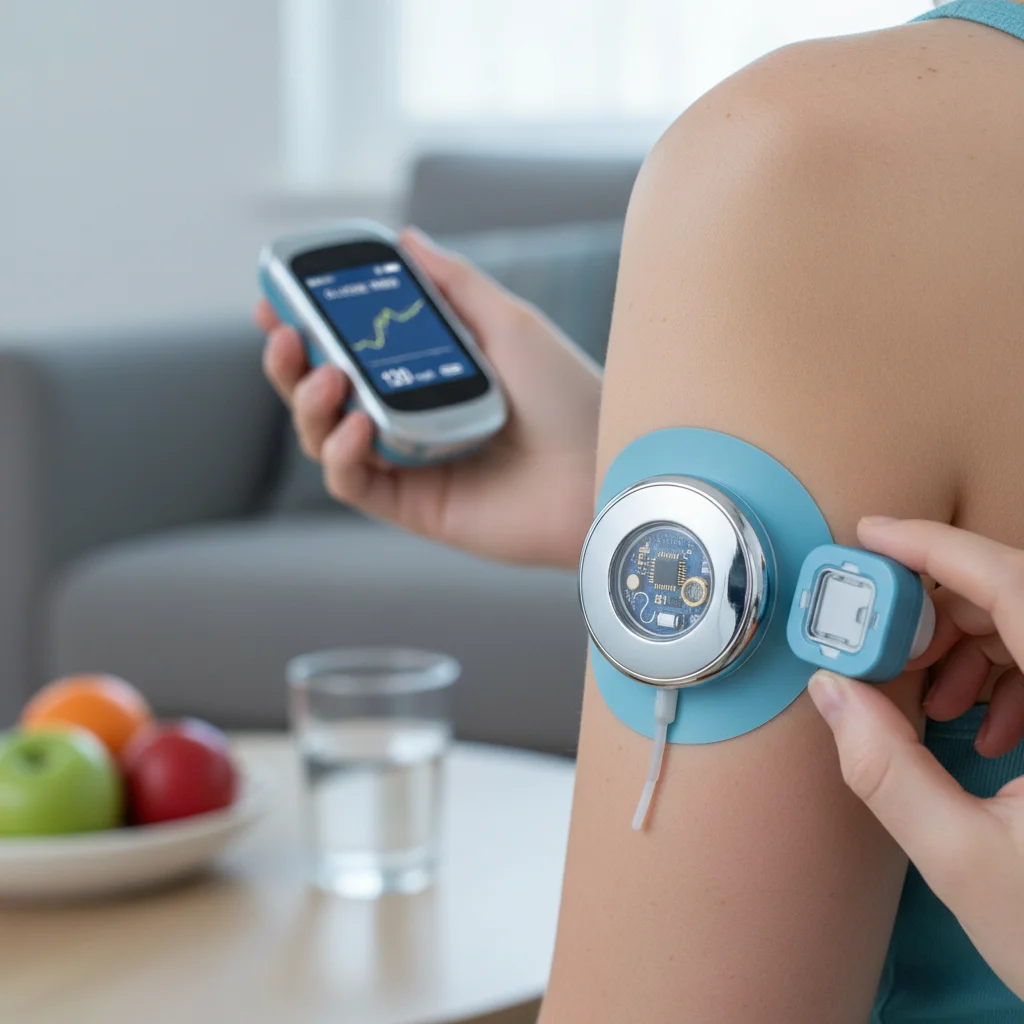
The flagship product, the RGMS-3O Continuous Glucose Monitoring System, demonstrates how engineering choices translate directly into clinical utility. At the sensor level, the device employs a dual-electrode design grounded in the glucose oxidase reaction principle. The electrode converts interstitial glucose concentration into an electrical current, which a proprietary algorithm then processes into a blood glucose value. This dual-electrode architecture improves measurement reliability compared with single-electrode designs and provides a layer of redundancy against signal noise. The sensor records a new average data point every three minutes, producing 480 readings per day. A single sensor application sustains 15 continuous days of monitoring before replacement, covering two complete weekly cycles within one wear period.
Accuracy figures tell an equally clear story. The RGMS-3O achieves a Mean Absolute Relative Difference (MARD) value of 7.82%, a notable improvement over the preceding-generation RGMS-II, which registered 9.50%, and well within the industry benchmark of under 15%. Sensor electrode diameter also merits attention: the design causes less than 90% of the subcutaneous trauma associated with standard competing sensors, reducing discomfort at implantation and throughout the wear period. Physical dimensions stay compact — the sensor measures 29 mm in length with a thickness under 5.5 mm, while the transmitter reaches only 22.6 mm long and 4.3 mm thick, sitting inconspicuously beneath everyday clothing.
Durability and comfort receive equal attention in the hardware design. The sensor patch uses hypoallergenic, low-sensitivity medical adhesive tape that remains breathable and stable throughout extended skin contact. Furthermore, the entire system carries an IPX7 waterproof rating, withstanding full submersion in one meter of water for 30 minutes. Showering, swimming, and rainy-day exposure therefore pose no risk to device function. The transmitter operates via Bluetooth and stores up to 15 days of complete blood glucose data internally, automatically restoring any records accumulated during periods of connectivity loss once the app reconnects. This offline data retention prevents gaps in the longitudinal glucose record, a detail that matters when the data informs clinical decision-making.
On the user experience side, the RGMS-3O targets zero-barrier operation. The needle aid applicator uses a foolproof one-click mechanism: sensor implantation completes in under one minute and requires no medical training or prior experience. After application, a 60-minute initialization period calibrates the system before active monitoring begins. The companion app, available for both iOS and Android, displays real-time glucose values, directional trend arrows, and historical curves in a straightforward interface. Users can configure personalized high and low threshold alerts; the device triggers vibration and audible alarms when glucose crosses either boundary, with a dedicated overnight alert function designed specifically to catch nocturnal hypoglycemia events that might otherwise go unnoticed.
Cost structure rounds out the value proposition. The transmitter and needle aid both carry a three-year operational lifespan, making them reusable across many consecutive sensor cycles. Only the disposable sensor requires periodic replacement, reducing long-term expenditure compared with fully disposable CGM systems where every component enters the waste stream after a single use. Sensors store well at room temperatures between 0 and 40 degrees Celsius, with an 18-month shelf life that suits both individual users and institutional buyers managing inventory.
The device serves a broad clinical and consumer spectrum. Pediatric users from age eight onward through elderly patients represent the age-eligible range, covering the populations that often require the most attentive glucose oversight. Family caregivers can access shared app views remotely, monitoring a child's or parent's glucose data without physical presence. Athletes and health-conscious individuals without a diabetes diagnosis increasingly turn to CGM data to understand metabolic responses to specific meals and training loads — a use case the RGMS-3O accommodates through its continuous, life-compatible design.
Huzhou Xinmei Medical Equipment Co., Ltd. positions compliance management and technical product development as complementary rather than competing priorities. The company's product range extends beyond the RGMS-3O to include standalone sensor patches, dedicated transmitter units, and needle aid tools, forming a modular system that healthcare buyers can configure according to patient needs. More information on the full product range, technical specifications, and distribution inquiries is available at www.xmylcgm.com.
Media Contact
Huzhou Xinmei Medical Equipment Co., Ltd. info@xmylcgm.com Room 1213-547, 12th Floor, Building 3, No. 1366 Hongfeng Road, Kangshan Street, Huzhou, Zhejiang, China https://www.xmylcgm.com/