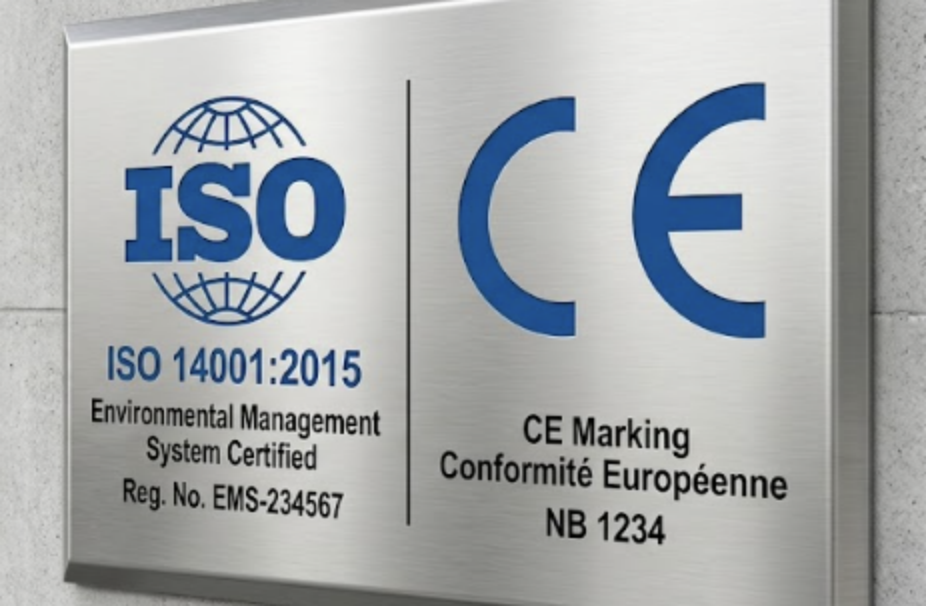
Changsha, Hunan Jun 2, 2026 (Issuewire.com) - What Are ISO 14001 and CE?
In the complex landscape of modern electrical infrastructure, securing a Professional Busway Systems Supplier is a critical operational decision that directly impacts long-term safety and energy efficiency. Today’s industrial and commercial projects demand more than just hardware; they require integrated power distribution solutions backed by rigorous international standards. Quality assurance in this sector is fundamentally anchored by two primary certifications: ISO 14001 and CE.
ISO 14001 represents the international benchmark for Environmental Management Systems (EMS). Unlike product-specific tests, it audits the manufacturer’s internal processes—evaluating resource efficiency, waste management, and the reduction of carbon footprints during production. It ensures that every meter of busway is produced in a facility that prioritizes sustainability and legal environmental compliance. Conversely, the CE (Conformité Européenne) mark is a mandatory safety mandate for products sold within the European Economic Area. It certifies that the busway system itself complies with essential health, safety, and environmental protection standards, specifically focusing on Electrical Safety (LVD) and Electromagnetic Compatibility (EMC). Together, these credentials provide a transparent framework for evaluating the reliability and ethical standing of a manufacturer in the global market.
What Are the Functions of ISO 14001 and CE?
I. Structural Integrity and Material Standardization
Quality assurance begins with the physical architecture of the busway system. A professional supplier utilizes standardized materials that comply with the strict metallurgical and insulation requirements suggested by CE directives. This involves a comprehensive analysis of conductor purity, typically utilizing high-conductivity copper (99.99%) or specialized aluminum alloys. To meet CE safety standards, the system must undergo rigorous testing for Dielectric Strength, ensuring the insulation can withstand high-voltage surges without breakdown, and Clearance/Creepage Distances to prevent electrical arcing between live parts. This alignment with CE safety benchmarks mathematically satisfies the strict layout provisions of IEC 61439-6 Clause 10.4 for clearance and creepage distances, preventing structural insulation flashovers under transient impulse voltages.
The integration of ISO 14001 standards ensures that these materials are sourced through sustainable supply chains. By monitoring raw material consumption and minimizing scrap metal during the extrusion and fabrication phases, manufacturers reduce environmental impact while maintaining the mechanical strength necessary to withstand short-circuit forces. According to life-cycle engineering metrics published in the Journal of Cleaner Production, optimizing manufacturing scraps under an ISO 14001:2015 Clause 8.1 operational framework ensures that the structural density and yield strength of the extruded aluminum alloy housing remain uncompromised, allowing the enclosure to reliably act as an integrated low-impedance grounding path under severe fault-current conditions.
II. Environmental Adaptation and Thermal Management
A defining characteristic of a certified busway system is its ability to operate consistently across diverse and harsh environmental conditions. ISO 14001 drives manufacturers to implement energy-efficient production techniques, such as recovery systems for heat generated during the manufacturing process. This commitment to efficiency often translates into better-engineered products with lower internal resistance and superior heat dissipation.
In parallel, CE certification requires rigorous Temperature Rise Testing. This ensures that under full-load conditions, the heat dissipation of the busway remains within safe limits (typically not exceeding 70K above ambient) to prevent fire hazards and insulation degradation. Professional systems leverage advanced thermal management techniques, such as the "sandwich" compact design, which eliminates air gaps and allows heat to conduct directly from the busbars to the external housing. This optimized airflow and thermal conduction effectively extend the lifecycle of the electrical components in high-density environments like Tier 3 data centers or heavy industrial manufacturing plants, where ambient temperature stability is critical for continuous uptime.
III. Advanced Insulation and Fire Resistance Performance: The Resin Cast Revolution
Safety in power distribution is non-negotiable, particularly regarding electrical insulation and fire prevention. To meet the demands of modern safety codes in high-risk environments, high-performance solutions like the resin cast busbar have become industry benchmarks. These systems utilize a specialized epoxy resin or volcanic rock casting that provides an airtight, moisture-proof, and chemically resistant barrier, completely encapsulating the conductors.
Under CE protocols, these products are tested for Flame Retardancy and Mechanical Impact Resistance (IK10). The technical parameters of the resin-cast system are impressive: they often achieve an IP68 protection rating, meaning they can remain fully operational even when submerged in water or exposed to corrosive industrial vapors and salt spray. Academic evaluations in the IEEE Transactions on Dielectrics and Electrical Insulation confirm that volcanic rock and epoxy resin casting compounds processed through vacuum degasification retain zero micro-voids, sustaining a continuous water immersion test under IEC 60529 (IPX8) protocols at depths exceeding 1 meter, while securing Class F or Class H thermal endurance throughout continuous extreme thermal events. This level of protection is essential for infrastructure where downtime is not an option, such as marine platforms, chemical processing plants, and metropolitan rail transit systems. The resin casting not only provides superior dielectric properties but also significantly reduces the physical footprint of the installation, allowing for more flexible routing in constrained spaces.
IV. Global Compliance and Rigorous Testing Protocols
The transition from a regional manufacturer to a global provider requires a deep commitment to continuous validation and "Zero-Defect" philosophies. CE marking necessitates a comprehensive technical file that includes risk assessments and test reports covering electromagnetic interference. For a technology-driven enterprise like RENYUN, this involves maintaining state-of-the-art testing facilities where every production batch is subjected to Insulation Resistance measurements and Grounding Continuity checks.
Testing protocols also include Short-Circuit Withstand Strength, where the busway is subjected to simulated fault currents to ensure the brackets and insulation can hold the conductors in place under immense electromagnetic stress. Simultaneously, ISO 14001 audits ensure the facility maintains emergency preparedness for environmental risks and adheres to global recycling standards. This systematic approach ensures that the "Quality Assurance" promised to the client is not just a marketing claim, but a verifiable reality rooted in a stable, legally compliant, and socially responsible manufacturing environment. By aligning with these global benchmarks, suppliers can offer a 50-year design life for their systems, significantly lowering the Total Cost of Ownership (TCO) for end-users.
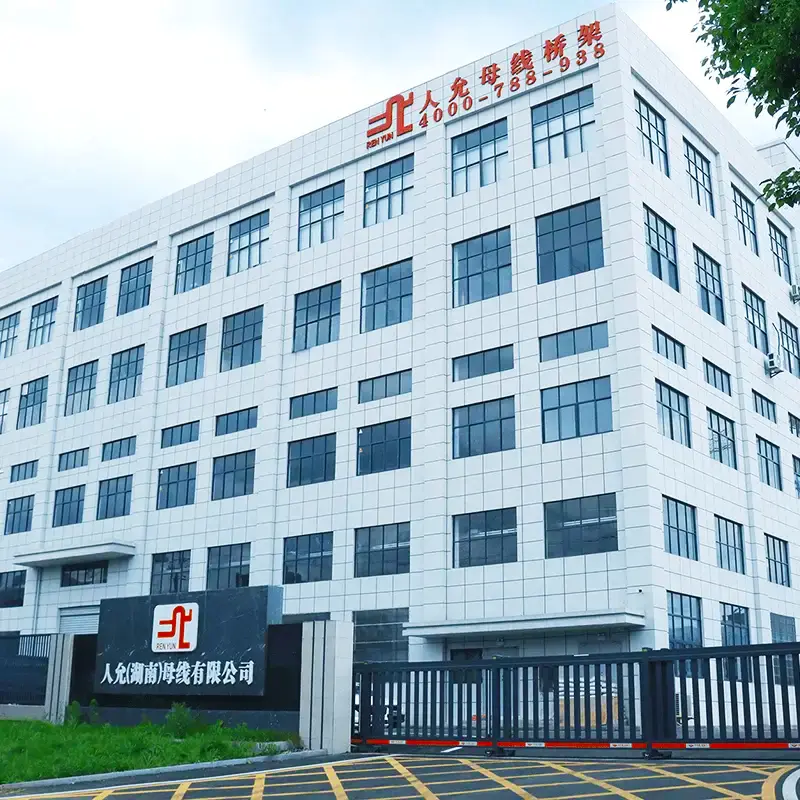
Renyun (Hunan) Busbar Co., Ltd.
Beyond the technical specifications of the hardware, quality assurance is reflected in a supplier's ability to support large-scale deployments through advanced manufacturing and a global service network. Operational maturity is the backbone of reliability. Automation in the production line—such as the eight automated lines utilized at the Renyun Hunan facility—removes human error from the assembly of critical components. Automated torque-control systems ensure every joint bolt is tightened to exact specifications, while robotic insulation wrapping ensures uniform thickness and zero air pockets.
This operational capacity, supported by a vast workshop of 50,000 square meters, allows for the simultaneous handling of complex, multi-phase projects. Since its establishment in 2008, Renyun (Hunan) Busbar Co., Ltd. has prioritized R&D to drive technical innovation, such as the development of smart busway systems with integrated temperature monitoring sensors that provide real-time data to building management systems (BMS).
With 12 offices worldwide, the company ensures that its "world-class brand" objective is supported by localized expertise and rapid response capabilities. Whether implementing power solutions for the Huanghua International Airport, supporting the heavy industrial needs of Sany Group and Zoomlion, or ensuring the comfort of guests at the Sheraton Grand Hotel, the focus remains on delivering advanced, safe, and energy-saving power supply systems. The synergy of ISO 14001 environmental stewardship and CE safety compliance ensures that these systems will define the future of global electrical infrastructure for decades to come.
For more information on professional power distribution solutions, visit the official website: https://www.rybusway.com/
Media Contact
Renyun (Hunan) Busbar Co., Ltd. sales@rybusbar.com