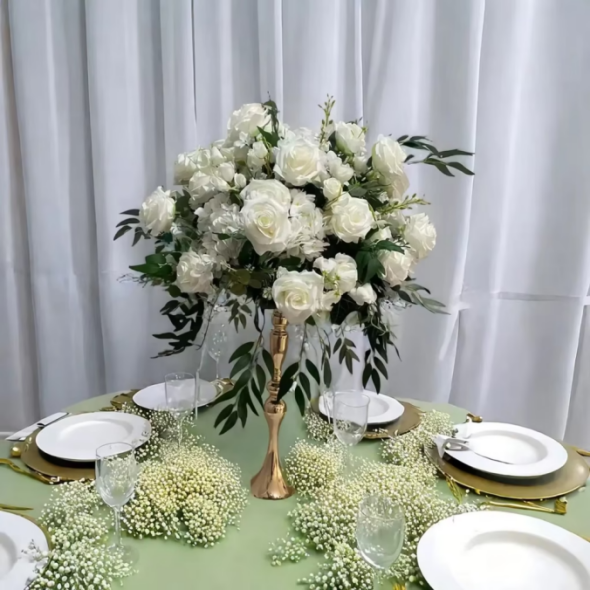
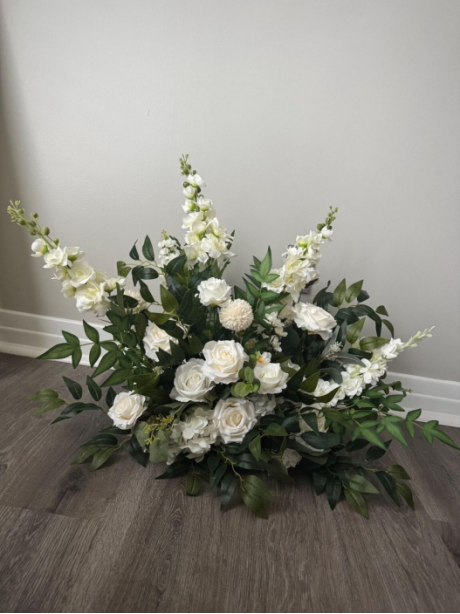
Kaifeng, Henan Jul 13, 2026 (Issuewire.com) - In the commercial event planning and luxury hospitality industries, the visual and physical integrity of floral arrangements can heavily impact the prestige of a venue. Grand banquets, high-profile weddings, and large-scale corporate exhibitions require decorative elements that project refinement while managing the logistical challenges of transit and long event durations. As destination events and multi-day celebrations continue to grow in popularity, a noticeable market shift has emerged toward choosing a premium Professional Flower Ball Service over traditional fresh cut flowers or standard, mass-produced floral decor. Selecting the right base material is a critical operational decision for commercial buyers, international distributors, and event designers. Evaluating the structural and aesthetic differences between advanced micro-fiber materials and low-grade plastics reveals why high-tier synthetic textiles have become the benchmark for professional hospitality standards.
1. Micro-Fiber Materials vs Low-Grade Plastics for Banquet Decor
To properly assess material options for premium banquet decor, it is helpful to understand the structural composition of micro-fiber materials versus low-grade plastics. Advanced micro-fiber materials used in high-end floral design consist of ultra-fine synthetic yarns—such as high-density polyester or premium silk blends—that are woven or compressed into complex textile matrices. These fibers are engineered with fine surface profiles that allow them to absorb dyes evenly, mimic natural organic veins, and hold their molded shape.
In contrast, low-grade plastics rely on cheap, injection-molded polyvinyl chloride (PVC) or recycled polyethylene components that lack soft textile properties. These low-tier plastics are characterized by a rigid, non-porous structure that reflects light unnaturally, producing a cheap plastic sheen. While low-grade plastics are inexpensive to manufacture, they fail to replicate the subtle movement and delicate texture of natural flora, making them less suitable for sophisticated commercial environments.
2. Visual Realism vs Artificial Sheen
The primary challenge when selecting faux floral installations for high-end banquets is achieving visual authenticity under varying lighting conditions. Micro-fiber materials excel in this area due to their complex texture, which scatters light in a manner similar to natural living petals. This scattering eliminates glare, allowing the arrangements to maintain a realistic appearance under both bright daytime sunlight and warm, low-intensity interior venue lighting.
Low-grade plastics exhibit a high specular reflection, or an artificial gloss, which instantly reveals their synthetic origin. Under standard banquet chandeliers or camera flashes, plastic petals create harsh reflections that disrupt the intended aesthetic. Furthermore, because plastic surfaces cannot absorb advanced multi-tonal reactive dyes, low-grade plastic floral arrangements are restricted to uniform, single-tone colors that lack the natural depth and gradients found in organic petals.
3. Structural Integrity vs Material Degradation
Commercial event decor is subjected to frequent handling, tight packing, and environmental exposure during transport and installation. Micro-fiber materials are engineered with excellent mechanical resilience, allowing them to bend and flex under pressure without breaking. Premium floral designs often feature thermal edge-sealing techniques during the cutting process, which fuses the synthetic fibers together. This process prevents fraying along the petal margins and ensures the arrangement retains its crisp, intentional shape over years of repeated use.
Low-grade plastics suffer from material brittleness and rapid degradation. When exposed to fluctuating temperatures during transit or storage, low-tier polymers lose their plasticizers, leading to cracking and structural warping. Additionally, plastic components lack structural memory; once a plastic leaf or petal is bent or crushed during shipping, it typically develops permanent crease marks that cannot be easily repaired, increasing the risk of product disposal and return losses.
4. Environmental Stability vs Chemical Outgassing
For interior banquet halls and enclosed corporate spaces, air quality and odor control are important considerations for guest comfort. High-grade micro-fiber installations utilize stable, non-toxic polymer matrices and UV-inhibited colorants that do not release volatile organic compounds (VOCs). These materials can also be safely treated with industrial fire-retardant and UV-stabilizing coatings during the manufacturing process, making them suitable for strict, compliance-driven commercial venues without compromising the texture of the fabric.
Low-grade plastics frequently emit a strong, synthetic chemical odor caused by residual solvents and unstable chemical colorants. This outgassing can be noticeable in enclosed banquet settings, affecting the guest experience. Furthermore, low-grade plastics degrade quickly under ultraviolet light; prolonged exposure to direct sunlight during outdoor installations can lead to rapid fading, yellowing, and severe material embrittlement within a short timeframe.
Practical Commercial Cases and Technical Specifications
A practical example of premium micro-fiber engineering can be seen in advanced floral backdrops, such as large-scale rose and hydrangea row arrangements used for luxury wedding arches and grand stage backgrounds. Premium designs, like the specialized pink rose and hydrangea long row configurations, blend high-density silk micro-fibers with reinforced inner frameworks. Rather than relying on simple gluing methods, high-tier manufacturing utilizes a dual-stage polymer fusion process where the inner structural core of the blossom forms a strong thermal bond with the micro-fiber layers. The outer calyx is then mechanically locked over the assembly to provide excellent pull-off resistance during venue setup and teardown.
From a technical perspective, these professional-grade floral modules are built onto flexible, high-density foam or mesh backings rather than rigid plastic grids. This allows event technicians to wrap, bend, or seamlessly connect multiple floral rows to fit custom architectural structures, such as circular arches or geometric wall panels. The integration of UV stabilizers directly into the fabric fibers ensures that light pastel shades—such as soft pinks, creams, and ivory—maintain their color stability without shifting or fading during outdoor events.
Supply Chain Reliability and Global Service Standards
This level of operational security is provided by Yongnuo, an enterprise with twenty years of foreign trade export experience specializing in premium wedding and holiday supplies. Operating from a modern 30,000-square-meter manufacturing facility equipped with 20 parallel production lines, the company maintains the structural capacity needed to manage high-volume international orders while preventing production bottlenecks. By utilizing automated precision thermal stamping and rigid quality control frameworks, the factory eliminates material defects at the source, helping commercial clients avoid high return losses and unpredictable inventory shortages.
To learn more about premium material specifications, view comprehensive product catalogs, or explore custom commercial design options, please visit the central corporate platform at Henan Yongnuo Trading Co., Ltd..
Media Contact
Henan Yongnuo Trading Co., Ltd. zhang888bo@gmail.com