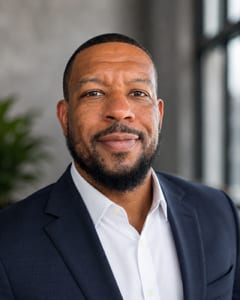
Columbia, South Carolina Sep 28, 2026 (Issuewire.com) - A letter, not a lecture
Pedro Morales-Llanos spent years inside federal agencies before he started Strategic Rise Advisory Group, LLC. He worked as Operational Support Manager at the US Department of Justice from 2020 to 2024, and before that held program management roles at the National Institutes of Health for close to a decade.
That background shapes how he talks to public sector leaders now. He is not writing as an outsider telling agencies what they do wrong. He is writing as someone who sat in the same chair.
"If I could put one thing in front of every public sector leader right now, it would be this: your people already know where the friction is," Morales-Llanos says. "They just need permission to say it out loud."
To the leaders who inherited the system
Morales-Llanos says most public sector leaders did not design the processes they now manage. They inherited them, often stacked on top of older processes nobody ever cleaned up.
"You didn't build the maze," he says. "But you're the one who has to help people find their way through it. That's a different job than building something from scratch, and it deserves a different kind of patience with yourself."
He points out that government work carries constraints private companies rarely deal with: procurement rules, oversight requirements, budget cycles tied to the calendar year instead of business need. Any advice that ignores those constraints is advice built for a different job.
"I've heard consultants tell agency leaders to just move faster, cut the red tape, act like a startup," he says. "That's not useful. The oversight exists for reasons. The work is figuring out how to move well inside the structure you actually have, not the structure you wish you had."
To the people doing the work
Part of the letter, Morales-Llanos says, is for frontline staff and mid-level managers, not just the people at the top.
"You are the ones who notice when a form asks for the same information three different ways," he says. "You are the ones who know which approval step nobody has ever actually rejected anything at. That knowledge is worth something. Say it in the meeting, not just in the hallway afterward."
He says one of the more consistent things he saw across his time at NIH and DOJ was how much operational insight sat with people several levels below where decisions got made. The information was there. The channel for it was not always there.
"Leaders should ask, not assume they already know," he says. "And staff should answer plainly, even when it's easier to just nod along."
To the agencies themselves
Morales-Llanos says his letter would also speak to the institutions, not just the individuals inside them.
"An agency's culture outlives any one director," he says. "If the only reason things run well is one person's force of will, the agency hasn't actually built anything. It's borrowed stability, and it runs out the day that person leaves."
He says this is why he pushes clients toward documented processes and clear decision rights, not just good intentions from good people.
"Good people leave. Good process stays," he says. "That's not a knock on anyone. It's just how institutions actually work."
Closing the letter
Morales-Llanos ends where he says most conversations about change should end: with a specific next step, not a general call to do better.
"I don't think 'be more agile' or 'embrace innovation' means much to a program manager staring at a stack of forms," he says. "What means something is: pick the one process that frustrates the most people, and go fix that one first. Then pick the next one."
He says the letter isn't really about government specifically. It's about any organization where the people at the top and the people doing the work have stopped talking directly to each other.
"Close that gap," he says, "and most of the rest sorts itself out."
About Pedro morales-Llanos
Pedro Morales-Llanos is founder and principal consultant at Strategic Rise Advisory Group, LLC in Columbia, South Carolina. He previously worked as Operational Support Manager at the US Department of Justice and held program management roles at the National Institutes of Health. He holds a bachelor's degree from the University of South Carolina and an MBA and master's in health services management from Webster University.
Media Contact
Pedro Morales-Llanos contact@pedromoralesllanos.com https://www.pedromoralesllanos.com/