Jiangyin, Jiangsu Sep 8, 2026 (Issuewire.com) - The global logistics and e-commerce fulfillment sectors are undergoing a profound structural transformation driven by rising consumer demand for environmental responsibility and evolving municipal waste regulations across major markets. As cross-border trade accelerates and parcel volumes reach unprecedented heights, fulfillment hubs face the dual challenge of maximizing operational throughput while systematically minimizing carbon footprints and packaging material waste. In response to these shifting operational priorities, Advanced Void Fill Solutions from China have emerged as a pivotal technology for global supply chain networks. These comprehensive packaging protection systems encompass both high-performance paper void fill equipment and scalable plastic void fill machinery, enabling courier services, brand owners, and third-party logistics providers to customize their protective packaging strategies based on product delicacy, transport distance, labor cost, and corporate circular economy objectives.
Evaluating Protective Packaging Paradigms: Paper vs Plastic Void Fill Solutions
Selecting the appropriate protective packaging medium requires a comprehensive technical evaluation of material performance, economic metrics, volumetric storage efficiency, and lifecycle environmental impact. While plastic cushion films and paper protective media have historically been viewed as direct competitors, modern fulfillment infrastructure increasingly utilizes them as complementary solutions tailored to specific inventory stock-keeping units (SKUs) and shipping profiles.
l Material Composition and Structural Integrity
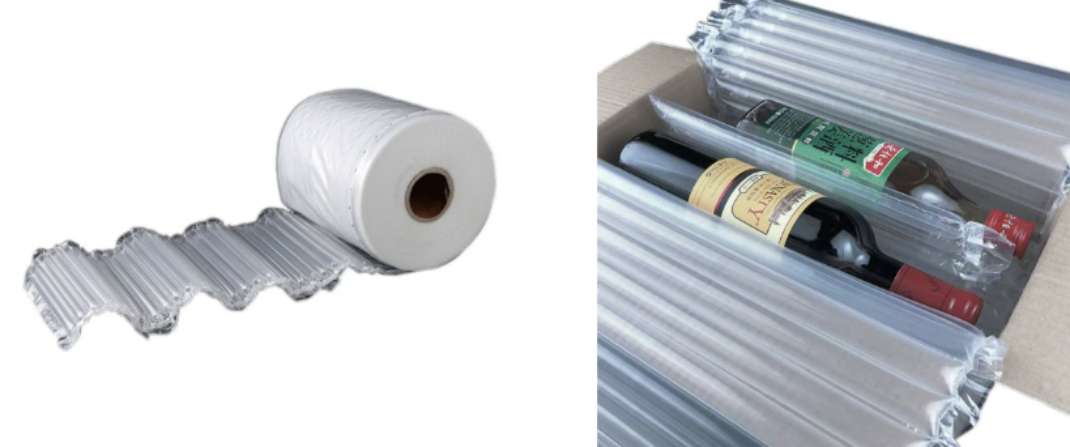
Plastic void fill systems, such as inflated air pillows, bubble cushioning films, and multi-chamber air column bags, rely on lightweight co-extruded polyethylene or high-density linear low-density polyethylene films. These air cushion architectures leverage encapsulated ambient air to absorb kinetic shock, distribute impacts, and multi-axis vibration during transit. The primary physical advantage of plastic void fill lies in its extreme volumetric expansion efficiency: raw, uninflated film rolls occupy less than two percent of their final inflated volume on the warehouse floor, drastically reducing inbound freight transport costs and storage space requirements prior to conversion.
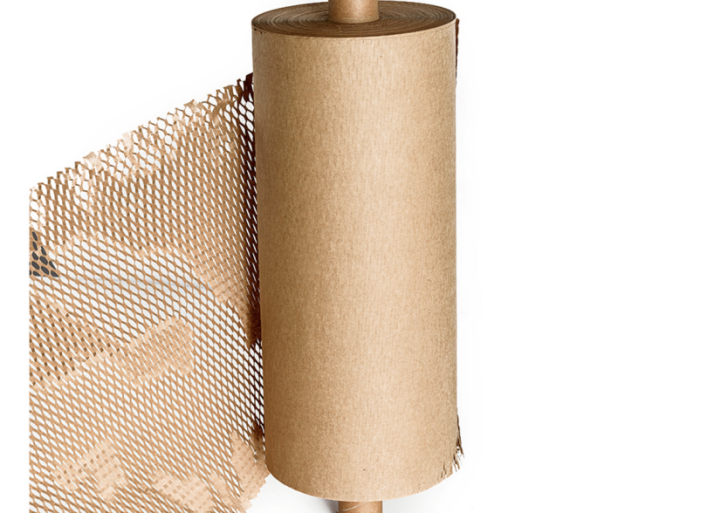
Conversely, paper packaging solutions utilize dense kraft paper converted into three-dimensional protective cushioning via specialized mechanical processing. Systems such as honeycomb paper-making equipment produce a precise hexagonal, interlocking geometry that provides exceptional compressive strength and shear resistance. When expanded during application, honeycomb paper creates a naturally resilient shock absorber that wraps tightly around products without requiring adhesive tape or secondary fasteners. Similarly, embossed paper bubble mailers and heavy-grade corrugated paper liners offer localized impact absorption through controlled mechanical deformation, delivering high load-bearing capacity for heavier retail goods, consumer electronics, and automotive parts.
l Cost Efficiency and Operational Throughput
From a direct raw material cost perspective, plastic air pillow films remain highly competitive for high-volume, low-density void filling applications. Because atmospheric air accounts for over ninety-eight percent of the finished cushion volume, the raw resin material input cost per unit of filled box space is exceptionally low. However, comprehensive operational cost calculations must account for initial machinery capital investment, power consumption, long-term equipment maintenance, and packing line throughput speeds.
Paper void fill systems, while involving higher raw material weight per package, offer significant process efficiencies in multi-item e-commerce fulfillment. Honeycomb structures and paper padding mailers allow packing operators to tear, fold, and wrap goods rapidly without requiring scissors, utility knives, or automated tape dispensers, thereby reducing average packing cycles per parcel. Furthermore, as international regulations increasingly penalize single-use plastics through extended producer responsibility tariffs and national plastic packaging taxes, the net economic equation is progressively shifting in favor of paper-based packaging infrastructure.
l Environmental Impact and Circularity Metrics
The lifecycle profile of packaging materials serves as a primary metric in corporate sustainability reporting and environmental compliance. Paper void fill materials derived from responsibly managed forestry sources or post-consumer recycled fiber excel in end-of-life material recovery. Uncoated paper cushioning, paper bubble mailers, and honeycomb structures are fully curbside recyclable, biodegradable, and compostable under standard municipal waste conditions. This eliminates sorting friction for end consumers and supports closed-loop circular material economies.
Plastic void fill presents a more complex environmental and logistical profile. Modern high-performance air column and bubble cushion films increasingly incorporate post-consumer recycled resin content or specialized oxo-biodegradable additives to reduce fossil fuel dependency. Nevertheless, recycling infrastructure for flexible thin-film plastics remains fragmented globally, requiring dedicated retail drop-off collection systems in many jurisdictions. For brands aiming for immediate compliance with stringent zero-waste mandates and plastic-reduction goals, paper conversion alternatives provide a straightforward path toward verifiable landfill diversion.
Technical Innovations Driving Machinery Design at HJ Machinery
The transition toward versatile, high-throughput packaging operations has required significant technical advancements in packaging machinery engineering. Established manufacturers such as HJ Machinery have played a central role in developing automated systems that bridge the operational gap between traditional plastic cushion production and advanced paper conversion equipment.
l Precision Engineering in Paper Conversion Machinery
Modern paper packaging equipment must maintain consistent structural output and operational stability under continuous industrial workloads. In paper void fill machinery, such as industrial honeycomb paper making equipment, structural performance depends heavily on precise web tension control and uniform mechanical expansion. Advanced machine architectures utilize multi-stage precision slitting and embossing modules driven by digital servo systems to ensure that raw kraft paper feeds smoothly without tearing at elevated production speeds.
To maximize protective cushioning, honeycomb converting equipment cuts precise micro-incisions into heavy paper rolls. When expanded by fulfillment line operators or automated dispensing units, the paper transforms into an expanded geometric grid featuring high lateral stiffness and structural memory. This engineered matrix allows lightweight paper sheets to achieve energy-absorption properties comparable to expanded plastic foams, making it ideal for fragile cosmetics, pharmaceuticals, luxury electronics, and glass container shipments.
l Advanced Pneumatics and Sealing in Plastic Cushion Systems
In parallel with paper packaging innovations, plastic void fill production machinery has evolved toward higher processing speeds, energy efficiency, and multi-format versatility. Equipment such as semi-automatic air column film machinery represents a substantial mechanical refinement in inflatable protective packaging manufacturing. Air column structures utilize independent pneumatic chambers equipped with micro-engineered non-return continuous check valves, ensuring that if an individual air cell suffers a puncture during transport, adjacent columns remain fully pressurized to preserve structural protection around the enclosed product.
The engineering focus in modern air column and air pillow machinery centers on heat-sealing consistency and continuous film tracking. Advanced machine configurations feature continuous rotary heat-sealing bars with digital microcontroller temperature feedback, allowing leak-free seals across varying film thicknesses, multilayer structures, and recycled resin formulations. This precise thermal control eliminates micro-leaks and structural degradation along seal lines, ensuring long-term pressure retention during extended international maritime transit and multi-stage courier handling.
l Industrial Build Quality and Machinery Reliability
The foundational requirement for fulfillment centers processing tens of thousands of parcels daily is unyielding mechanical reliability. Industrial-grade packaging machines feature heavy-duty welded steel chassis structures, precision-ground roller assemblies, and intuitive programmable logic controller touchscreen interfaces. Integrated optical safety sensors, quick-change roll loading mechanisms, and low-maintenance drive assemblies minimize operational downtime and simplify routine maintenance for factory personnel.
Customization capabilities are equally essential for modern e-commerce fulfillment environments. Modern converting lines support variable length slitting, integrated tear-tape application, automatic side-sealing, and return-strip integration directly within the primary machine cycle. These integrated functional features eliminate downstream manual operations, enabling fulfillment facilities to optimize labor requirements while expanding overall throughput capacity.
Strategic Selection for Future-Proof Packaging Lines
As global supply chains navigate changing environmental legislation, volatile raw material markets, and evolving consumer expectations, packaging strategy can no longer rely on a single material medium. Optimal fulfillment operations require a balanced packaging architecture that deploys plastic air cushioning for high-volume, cost-sensitive, lightweight void filling alongside automated paper conversion machinery for premium, fully recyclable, and plastic-free product wrapping.
By integrating robust, industrial-scale equipment capable of processing both traditional films and sustainable paper substrates, logistics providers, courier services, and manufacturing brands ensure maximum operational flexibility, cost control, and long-term regulatory compliance across all international markets.
To learn more about advanced packaging machinery and total packaging solutions, visit the official website at https://www.hangjiamachinery.com/
Media Contact
Jiangyin Hangjia Machinery Co., Ltd. info@hangjiamachinery.com




