Barack Obama Presidential Library

The Safari House Culture and Educational Center

Dr. Martin Luther King in Orange Mound in 1959

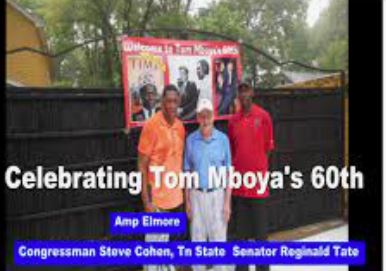
Celebrating Tom Mboya 60th

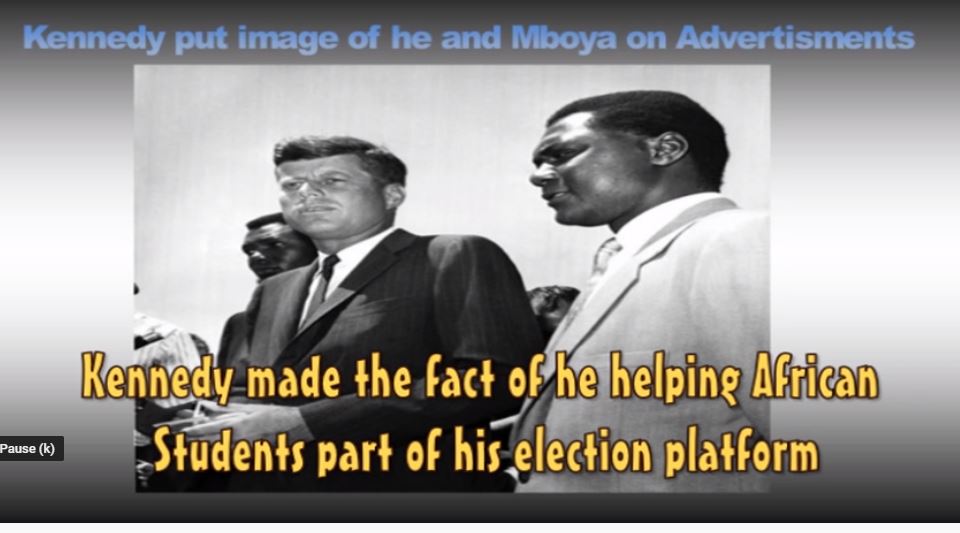
Kennedy and Tom Mboya

The Contemporary Gladiator 1st Kickboxing film

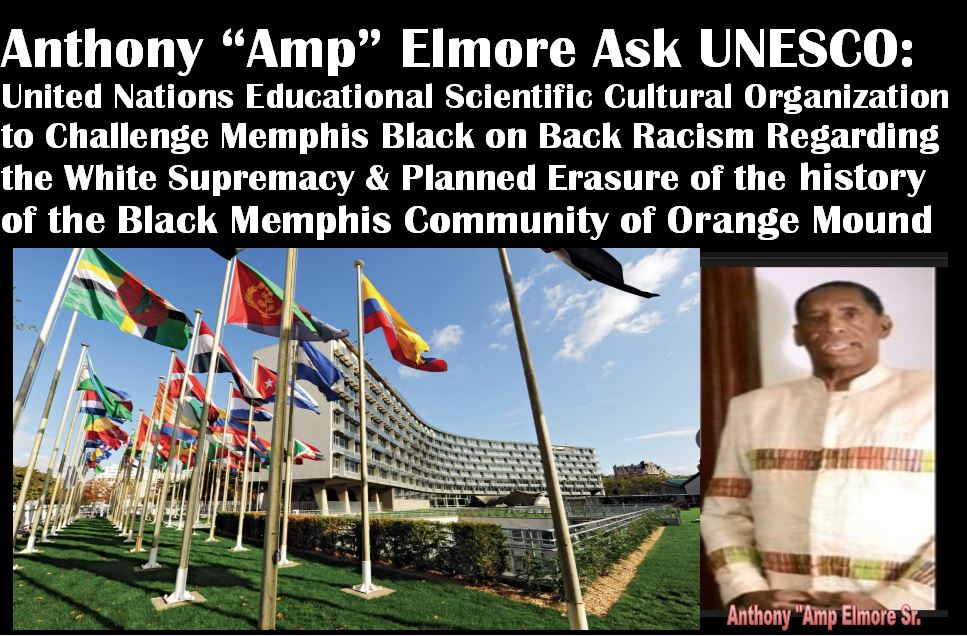
Anthony "Amp" Elmore to ask UNESCO

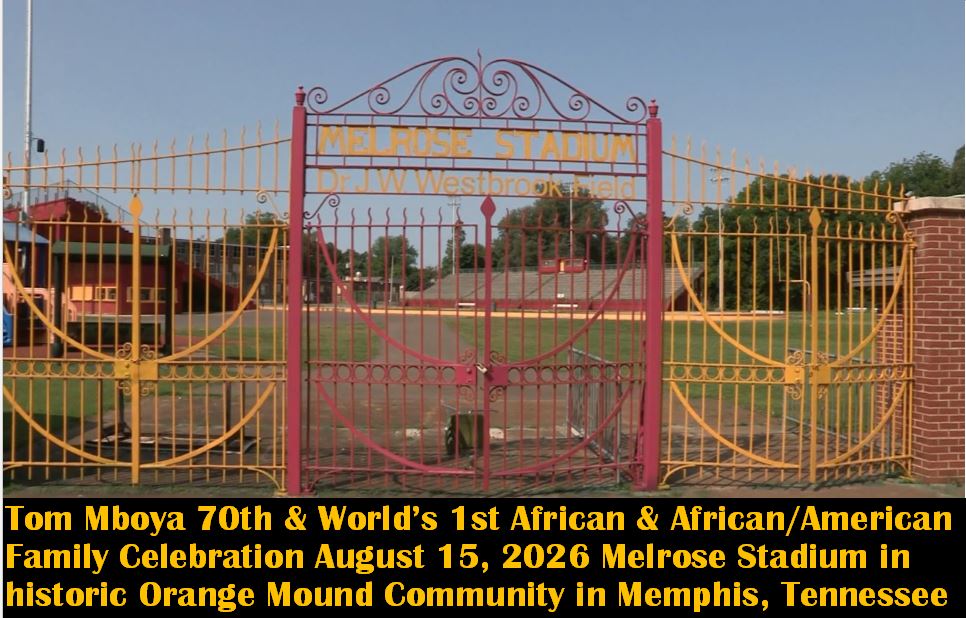
Tom Mboya 70th Orange Mound

Anthony "Amp" Sr. and Jr. Pose with Students

Raila Odinga and Governor Nyongo
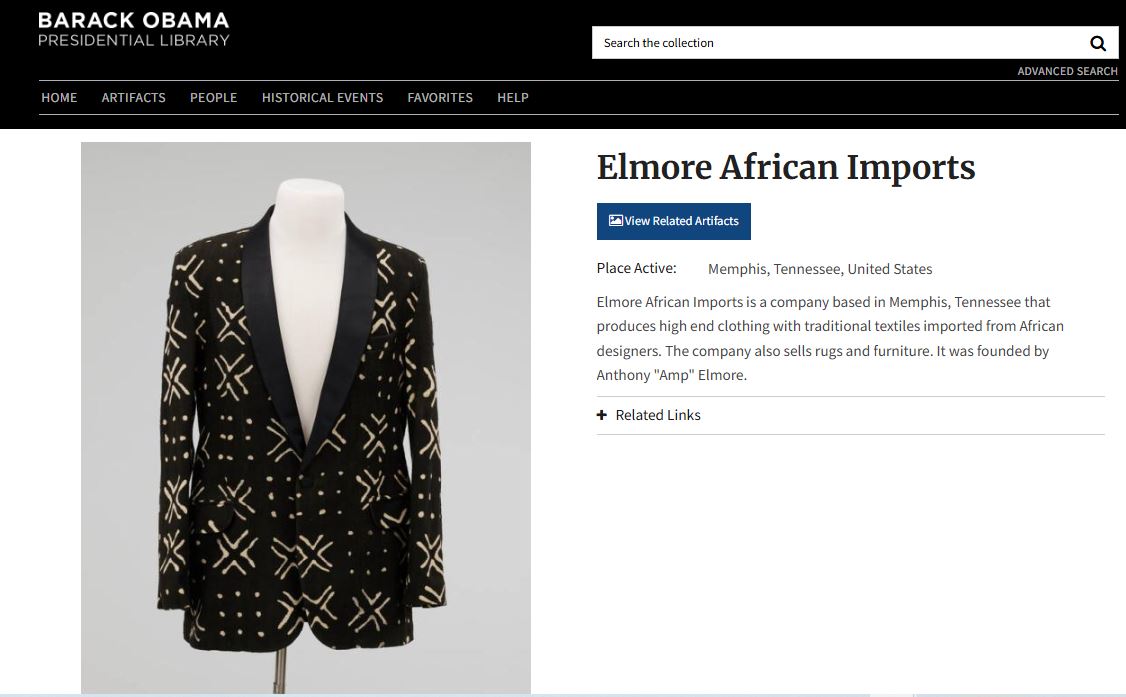



Memphis, Tennessee Dec 13, 2025 (Issuewire.com) - NARA, or the National Archives and Records Administration, designates Anthony “Amp” Elmore’s 2008 African-produced Mud Cloth Tuxedo made for President Obama's 2009 Inauguration, designated on the National Archives and Records Administration's official registry.
This Anthony "Amp" Elmore African produced Tuxedo is the First tailored, Authentic 21st Century African Fashion Honored in the United States National Archives.
Please click Here to see visit the Tuxedo on the Obama Presidential Library Website.
The Obama Presidential Library, the first fully digital presidential library in American history, has enshrined Anthony “Amp” Elmore’s Mud Cloth Tuxedo as the first authentic African‑made fashion artifact created for a sitting U.S. President. This milestone elevates Anthony "Amp" Elmore, Orange Mound, Black Memphis History. Com, The Orange Mound News Network. Com and The Safari Initiative.Com created by Anthony "Amp" Elmore and African fashion into the realm of African cultural diplomacy and permanently embeds African heritage and culture within the National Archives and Records Administration (NARA).
Anthony "Amp" Elmore an Orange Mound Historian and a 5-time World Kickboxing Champion, created A 21st‑Century Cultural Monument, The Mud Cloth Tuxedo, which represents a 21st‑century African fashion cultural art form, designed not merely as clothing but as a diplomatic artifact. Its inclusion in the Obama Library ensures that Africans worldwide can access and celebrate this achievement through the library’s fully digital format. This recognition establishes Anthony “Amp” Elmore as The Father of African Cultural Diplomacy and the African/American Memphis community of Orange Mound, as The Birthplace of African Cultural Diplomacy.
Orange Mound, a Black community in Memphis, is the most continuous and most significant African American community formed by ex‑slaves in American history. "Through Elmore’s African Mud Cloth Tuxedo as well as Anthony "Amp" Elmore's African Cultural integration, Orange Mound is now also recognized as the birthplace of African Cultural Diplomacy in the 21st century.
Click here to see video titled: The Orange Mound Home A Beacon of Hope and Heritage
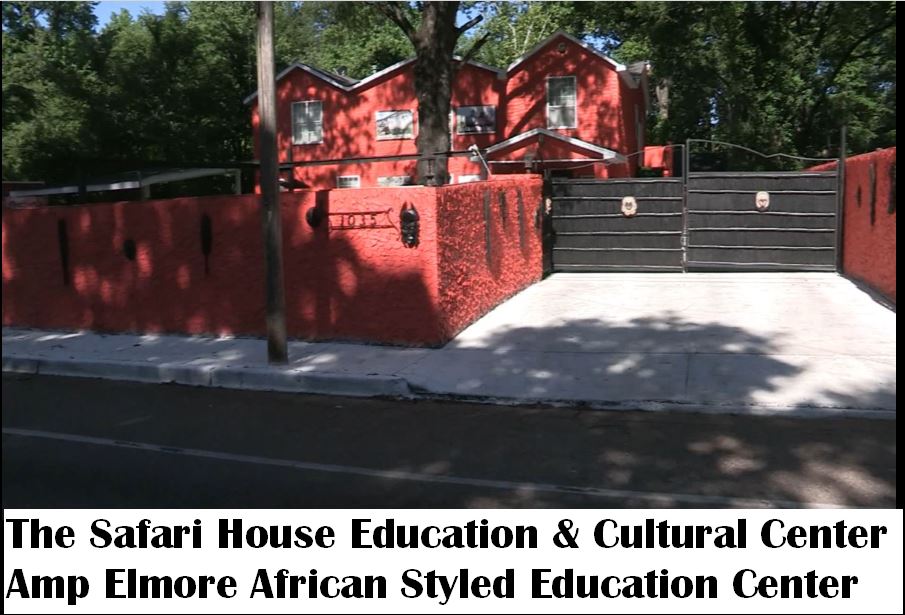
Located at 1035 Semmes Street, The Anthony "Amp" Elmore Home in "The Orange Mound Community" is a beacon of hope and a testament to the rich cultural and historical legacy of Orange Mound, Memphis. Originally named "The Safari House Museum Educational and Cultural Center," the Anthony "Amp" home symbolizes resilience, hope, and community upliftment. This vibrant orange house stands as the epicenter of cultural diplomacy and community pride. A Home Associated with the National Archives and Records Administration, Barack Obama Mud Cloth Tuxedo.
This achievement positions the community not only as a cornerstone of African American history but also as a global cultural landmark, permanently tied to the Obama Library’s digital archive. From now on, anyone who searches for Anthony “Amp” Elmore or Orange Mound will discover this connection, ensuring that the community’s role in cultural diplomacy is permanently indexed in America’s national record.
Anthony "Amp" Elmore notes: “The Mud Cloth Tuxedo is not simply fashion—it is the first authentic African‑made artifact honored in the history of the National Archives. As a 21st‑century African fashion cultural art form created for a sitting U.S. President, it symbolizes African dignity, integration, and the enduring legacy of African culture in shaping America’s future. It also ensures that Orange Mound, Memphis, is forever recognized as the birthplace of African Cultural Diplomacy.”
Anthony “Amp” Elmore is a filmmaker, historian, educator, philosopher, martial artist, and cultural ambassador, who can also be known as The Father of African Cultural Diplomacy. Elmore has dedicated his life to restoring dignity and agency to Black Memphis through historical correction, education, and public advocacy. Anthony "Amp" Elmore, a Historian, notes that the Birth of Orange Mound was in 1879 and not 1890 as previously believed. The Anthony "Amp" Elmore Mud Cloth Tuxedo now stands as a permanent digital monument to African culture in American history.
The News Release reads: "One of my constituents, 5-time karate and kickboxing champion, Anthony “Amp” Elmore, fulfilled his lifelong dream by visiting Ghana in 1998. The Champ visited Accra, and it changed his life. After returning to Memphis, Amp developed his vision of educating and enlightening people about the cultural and economic importance of Africa. At his home and throughout the city, he showcases African artifacts, fabrics, and art."
Through the recognition of his African-styled tuxedo in the National Archives and Records Administration, Anthony “Amp” Elmore is vying to be acknowledged as "The Father of African Cultural Diplomacy." African Cultural Diplomacy is not a political position; rather, it is the practice of African Cultural Integration which brings dignity to Africa and African American history and Culture.
Elmore’s creation of the first all-African home in America stands as a model of African Cultural Diplomacy, demonstrating how African design, art, and lifestyle can be seamlessly integrated into American society. The role of the Father of African Cultural Diplomacy is to inspire African governments — such as Kenya, Ghana, and Ethiopia — to arrange trade deals and cultural exchanges with American/Americans that highlight African products and traditions. Within the African American community of Orange Mound, this vision translates into cultural integration projects where African goods and culture are showcased, creating a living bridge between Africa and America, creating jobs, education and culture.
Click here to see video titled: Most African House in America " The Safari House" Video Tour
The Anthony "Amp" Elmore "Made in Africa Movement" is the living bridge between Africa and African Americans:
Anthony "Amp" Elmore notes his role of the "Father of African Cultural Diplomacy" is to live as an African inspired. African governments such as Kenya, Ghana, and Ethiopia can arrange trade deals and cultural exchanges with American/Americans that highlight the beauty of African products and traditions.
Within the African American community of Orange Mound, this vision becomes real because Anthony "Amp" Elmore created the 1st "All African Furnished home in America" where African furniture, culture and decoration are showcased, creating a living bridge between Africa and America.
A few years ago, the late Ghana Minister of Tourism, the Statesman Jake Obetisebi Lamprey, visited the Anthony "Amp" Elmore home and noted there was no house in Ghana that could compare to the Orange Mound home in regard to African made products and culture.
Anthony "Amp" Elmore notes: This bridge is not built on politics or presidents, but on products — the untold “P” that connects people. What good does it do for African presidents to address America's joint session of Congress or meet with American leaders who recently demeaned Africa, when the true bridge lies in producing better goods at better prices. Once upon a time Made in Japan was a Joke, Japan gained via making better products.
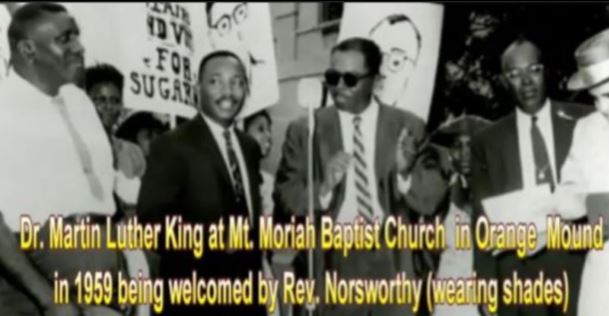
In 1957, Dr. Martin Luther King came to Ghana. In 1959, Dr. Martin Luther King Jr. came to Mt. Moriah Baptist Church in Orange Mound, affirming that the connection between Africans and African Americans must be rooted in dignity and shared progress. That progress is found in products: our African tuxedo, crafted in Ghana and preserved in the Obama Presidential Library, is a symbol of quality “Made in Africa.” Every home in America has furniture, and Anthony “Amp” Elmore proved that African artisans, even without electricity, a roof and running water, could furnish a 5,000-square-foot home in America in Orange Mound with skill, pride, and craftsmanship.
The "Made in Africa Movement" asks African leaders to bring to America what people truly need: quality African furniture, clothing, food, and culture. American homes celebrate Early American, French, Italian, and Oriental styles, but where are the African products?
In May of 2024 Kenya President Dr. William Ruto was not allowed to address the "Joint Session of Congress" Anthony "Amp" Elmore asks Kenya President William Ruto to come to Memphis and Address a Joint session of Africans and African/Americans honoring one of Kenya's Founding Fathers Tom Mboya via coming to America and bringing with him African made products to integrate in American culture.
In regards to Kenya President, Dr. William Ruto, Anthony "Amp" Elmore, via this story, pulls "The Trump Card" and not that of American President Donald J. Trump. Kenya President Dr. William Ruto is a member of the "Kalenjin ethnic group," whereas in 1992, Anthony "Amp" Elmore met Kenya President the late Daniel Arap Moi, who named Anthony "Amp" Elmore an African Ambassador, whereas Anthony "Amp" Elmore is doing the work his fellow tribesman and Kenya President.
The Kenya unity song was written in 2015. Click here to listen to the Anthony "Amp" Elmore Tom Mboya Kenya Unity song.
The point is clear: Anthony “Amp” Elmore traveled to Ghana, Kenya, and Ethiopia, investing his own money to prove that African products can stand with pride in America. The tuxedo made in Ghana is not just clothing — it is a bridge. "The Made in Africa Movement" is the path we must cross, the living connection that unites Africans and African Americans through products, pride, and cultural diplomacy.
On August 15, 2026, the world will mark the 70th anniversary of Tom Mboya’s arrival in America on his 26th birthday, August 15, 195,6 a moment that would forever alter the course of American history and culture. Tom Mboya, the brilliant Kenyan trade unionist, Pan-Africanist, and statesman, stands as the most significant African figure to influence American society.
His legacy is best captured by the John F. Kennedy Presidential Library, which records: “At a key point in the 1960 presidential campaign, a dynamic young leader from Kenya named Tom Mboya visited Senator John F. Kennedy. Mboya led a campaign of his own that would eventually bring hundreds of African students to America for higher education, including Barack Obama Sr., President Obama’s father. Kennedy’s decision to support the effort became an issue in the election and possibly a factor in his narrow victory.”
This single act of cultural diplomacy reshaped American politics. It was Mboya’s influence that helped shift Black Americans, once loyal to the Republican Party of Abraham Lincoln, toward the Democratic Party in support of Kennedy — a political realignment that continues to define American politics today. Without Tom Mboya’s vision and guidance, there would never have been a Barack Obama, for it was Mboya who selected and directed the young Obama Sr. to study in Hawaii, setting in motion the chain of events that made possible the first African American presidency.
Anthony "Amp" Elmore notes that despite his monumental contributions, Tom Mboya has not been properly honored in Kenya or across Africa. It is Anthony “Amp” Elmore, moved by the spirit of Tom Mboya, who sought to fill this void. In 2013, Elmore traveled from America to Kenya to honor Mboya and offer prayers, recognizing the spiritual and historical weight of his legacy.
In 2016, during the 60th anniversary of Mboya’s arrival in America, Elmore joined with Memphis Congressman Steve Cohen and Tennessee State Senator Reginald Tate to honor Mboya’s contributions, ensuring that his name was remembered in Memphis even when it was neglected in Nairobi. Elmore’s commitment to Mboya is not only historical but deeply personal, as he has given Mboya something Kenya itself did not — a song, a spiritual tribute that enshrines Mboya’s memory in cultural form.
Now, as the 70th anniversary approaches in 2026, Anthony “Amp” Elmore calls upon African governments and UNESCO to recognize Tom Mboya’s unparalleled role in shaping American history and to join in a celebration that bridges Africa and African America. On Saturday, August 15, 2026, Tom Mboya’s 70th anniversary and his 95th birthday will be commemorated in Memphis, Tennessee, in the historic Black community of Orange Mound — the birthplace of African Cultural Diplomacy.
This event will not be a sterile political gathering but a vibrant cultural festival showcasing 21st-century African garments, food, music, and traditions. It will be a living demonstration of African Cultural Integration, where African products and creativity are celebrated alongside African American heritage. Elmore envisions African presidents and leaders traveling to Memphis not to address Congress or meet with American politicians, but to honor the authentic relationship between Africans and African Americans in a community that has long embodied resilience, dignity, and cultural pride.
Anthony "Amp" Elmore's achievement is recognized by NARA, or "National Archives and Records Administration.
Just as Tom Mboya used education as a tool of diplomacy, Elmore uses fashion, film, architecture, and cultural exchange to continue the mission of African Cultural Diplomacy. The tuxedo crafted in Ghana and preserved in the Obama Presidential Library, the Safari House furnished entirely with African-made products, and the film The Contemporary Gladiator are all modern echoes of Mboya’s vision. Together, they prove that African culture can and must be integrated into American society with pride and permanence.
The call is clear: Africans must acknowledge Tom Mboya’s work, honor his legacy, and join Anthony “Amp” Elmore in Memphis on August 15, 2026, to celebrate the living bridge between Africa and African Americans. This is not only a tribute to Mboya but a declaration of the future — a future where African governments embrace cultural diplomacy, arrange trade deals that showcase African products, and uplift African American communities through shared heritage.
The record of Tom Mboya is one of global unity, education, and cultural diplomacy. His legacy is not only Kenyan but profoundly American, for he helped shape the course of U.S. history. Mboya’s vision was rooted in education and integration. He spoke at liberal white colleges across America, securing scholarships for African students at a time when opportunities were scarce. It was two white women who paid for Barack Obama Sr.’s airfare to Hawaii, a gesture that would ultimately change the trajectory of American history.
Unknown and untold is the story of President John F. Kennedy’s early connection to Africa. In 1959, as a young senator seeking foreign policy experience, Kennedy recognized the importance of Africa in the global Cold War struggle. While Kennedy supported “Airlift America,” bringing African students to the United States, Oginga Odinga arranged for Kenyans to be educated in Russia.
This competition between East and West made Africa a central stage in the ideological battle of the era. Kennedy became known as “Mr. Africa,” and his support for Mboya’s airlift program not only influenced the 1960 presidential election but also reshaped American politics. It was Tom Mboya who integrated many American colleges by bringing African students into spaces where Black Americans were still excluded.
In Black history, Ghana’s independence in 1957 marked a turning point. Dr. Martin Luther King Jr.’s first international trip was to Ghana to celebrate its freedom, where he stood alongside President Kwame Nkrumah. Nkrumah honored Tom Mboya, recognizing his leadership in Pan-Africanism.
Kenya’s history is equally intertwined with America: it was Thurgood Marshall, America’s first Black Supreme Court Justice, who helped draft Kenya’s 1st constitution. These connections show that African independence and American civil rights were deeply linked.
Anthony “Amp” Elmore’s journey continues this legacy of African Cultural Diplomacy. In 1990, his film The Contemporary Gladiator played in Kenya, where he was welcomed as a hero. His work demonstrated that African American culture could resonate deeply with African audiences, just as Mboya had brought African students to America decades earlier.
The Amp Elmore Obama African tuxedo is preserved in the Obama Presidential Library in a digital format that the world can view.
Elmore’s contributions extend beyond film and fashion. Together with Memphis Congressman Steve Cohen, he organized the first "Black History Month African dinners," creating a space where African and African American traditions could be celebrated side by side. His personal ties to Kenya run deep: he was married to a Kenyan woman, and though they are no longer married, they share a son, Anthony “Amp” Elmore Jr., now 27 years old.
In August 2024, Kisumu Governor Professor Peter Nyong’o invited Elmore to the Festac Festival, further cementing his role as a cultural bridge. Elmore also filmed the late former Kenyan Prime Minister Raila Odinga in a video titled You Are My Friend, symbolizing the bonds of friendship between Africans and African Americans.
The tuxedo crafted in Ghana and preserved in the Obama Library is more than a garment. It represents family, heritage, and diplomacy. It is a tuxedo for Barack Obama, the Kenyan son whose father came to America through Tom Mboya’s airlift. The garment ties Africa and America together in a single thread of history. It is a symbol of African craftsmanship, African pride, and African integration into American life.
To honor Black America is to honor Dr. King. And to honor Dr. King is to come to Memphis, the city where he gave his life for justice. Honoring Dr. King’s legacy means honoring Africa and family, for King’s vision was not limited to civil rights in America but extended to global unity. The real legacy of Dr. King is fulfilled when Africans and African Americans come together in Memphis, in Orange Mound, the birthplace of African Cultural Diplomacy, to celebrate culture, products, and family.
Click here to see the Tom Mboya 60th held in Orange Mound 2016.
On August 15, 2026, the 70th anniversary of Tom Mboya’s arrival in America will be commemorated. This date also marks what would have been his 95th birthday. Anthony “Amp” Elmore calls upon African governments, UNESCO, and African presidents to acknowledge Mboya’s work and to come to Memphis to celebrate. This will not be a political summit but a cultural festival — a showcase of African garments, food, and traditions in Black Orange Mound. It will be a living demonstration of African Cultural Diplomacy, where Africans and African Americans unite not through politics but through products, pride, and family.
Media Contact
Orange Mound News Network anthony@elmorecarpets.com 9014524330 1035 Semmes Street http://blackmemphishistory.com