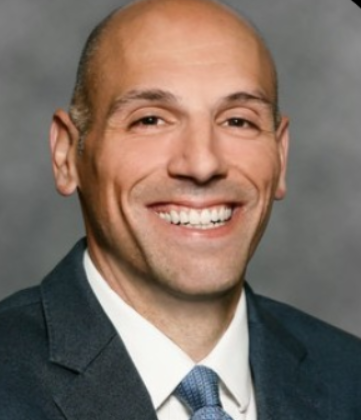
Littleton, Colorado Feb 19, 2026 (Issuewire.com) - As artificial intelligence dominates boardroom conversations and investor decks across the SaaS industry, Nicholas Mirisis, seasoned Chief Executive Officer and operating partner, is offering a clear and cautionary message: AI is not a cure for broken operations. Without strong fundamentals, disciplined execution, and accountable leadership, even the most advanced AI tools will fail to deliver meaningful results.
Mirisis, who brings more than two decades of experience scaling and transforming vertical SaaS companies across global markets, has seen this pattern repeat itself time and again. “AI can amplify performance,” he explains, “but it also amplifies dysfunction. If your go-to-market engine, cost structure, or operating discipline is broken, AI will not fix it. It will simply help you fail faster.”
The AI Hype Cycle Meets Operational Reality
Across SaaS, companies are racing to embed AI into products, internal workflows, and customer experiences. From automated sales outreach to predictive churn models, AI is often positioned as a shortcut to efficiency, growth, and margin expansion. According to Mirisis, that framing is fundamentally flawed.
“AI is a force multiplier, not a tactic or a task,” he says. “When leadership teams treat it as a substitute for operational rigor, they are setting themselves up for disappointment.”
Mirisis emphasizes that sustainable SaaS performance still depends on the same core elements it always has: clear customer value, disciplined go-to-market execution, strong unit economics, and a culture of accountability. AI can enhance those systems, but it cannot replace them.
Lessons from the Front Lines of SaaS Turnarounds
As CEO and Board Member of a Series-A EdTech SaaS company based in Columbus, Ohio, Mirisis led a successful turnaround that illustrates this principle in practice. Under his leadership, the company achieved greater than Rule of 35 performance and generated more than $11 million in EBITDA. While AI and machine learning played an important role, they were deployed only after foundational issues were addressed.
The turnaround began with rebuilding the company’s go-to-market infrastructure, clarifying ICP focus, tightening sales execution, and aligning product development with real customer needs. Only then did Mirisis and his team embed AI and ML capabilities to enhance decision-making, optimize workflows, and improve customer outcomes.
“AI didn’t create the turnaround,” Mirisis notes. “Operational discipline did. AI helped us scale what was already working.”
Where SaaS Leaders Go Wrong
According to Mirisis, one of the most common mistakes SaaS executives make is attempting to overlay AI on top of fragmented systems and misaligned teams. When data quality is poor, processes are inconsistent, and accountability is unclear, AI outputs become unreliable at best and misleading at worst.
“You cannot automate your way out of chaos,” he warns. “If your CRM is a mess, your pipeline hygiene is weak, and your customer success motion is reactive, AI will not magically fix those problems.”
He adds that many companies underestimate the cultural component of AI adoption. Teams must trust the data, understand how to act on insights, and be held accountable for outcomes. Without that performance culture, AI becomes another unused dashboard rather than a driver of results.
A Track Record Built on Fundamentals
Mirisis’s perspective is grounded in a career defined by large-scale SaaS transformations and value creation. He has held senior executive roles at SamCart, GoCanvas, and Dude Solutions, where he led operational and growth initiatives that culminated in major acquisitions.
At Dude Solutions, his leadership contributed to Siemens’ $1.57 billion acquisition, while at GoCanvas, he helped drive Nemetschek’s acquisition at 11.5x ARR. In each case, success was driven not by chasing trends, but by building disciplined operating models capable of scaling profitably.
Across industries including EdTech, FinTech, GovTech, Healthcare, and Defense Tech, Mirisis has consistently delivered long-term enterprise value by focusing on fundamentals first.
AI as an Enabler, Not a Crutch
Mirisis is not anti-AI. On the contrary, he views it as a powerful enabler when applied correctly. In high-performing SaaS organizations, AI can sharpen forecasting accuracy, improve customer retention, enhance pricing strategy, and streamline internal operations.
The difference lies in intent and sequencing. “You earn the right to use AI effectively,” Mirisis explains. “That right comes from clean data, clear ownership, and disciplined execution.”
He encourages leaders to ask hard questions before investing heavily in AI initiatives. Are our core metrics trusted? Is our operating cadence consistent? Do teams know what success looks like? If the answer is no, AI investment should be delayed until those gaps are addressed.
What Investors Are Starting to See
Mirisis notes that investors are becoming more discerning as well. While AI narratives still attract attention, private equity and growth investors are increasingly focused on EBITDA quality, retention, capital efficiency, and operational resilience.
“Investors are no longer impressed by AI buzzwords alone,” he says. “They want to see systems that work, teams that execute, and leaders who understand how to translate innovation into cash flow.”
This shift aligns with Mirisis’s fiduciary mindset, developed through years of operating in venture-backed, private equity, growth equity, and founder-led environments. In every capital structure, fundamentals remain the common denominator of success.
A Message for the Next Generation of SaaS Leaders
For founders and executives navigating today’s AI-driven landscape, Mirisis offers a clear takeaway: fix the machine before upgrading the engine. AI should come after operational clarity, not before it.
“The future of SaaS will absolutely include AI,” he says. “But the winners will be the companies that pair innovation with discipline. Technology evolves. Fundamentals endure.”
With a Master’s degree in Government from Johns Hopkins University and a Bachelor’s degree in Political Science from North Carolina State University, Mirisis brings both analytical rigor and real-world operating experience to his leadership philosophy. As a partner at Fulcrum Venture Group and an advisor to multiple boards, he continues to shape conversations around SaaS growth, value creation, and leadership development.
In a market eager for shortcuts, Nicholas Mirisis’s warning stands out for its clarity: AI will not save broken operations. Only disciplined leadership will.
Contact
Nicholas Mirisis
Partner, Fulcrum Venture Group
Littleton, CO
LinkedIn: https://www.linkedin.com/in/nicholasmirisis/
Email: nickmirisis@gmail.com
Media Contact
Nicholas Mirisis nickmirisis@gmail.com (415)4944103 Littleton, CO