Shenzhen, Guangdong May 31, 2026 (Issuewire.com) - The rapid evolution of medical electronics demands a synergy between cutting-edge design and precision manufacturing. As global healthcare sectors pivot toward wearable diagnostics and minimally invasive surgical tools, the underlying hardware must meet unprecedented standards of reliability. The Shenzhen International Electronics Circuit Exhibition (CIECE) serves as a critical nexus for this industrial progress. Within this high-stakes environment, professional PCB assembly prototyping services facilitate the transition from conceptual engineering to functional medical devices. Venture Electronics Tech Ltd. utilizes this platform to demonstrate how integrated fabrication component sourcing and precision assembly accelerate the deployment of life-critical technologies.
CIECE: A Catalyst for Medical Electronic Innovation
Located in the heart of the "Factory of the World," CIECE represents a strategic hub for the Asia-Pacific printed circuit board and electronic assembly supply chain. The exhibition attracts a diverse spectrum of materials science experts, equipment manufacturers, and technical solution providers. For Original Equipment Manufacturers (OEMs) and Original Design Manufacturers (ODMs) in the medical sector, the event offers a venue to verify the technical competencies of potential production partners.
The presence of Venture Electronics at CIECE addresses a fundamental challenge in medical hardware development: the balance between strict regulatory compliance and the need for rapid iteration. Medical technology companies require more than just a component supplier; they seek partners capable of navigating the complexities of New Product Introduction (NPI) while maintaining high speed. By presenting a turnkey model that spans from initial quote to final delivery, the organization showcases a practical methodology for reducing time-to-market in a competitive global landscape.
Bridging Rapid Prototyping and Medical Standards
The medical device industry is characterized by low-volume, high-complexity production cycles. Unlike consumer electronics, medical hardware requires rigorous validation through every stage of development. Prototyping in this field is not merely about physical representation. It involves functional verification under strict operating conditions. Venture Electronics addresses these needs by offering rapid turnaround times, often delivering PCB assemblies within 8 to 48 hours.
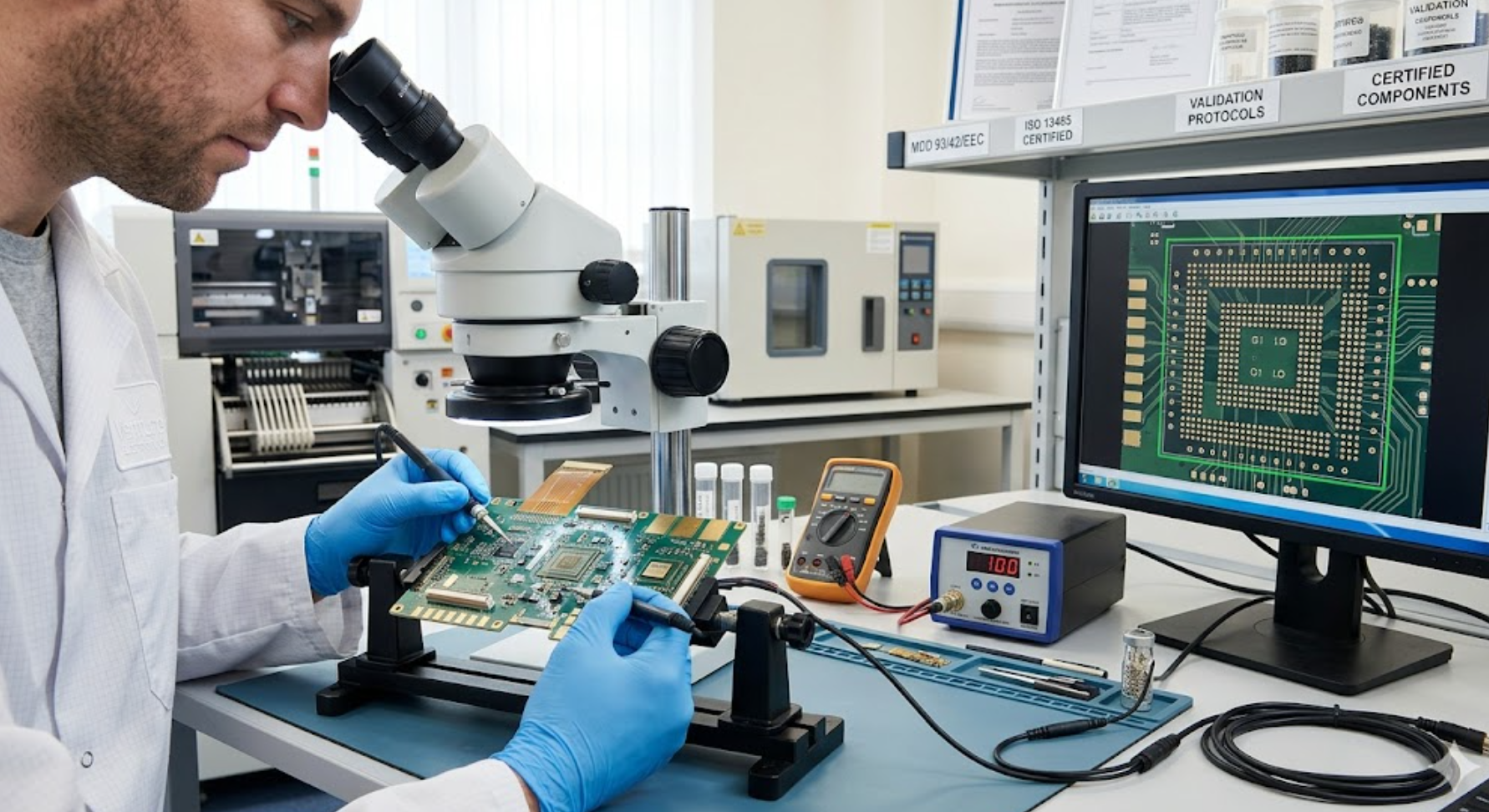
This speed does not come at the expense of quality assurance. The assembly process integrates specialized medical industry validation protocols, including Installation Qualification (IQ), Operational Qualification (OQ), and Performance Qualification (PQ). These systemic checks ensure that every prototype functions within specified parameters. Furthermore, the convergence of PCBA with 3D printing and CNC machining allows for the delivery of complete electromechanical prototypes. This holistic approach enables engineers to test ergonomics and Electromagnetic Compatibility (EMC) early in the design phase. Early detection of structural interference or signal integrity issues prevents costly delays during the later stages of mass production.
Advanced Flexible Circuits and Micro-Assembly Capabilities
Modern medical applications are increasingly moving away from rigid, bulky systems toward "near-body" or wearable solutions. These devices must conform to human anatomy while enduring constant physical stress. Achieving this requires a combination of specialized materials and high-precision manufacturing techniques.
- Wearable Solutions and Material Innovation:
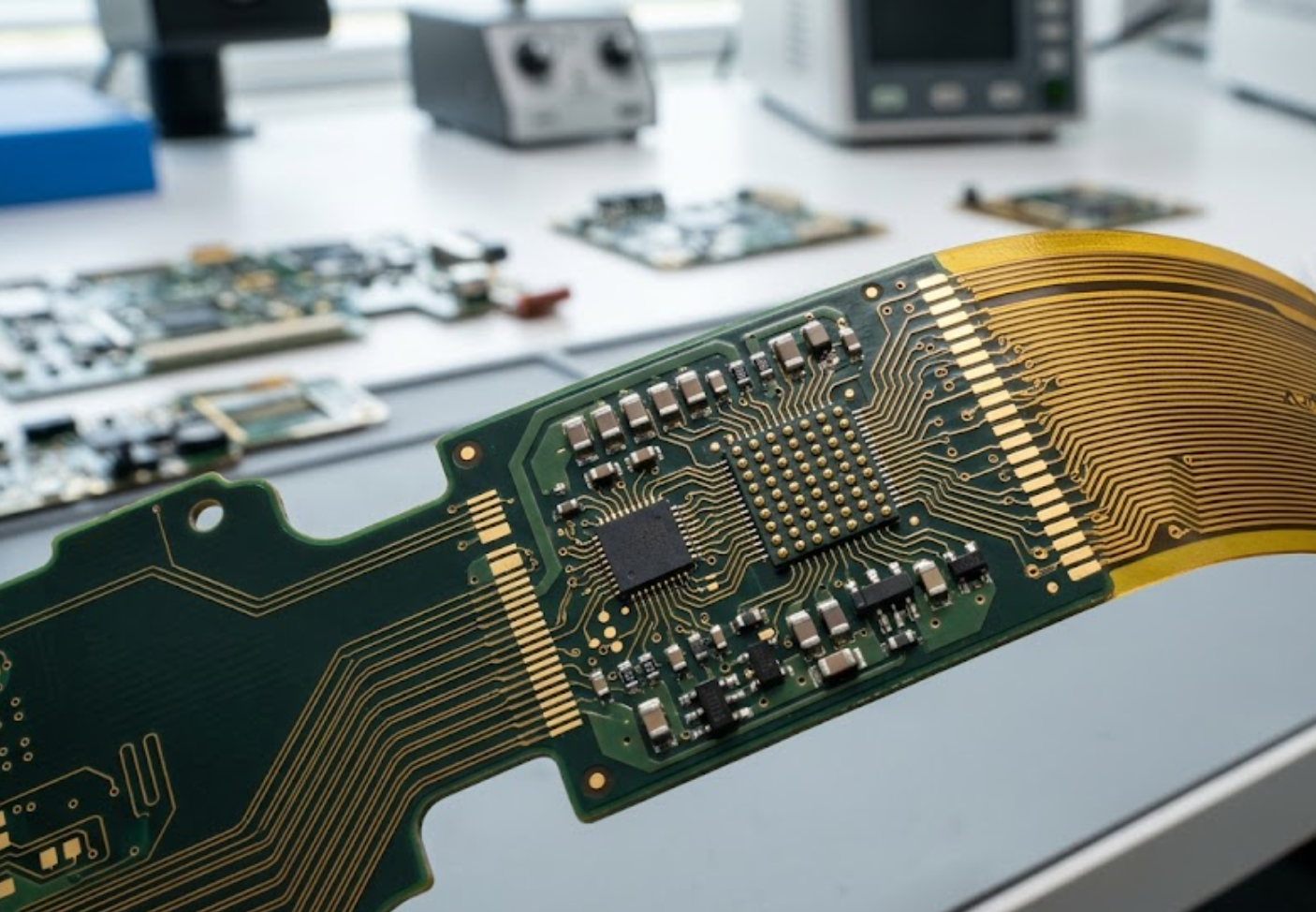
High-performance materials such as Polyimide and Rigid-Flex technology serve as the foundation for solving complex mechanical challenges. Technical demonstrations highlight how these flexible substrates provide durability and fatigue resistance superior to traditional rigid boards. These solutions are vital for smart patches, portable monitors, and diagnostic wearables that require a seamless interface with the user without compromising signal integrity.
- Precision Micro-Assembly for Miniaturization
As medical devices shrink, the density of electronic components increases significantly. Current manufacturing standards now accommodate 0201 components and 0.4mm pitch Ball Grid Arrays (BGAs). This level of miniaturization is essential for developing the next generation of implantable sensors and handheld surgical instruments that demand high functionality within a minimal footprint.
- Advanced Inspection and Reliability Assurance
Maintaining reliability at a microscopic scale requires sophisticated verification techniques. Automated X-Ray inspection serves as a critical non-destructive method to verify solder joint integrity beneath high-density components. These capabilities ensure that even the most compact medical devices remain robust and failure-free during critical clinical use, adhering to the industry's zero-failure mandates.
The NPI Path: From Schematic to Regulatory Compliance
Successful medical product launches depend on proactive engineering. Design for Excellence (DFx) principles, specifically Design for Manufacturing (DFM) and Design for Reliability (DFR), must be applied during the prototyping stage. By evaluating thermal management, insulation resistance, and voltage endurance early on, manufacturers can mitigate risks that typically surface during mass production. This foresight reduces the likelihood of expensive redesigns and ensures that the final product adheres to international safety standards.
The transition from a single prototype to low-volume production requires a seamless data transfer and supply chain management system. A "One-Stop Shop" model simplifies this process by providing a single point of accountability. Following the initial engagement at CIECE, the workflow moves from first-article inspection to full-process traceability. Traceability is a non-negotiable requirement for medical compliance, ensuring that every component in a device can be tracked back to its source. This integrated approach minimizes the logistical burden on medical firms, allowing them to focus on clinical innovation rather than vendor management.
Conclusion: Exploring the Future of Medical Manufacturing at CIECE
The showcase at CIECE underscores a shift in how medical electronics are brought to life. Reliability and speed are no longer mutually exclusive concepts. Through a combination of rapid prototyping, advanced micro-electronics assembly, and rigorous compliance frameworks, Venture Electronics demonstrates a viable path for the next generation of healthcare technology.
This commitment to engineering excellence provides a foundation for developers to explore new frontiers in diagnostics and patient care. By offering a bridge between innovative concepts and market-ready products, professional manufacturing services empower the medical industry to meet evolving global health challenges. The integration of technical expertise with a robust regional supply chain ensures that the future of medical devices remains both innovative and safe.
For more information on professional PCB solutions, please visit: https://www.venture-mfg.com/
Media Contact
Venture Electronics Tech Ltd. info@venture-mfg.com +86-0755-85296692 Building 36, Chentian Industrial Area Xixiang, Bao an District, Shenzhen, GuangDong, China http://www.venture-mfg.com




