
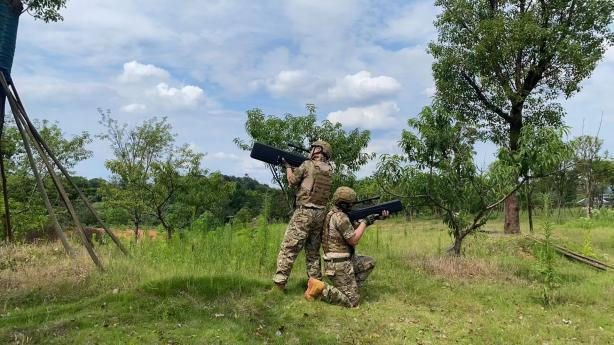
Chongqing, China Apr 16, 2026 (Issuewire.com) - In the heart of Riyadh, the vast expanse of the World Defense Show (WDS) 2026 bustles with the hum of next-generation defense systems and the rhythmic conversation of global security leaders. Amidst the desert sun reflecting off sleek armored vehicles and advanced tactical gear, a crowd gathers at a specialized tactical demonstration zone. An operator, clad in field gear, holds a compact, rugged device that periodically emits a sharp, clear alert. The screen flickers with real-time signal telemetry, pinpointing a stealthy FPV drone long before it becomes visible to the naked eye. This scene marks the prominence of MYT, recognized as a Top Rated Handheld Drone Detector Exporter in China, showcasing its latest innovations. The handheld drone detector in focus is not just a sensor; it is a critical lifeline for modern infantry and security personnel, designed to detect, identify, and track unauthorized unmanned aerial vehicles (UAVs) across complex radio frequency environments. Its lightweight design and intuitive interface represent a shift in electronic warfare—from heavy, vehicle-mounted systems to agile, person-portable dominance.
Global Defense Synergy and Real-World Validation
The World Defense Show 2026 serves as the ultimate stage for such technological breakthroughs. As the global defense community grapples with the increasing "drone-ification" of modern conflict, the demand for reliable, field-tested detection equipment has reached an all-time high. At the MYT exhibit, the atmosphere is one of intense professional exchange. Delegations from across the Middle East, Europe, and Southeast Asia are seen handling the devices, testing the tactile response of the buttons, and scrutinizing the clarity of the spectral display. One European defense attache, after observing a live detection drill, remarked on the device’s ability to differentiate between common industrial drones and modified tactical FPVs—a distinction that is often the difference between a false alarm and a successful mission. This real-time validation from end-users underscores the market’s shift toward equipment that prioritizes signal accuracy and low false-positive rates.
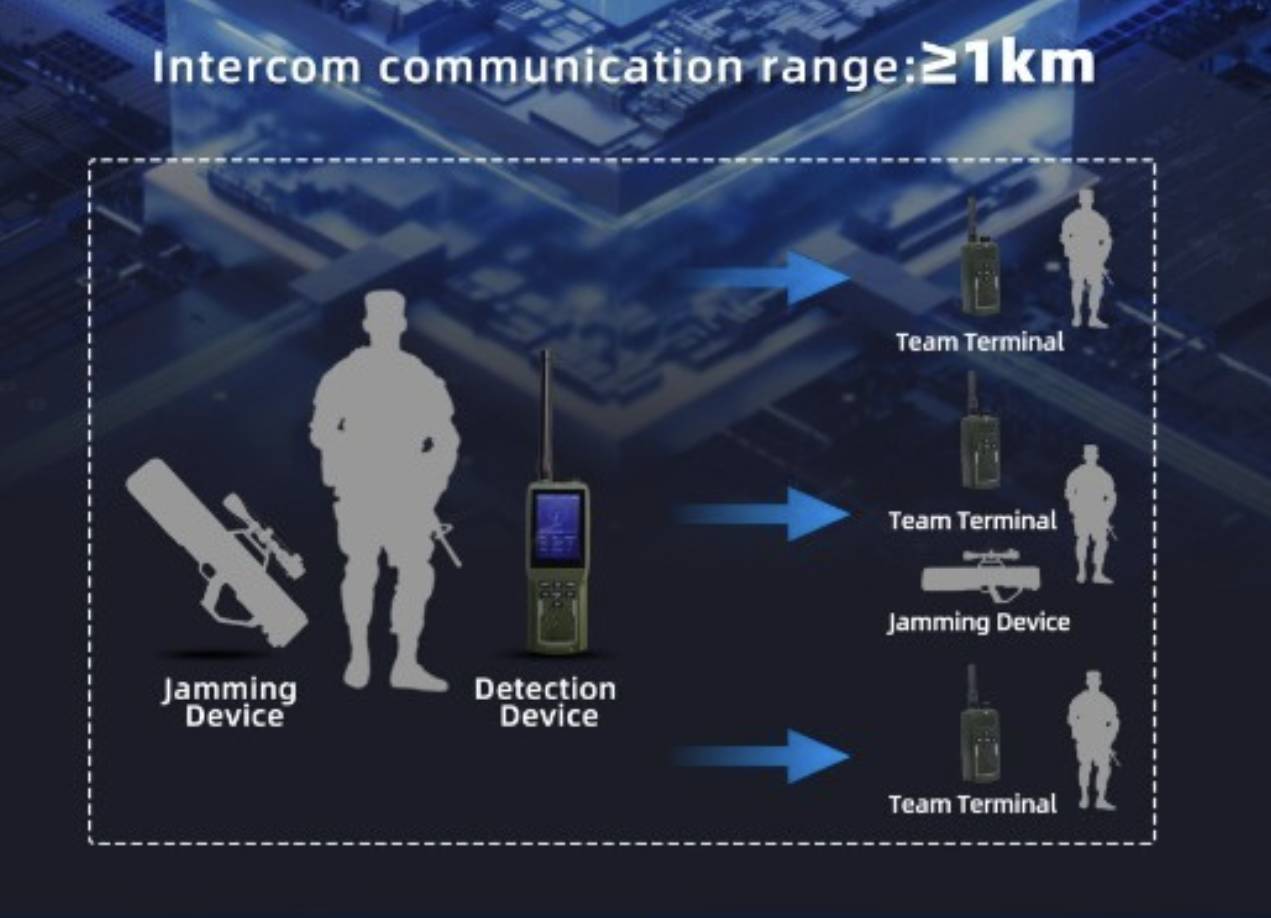
The exhibition's focus on "Integrated Defense" perfectly mirrors the trajectory of the industry. Visitors at WDS 2026 are no longer looking for standalone gadgets; they are seeking ecosystems. MYT’s presence at the show highlights how handheld detection fits into a broader defensive layer. Industry experts at the event noted that the success of these detectors in the global market is largely due to their adaptability. Whether it is protecting a stationary high-value asset or providing a "moving bubble" of protection for a mobile patrol, the equipment demonstrated at the show proves that Chinese innovation in the low-altitude security sector has reached a level of maturity that rivals traditional Western counterparts. The feedback from local Saudi security contractors was particularly telling, as they emphasized the importance of equipment that can withstand extreme thermal conditions while maintaining high-frequency sensitivity—a challenge MYT’s hardware has been specifically engineered to meet.
Advancements in Handheld Detection Technology
This level of engineering excellence is not accidental but is rooted in a deep institutional foundation. MYT is affiliated with the Institute of Internet of Things (IoT) under the Chinese Academy of Sciences, a pedigree that grants it access to some of the most advanced low-altitude security research in the world. The company’s technical backbone is formidable, featuring an R&D team of over 100 members supported by more than 120 test engineers. This workforce includes an academician of the Chinese Academy of Sciences, 17 Ph.D. holders, and 48 master's degree holders. Such a high concentration of academic expertise allows the firm to solve the most difficult "needle in a haystack" problems in signal detection.
The handheld drone detector serves as a primary defense tool, offering unique advantages over stationary systems. Its greatest strength lies in its mobility and zero-infrastructure requirement; it provides immediate situational awareness for personnel on the move. Technically, the device utilizes a sophisticated passive spectrum sensing architecture. Unlike active radar, which emits signals that can reveal the operator's position, this handheld unit remains silent, "listening" for the specific radio frequency (RF) signatures of drone control links and video downlinks. This is particularly effective against FPV (First Person View) drones that often utilize non-standard frequencies to bypass traditional electronic countermeasures.
The device features an integrated ultra-wideband antenna system that allows for both omnidirectional sensing—providing 360-degree early warning—and directional pinpointing to locate the drone's bearing. Its internal processing unit is pre-loaded with a massive, regularly updated library of drone signal protocols, enabling it to identify the manufacturer and model of the threat in milliseconds. This provides operators with actionable intelligence: knowing whether they are facing a commercial scout or a specialized loitering munition. Furthermore, the hardware is designed for high-interference environments, using digital filtering to separate target signals from the noise of Wi-Fi, cellular towers, and other urban electronic clutter.
Diverse Application Scenarios and Global Reach
The application scenarios for these handheld and integrated systems are vast. Beyond the battlefield, they are increasingly deployed for the protection of critical infrastructure, such as oil refineries in the Middle East and government buildings in Europe. The handheld drone detector is a favorite for VIP protection details and border patrol units who require a device that can be deployed in seconds. The integration of AI-based recognition and tracking for photoelectric cameras further enhances these capabilities, allowing for a "detect-and-confirm" workflow where the radio spectrum identifies the presence of a drone and the camera provides visual verification.
As the World Defense Show 2026 concludes, the narrative is clear: the future of low-altitude defense lies in the fusion of academic research and practical, field-proven hardware. The handheld drone detector has evolved from a niche tool into a standard requirement for security forces worldwide. With a commitment to independent R&D and a foundation built on scientific inquiry, MYT continues to set the benchmark for the anti-drone industry. By bridging the gap between complex radar signal processing and the needs of tactical operators, the company ensures that the skies remain secure, one signal at a time.
For more information on the latest in drone detection technology and integrated defense solutions, please visit the official website: https://www.chinaantidrone.com
Media Contact
Chongqing Miao Yi Tang Technology Co., Ltd. gary@chinaantidrone.com




