Shaoxing, Zhejiang Jun 14, 2026 (Issuewire.com) - Imagine a traditional hosiery manufacturing plant where row upon row of mechanical machinery clatters incessantly. Technicians scramble across the floor to fix broken needles, manually adjust heavy gear systems, and manage separate production steps that stretch out layout footprints. In this legacy setup, producing premium, comfortable socks with flawless ribs requires constant intervention, resulting in higher downtime and substantial material waste. Now, shift the perspective to a modern hosiery facility. Here, compact, automated setups run quietly and continuously. Sleek digital interfaces monitor tension parameters, while multi-shuttle systems smoothly transition between complex patterns at high velocities. This stark contrast illustrates the industry's shift away from outdated equipment toward advanced production ecosystems. Navigating this transition successfully requires a comprehensive High Speed Double Cylinder Socks Knitting Machine Production Line Provider that delivers both cutting-edge engineering and the auxiliary infrastructure necessary to sustain modern manufacturing speeds.
Evaluating efficiency between modern and legacy systems goes beyond comparing raw rotational speeds. True efficiency encompasses structural design, multi-colored yarn management, fault detection, and downstream automation. For global hosiery manufacturers, understanding these operational differences is crucial for lowering daily operational costs and scaling up production capacity.
Rollerless Digital Control vs Manual Mechanical Gearing
Legacy double cylinder sock machines rely heavily on complex chains of physical gears, mechanical drums, and pattern rollers to govern stitch selection and structural transitions. Changing a sock design or switching between sizes requires hours of manual downtime to reconfigure cams and mechanical links. This dependency introduces structural play over time, which compromises product consistency and increases long-term maintenance costs.
In contrast, modern high-speed infrastructure eliminates these mechanical bottlenecks by utilizing a completely rollerless design governed by an integrated computer system. By managing structural movements via a digital control unit, operators can load entirely new design profiles instantly through a multilingual user interface supporting English, Spanish, Arabic, and Russian. The elimination of physical rollers reduces mechanical wear and simplifies the machine's internal architecture, enabling consistent high-speed operation without requiring manual calibrations.
Multi-Shuttle Motorized Knitting vs Single-Feeder Limitations
Traditional double cylinder setups frequently operate with limited yarn feeders and basic mechanical shuttles. This mechanical bottleneck restricts the complexity of colors and patterns that can be produced in a single continuous cycle. To achieve intricate jacquard aesthetics or structural variations like a true invisible fit or specialized sports ribs, legacy systems must reduce their operating speed or run the sock through secondary processing steps, which hurts overall throughput.
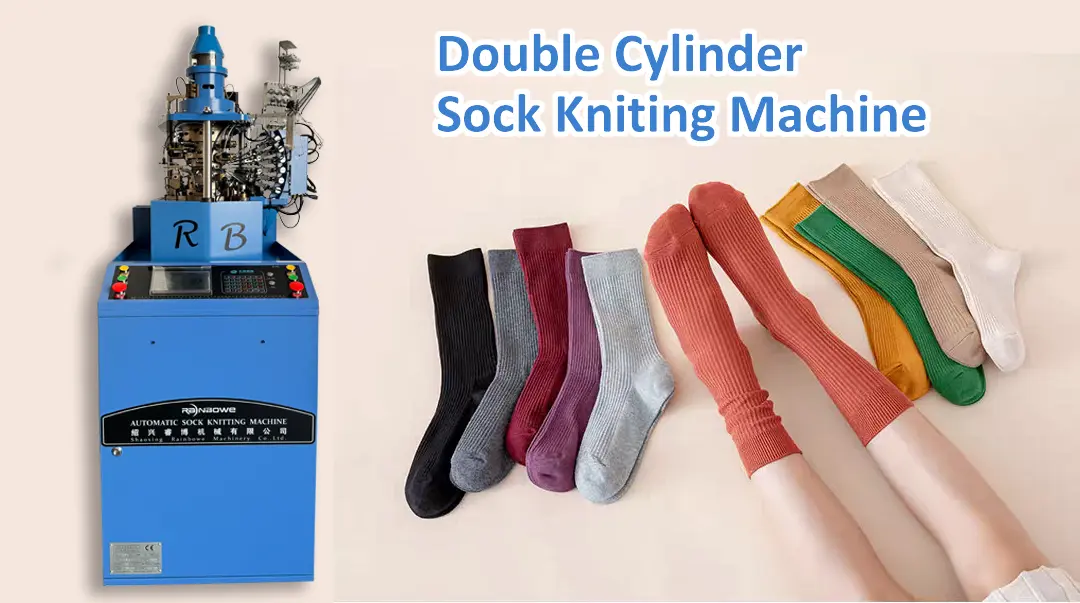
Modern engineering resolves this limitation by integrating advanced electrically controlled shuttles and independent electric drive motors. For example, systems utilize six distinct shuttle devices that allow multiple shuttles to operate continuously on the same sock. This synchronized movement enables the seamless knitting of up to four colors in a single pattern block. Driven by precision motors, the system dynamically adapts the knitting tension and needle positioning to form complex "Y" heels, multi-heels, and single-layer flat-seamed welts at higher speeds, maintaining excellent structural integrity even during complex design changes.
Proactive Fault Diagnostics vs Reactive Intervention
In a legacy production environment, a broken needle, yarn snapping, or an electrical surge can go unnoticed for several minutes, leading to defective production batches or compounding mechanical damage. Operators must constantly monitor the workshop floor, and the factory's profitability remains vulnerable to human error and delayed responses.
Modern double cylinder platforms integrate an array of automated fault detection sensors that continuously monitor operations in real time. The control architecture instantly detects broken wires, fractured needles, unexpected power interruptions, and electronic faults, pausing execution immediately to safeguard the machinery and the raw materials. Combined with an automated oil supply system that delivers precise lubrication across the internal mechanics, these systems drastically extend individual component lifespans and reduce maintenance overhead for modern industrial facilities.
Balanced Technical Specification Profiles
A detailed look at the physical and mechanical parameters highlights how modern systems pack increased performance into a balanced operational footprint. Below are the key specifications for high-speed, computerized double cylinder configurations:
- Cylinder Diameters:Available in 4.0-inch and 4.5-inch options to accommodate various hosiery types.
- Needle Counts:Optimized at 120N to 220N for 4.0-inch cylinders; 56N to 96N for 4.5-inch cylinders.
- Rotational Velocity:Reaches 250 RPM to 280 RPM on 4.0-inch platforms; 220 RPM to 230 RPM on 4.5-inch units.
- Power Configuration:Compatible with 220V/380V at 50/60Hz, using a 0.5 KW computer controller alongside a 1.5 KW main drive motor.
- Physical Footprint:Net weight of 300 KG (Gross weight of 370 KG) with compact packing dimensions of 0.75 by 0.9 by 2.1 meters.
These parameters allow modern lines to deliver high production outputs while maintaining a compact physical footprint, enabling factories to optimize their floor layout and maximize productivity per square meter.
Integrated Production Lines vs Fragmented Auxiliary Workflows
True operational efficiency cannot be achieved by upgrading the knitting stage alone. A legacy factory often suffers from bottlenecks during post-knitting processing, where socks are manually transferred across disconnected stations for toe closing, boarding, labeling, and packaging. These fragmented workflows increase labor costs, extend lead times, and create operational imbalances across the manufacturing floor.
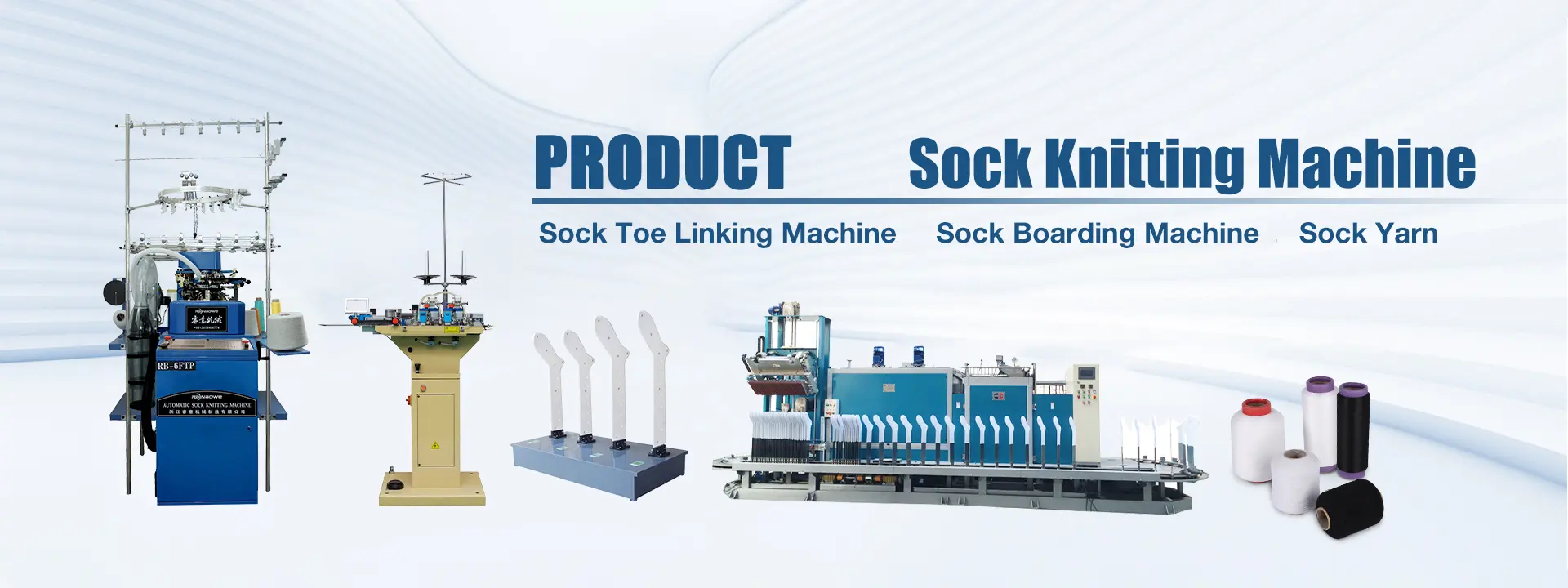
To address these inefficiencies, Shaoxing Rainbowe Machinery Co., Ltd. provides complete turnkey manufacturing ecosystems designed to eliminate post-knitting bottlenecks. Established in 2011, the enterprise integrates research, development, and service to support factories in upgrading from legacy frameworks to fully automated lines. Beyond advanced knitting units, the complete line includes high-speed toe linking machines, precise boarding systems (available in simple, box, and high-capacity rotary configurations), automated dotting equipment, tagging tools, label sewing units, and robust packaging systems.
By sourcing a synchronized production line from a single provider, manufacturers ensure that downstream automation handles the high output of modern knitting machines. This integration optimizes material flow from raw yarn to final packed product, cutting down on handling delays and maintaining product quality throughout the entire process.
Comprehensive Lifecycle Support and Long-Term Value
Investing in high-speed manufacturing assets requires dependable, long-term technical support. While legacy equipment vendors often provide minimal assistance after installation, modern manufacturing demands continuous technical partnership to maintain optimal uptime and performance.
A structured approach to lifecycle support provides factories with the resources needed to sustain high efficiency over time:
- Extended Asset Protection:Providing a 2-year warranty on mechanical components alongside a 1-year warranty on electronic control systems to secure operational investments.
- Comprehensive Knowledge Transfer:Furnishing detailed assembly manuals, operational user guides, and extensive video training libraries to streamline staff onboarding.
- On-Demand Technical Assistance:Offering direct, one-on-one remote video consultations with experienced engineers to diagnose and resolve operational issues quickly.
- Custom Pattern Development:Assisting clients by designing custom chain-making programs and pattern files based on target product samples to accelerate time-to-market.
Transitioning from legacy machinery to a modern, automated production line helps hosiery manufacturers reduce material waste, lower labor costs, and achieve excellent product consistency. Utilizing advanced digital controls, integrated fault diagnostics, and balanced mechanical layouts allows modern manufacturing facilities to maintain a strong competitive edge in the global textile market.
To explore advanced hosiery manufacturing equipment and complete automated production lines, visit the official website at https://www.rbsockmachine.com/
Media Contact
SHAOXING RAINBOWE MACHINERY CO., LTD ophelia@sxrainbowe.com




