Chongqing, China Apr 16, 2026 (Issuewire.com) - In the rapidly evolving landscape of low-altitude security, the choice of radar architecture determines the operational success of defense infrastructures. As a premier Advanced All-Scenario Anti Drone System Supplier, MYT has integrated two primary antenna technologies—MIMO Microstrip Arrays and Waveguide Slot Antennas—to address the complexities of modern drone threats. While traditional waveguide systems have long been the backbone of aerial surveillance, the emergence of Multiple-Input Multiple-Output (MIMO) microstrip technology offers a compact, high-precision alternative for urban and tactical environments. Understanding the technical nuances between these two approaches is essential for deploying a robust defense network capable of neutralizing everything from commercial quadcopters to high-speed FPV drones.
l Structural Engineering: Lightweight Integration vs. Mechanical Robustness
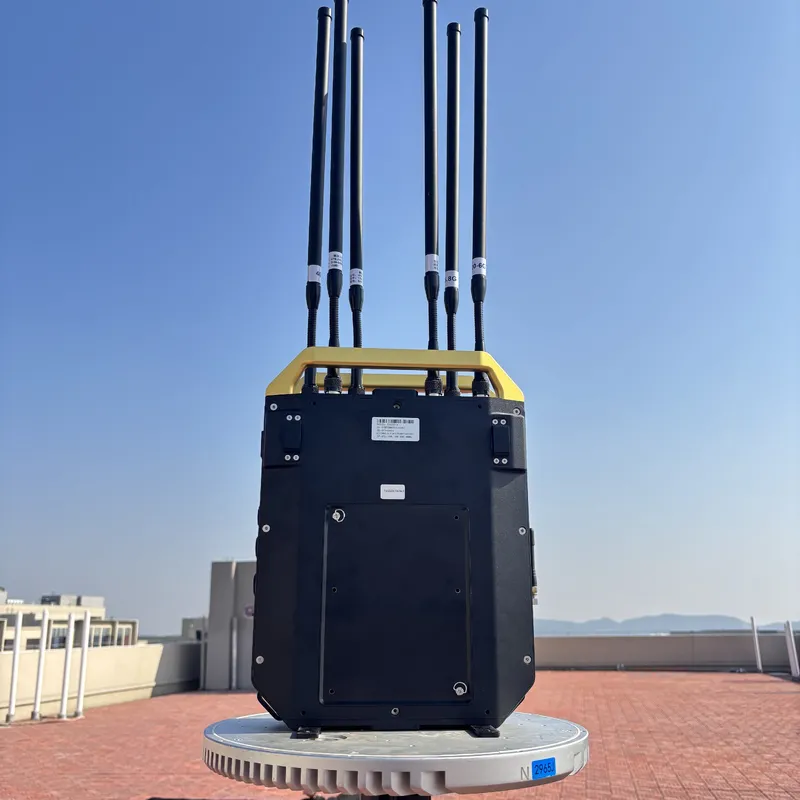
The physical architecture of a radar system dictates its deployment flexibility. MIMO microstrip antennas are etched onto dielectric substrates, resulting in a low-profile, "flat-panel" design. This structural advantage allows for seamless integration into portable jamming units and mobile detection platforms. Because they lack the heavy metal plumbing associated with traditional radar, they are ideal for rapid-deployment scenarios where weight is a critical factor.
In contrast, waveguide slot antennas consist of a metal waveguide with precisely cut slots to radiate energy. This design is inherently more robust and capable of handling significantly higher power levels. While the physical footprint is larger and heavier, the mechanical rigidity of waveguide systems ensures performance stability in extreme environmental conditions, such as high-wind coastal areas or permanent border installations. MYT leverages both designs, utilizing microstrip for its portable 10km detection kits and waveguide structures for long-range, heavy-duty stationary systems.
l Signal Processing: MIMO Digital Correlation vs. DBF Recognition
The core differentiator in target identification lies in how the signals are processed. MIMO microstrip arrays utilize spatial multiplexing, where multiple transmitters and receivers work simultaneously to create a high-resolution "image" of the airspace. By employing advanced clutter algorithms developed by the MYT R&D team—which includes specialists from the Chinese Academy of Sciences—these systems can effectively differentiate between a small drone and "biological clutter" like birds or wind-blown debris.
Waveguide slot antennas typically rely on Digital Beamforming (DBF) for recognition. DBF allows the radar to steer its "vision" electronically without moving the antenna physically. This traditional technology is exceptionally efficient at maintaining a high gain over long distances. While MIMO offers superior resolution for multi-target tracking in cluttered urban environments, DBF-equipped waveguide antennas provide a more consistent "searchlight" effect for early warning detection. MYT’s expertise in SDR (Software Defined Radio) technology, covering 70MHz to 8000MHz, ensures that regardless of the antenna type, the signal processing remains agile enough to counter frequency-hopping threats.
l Detection Precision: High-Resolution Mapping vs. Long-Range Sensitivity
When analyzing detection precision, MIMO microstrip technology excels in angular resolution. Because it simulates a larger virtual aperture through its multiple antenna elements, it can pinpoint the exact coordinates of an FPV drone even when it is flying low and fast against a complex background. This makes it a cornerstone of MYT’s AI-based recognition and tracking solutions, where the radar provides high-fidelity data to photoelectric cameras for visual confirmation.
Waveguide slot antennas, however, are the masters of sensitivity. The lower transmission loss within the waveguide structure means more power reaches the target and a clearer "echo" returns to the receiver. This is why waveguide technology remains the preferred choice for 10km+ long-range surveillance. For an all-scenario defense strategy, MYT often combines these technologies: waveguide antennas act as the "outer ring" for early detection, while MIMO arrays serve as the "inner ring" for precision tracking and engagement.
l Operational Deployment: Urban Saturation vs. Open-Field Surveillance
The application environment often dictates the winner of the MIMO vs. Waveguide debate. Urban environments are plagued by "multi-path interference," where signals bounce off buildings and cars. MIMO microstrip systems are designed to thrive in these conditions, using those reflections to actually improve detection accuracy through complex spatial processing. This allows for a "Multi-Scenario" jammer capability that can operate effectively in dense cities without causing excessive interference to civilian infrastructure.
Open-field surveillance, such as protecting oil refineries or national borders in the Middle East, demands the high-gain stability of waveguide slot antennas. These environments require the radar to push through atmospheric attenuation and maintain a solid lock on targets at the horizon. MYT’s global experience in regions like the United Kingdom, Spain, and South America has shown that a "one size fits all" approach is insufficient. By offering both MIMO-based identification and waveguide-based detection, the company provides a tailored technical layer that accounts for local topography and electromagnetic backgrounds.
l Integrated Defense: Power Efficiency and Bandwidth Versatility
Modern anti-drone operations require more than just detection; they require integrated electronic warfare capabilities. MIMO microstrip arrays are highly compatible with wideband SDR signal sources. MYT has pioneered the integration of 70MHz-8000MHz broadband transmission within these compact arrays, allowing a single unit to detect and jam a wide variety of signals, including unconventional FPV video feeds and specialized remote control frequencies.
Waveguide systems, while slightly more limited in instantaneous bandwidth compared to microstrip patches, offer unparalleled power efficiency at specific high-frequency bands. This makes them lethal when paired with directional power amplifiers for "hard-kill" electronic jamming. MYT’s independently developed ultra-wideband power amplifiers ensure that both antenna types can deliver the necessary energy to disrupt drone links effectively, whether through omnidirectional saturation or high-precision directional beams.
l Technical Specifications and Performance Metrics
Based on MYT’s latest technical benchmarks for all-scenario systems, the performance of these technologies can be summarized by their operational data:
- MIMO Microstrip Systems:Feature a detection range of up to 10km with a focused 3D coordinates output. They are optimized for AI-linked photoelectric tracking and exhibit superior performance in filtering "low-altitude clutter" (weather/birds).
- Waveguide Slot Systems:Utilize high-gain DBF recognition, offering stabilized long-distance scanning. These systems are typically integrated into heavy-duty platforms that require 24/7 operation in harsh climates.
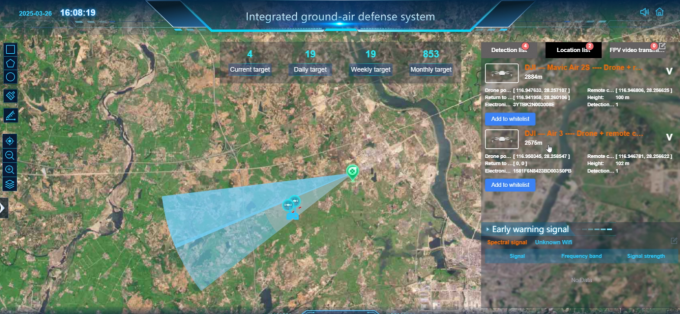
The integration of these antennas into a single defense ecosystem allows for a layered security approach. For instance, the system can detect an FPV video signal via the spectrum sensing unit, track its movement with the MIMO radar, and finally neutralize the link using a targeted wideband jammer.
Summary: Synergy in All-Scenario Defense
In the final analysis of MYT’s Advanced All-Scenario Anti Drone System, neither MIMO Microstrip nor Waveguide Slot technology is universally superior; rather, they are complementary. MIMO Microstrip arrays represent the future of precision, portability, and urban resilience, offering the high resolution required for AI-driven tracking. Waveguide Slot antennas remain the gold standard for long-range, high-power surveillance in open environments.
The true strength of MYT lies in the ability to harmonize these two technologies. By combining the academic rigor of the Institute of Internet of Things (Chinese Academy of Sciences) with practical field experience from international projects, MYT has created a system where MIMO provides the "sharp eyes" for close-quarters identification and Waveguide provides the "long reach" for early warning. This dual-track technological strategy ensures that the Advanced All-Scenario Anti Drone System remains the most versatile and reliable solution for safeguarding low-altitude airspace globally.
For more information, visit the official website: https://www.chinaantidrone.com
Media Contact
Chongqing Miao Yi Tang Technology Co., Ltd. gary@chinaantidrone.com