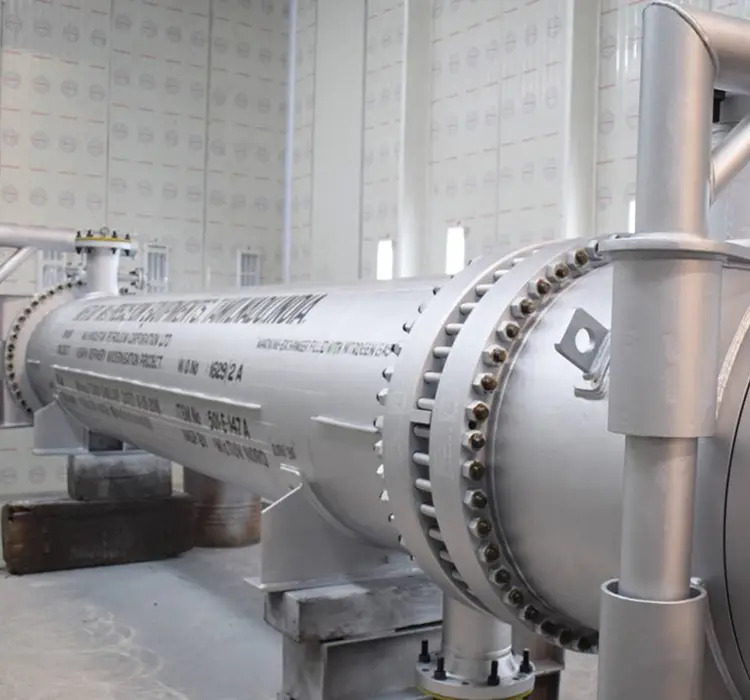
Chennai, Tamil Nadu May 20, 2026 (Issuewire.com) - Introduction
High Pressure Heat Exchanger systems play a critical role in offshore industries where reliability, thermal efficiency, and operational safety are essential. From FPSOs and LNG terminals to marine power plants and offshore processing units, these systems operate continuously in some of the harshest environments on earth.
Marine conditions create unique engineering challenges that can significantly influence heat exchanger performance over time. Salt-laden air, corrosive seawater, vibration, humidity, fluctuating temperatures, and biofouling all place stress on thermal equipment. Even well-designed systems can experience reduced efficiency if environmental factors are not properly managed.
Understanding how marine environments affect Shell and Tube Heat Exchangers is important not only for plant operators and procurement teams but also for sustainability-focused industries seeking longer equipment life, lower energy consumption, and reduced maintenance costs.
Why Marine Environments Are So Demanding
Offshore and coastal facilities are exposed to conditions that are far more aggressive than those found in inland industrial plants. Marine atmospheres contain high levels of chloride, moisture, and airborne salt particles, all of which accelerate material degradation.
In many offshore applications, heat exchangers are also subjected to:
- Constant vibration from rotating equipment
- High operating pressures
- Continuous thermal cycling
- Restricted maintenance access
- Exposure to seawater cooling systems
These factors can gradually reduce thermal performance and increase the risk of equipment failure if preventive measures are not built into the design and maintenance strategy.
Corrosion Remains the Biggest Challenge
Corrosion is one of the leading causes of heat exchanger deterioration in marine settings. Saltwater is highly conductive and promotes electrochemical reactions that attack metal surfaces over time.
For Shell and Tube Heat Exchangers, corrosion may appear in several forms, including pitting, galvanic corrosion, crevice corrosion, and stress corrosion cracking. Tube bundles are particularly vulnerable because they remain in direct contact with seawater or aggressive process fluids.
Material selection becomes especially important in offshore projects. Engineers often rely on corrosion-resistant alloys such as the following:
Common Marine-Grade Materials
- Duplex stainless steel
Offers excellent resistance to chloride corrosion and high strength. - Titanium
Performs exceptionally well in seawater environments and provides long service life. - Copper-nickel alloys
Frequently used in marine cooling applications because of their biofouling resistance. - High-alloy stainless steels
Suitable for demanding offshore chemical and LNG operations.
Choosing the correct material can significantly reduce lifecycle costs while improving long-term operational stability.
The Impact of Biofouling on Efficiency
Marine heat exchangers are constantly exposed to biological organisms found in seawater. Over time, algae, barnacles, mussels, and bacteria can accumulate inside tubes and cooling channels.
This process, known as biofouling, restricts fluid flow and reduces heat transfer efficiency. Even a thin layer of fouling can increase energy consumption and place additional stress on pumps and compressors.
In offshore operations where uptime is critical, biofouling can quickly become a costly issue.
Common Effects of Biofouling
- Reduced thermal efficiency
- Increased pressure drop
- Higher pumping energy requirements
- Unplanned shutdowns
- Accelerated tube corrosion
Routine cleaning schedules and effective water treatment systems help minimize these risks and maintain stable performance.
Thermal Stress and Mechanical Fatigue
Marine environments are rarely stable. Offshore equipment experiences constant movement from waves, wind, and operational vibrations. Combined with fluctuating process temperatures, these conditions create thermal stress within the exchanger structure.
Repeated expansion and contraction can weaken tube joints, welds, and shell components over time. In High Pressure Heat Exchanger applications, this becomes even more critical because systems operate under intense mechanical loads.
Without proper design considerations, thermal fatigue may eventually lead to leakage or structural damage.
Modern offshore heat exchanger designs often include the following:
- Expansion joints for thermal flexibility
- Reinforced tube support structures
- Advanced welding techniques
- Vibration-resistant tube arrangements
These features improve reliability and help equipment withstand long-term marine exposure.
Seawater Quality Directly Influences Performance
Not all seawater conditions are the same. Water temperature, salinity, oxygen content, and pollution levels vary from one location to another, affecting exchanger performance differently.
For example, warmer tropical waters can accelerate biological growth, while colder regions may increase thermal contraction stresses. Areas with high sediment levels can also contribute to erosion inside tubes.
Understanding local seawater characteristics allows engineers to optimize design parameters and select suitable materials for each project environment.
This location-specific approach is becoming increasingly important in global LNG, FPSO, and FSRU developments, where operating conditions differ significantly between regions.
Maintenance Access Offshore Is More Difficult
Unlike onshore facilities, offshore platforms and floating units often have limited access for inspection and repairs. Space constraints and operational pressures make routine maintenance more complex.
As a result, reliability becomes a key priority during heat exchanger selection.
Operators now prefer systems that offer:
Features Supporting Offshore Reliability
- Compact footprints
- Easier tube cleaning access
- Reduced maintenance frequency
- Higher corrosion resistance
- Longer operational lifespan
Predictive maintenance technologies are also becoming more common. Sensors and digital monitoring systems help operators detect performance loss early before serious damage occurs.
Sustainability and Energy Efficiency Considerations
Efficient heat transfer is closely linked to sustainability goals in modern industrial operations. Poorly performing heat exchangers consume more energy, increase operational emissions, and reduce overall plant efficiency.
Marine industries are under growing pressure to improve environmental performance while maintaining operational reliability.
Well-maintained Shell and Tube Heat Exchangers support sustainability efforts by:
- Reducing energy waste
- Improving thermal recovery
- Lowering fuel consumption
- Extending equipment lifespan
- Minimising replacement requirements
This balance between durability and efficiency is especially important in offshore energy projects where environmental regulations continue to evolve.
The Role of Smart Monitoring Technologies
Digitalization is transforming how marine heat exchangers are managed. Offshore operators increasingly use real-time monitoring systems to track temperature, pressure, vibration, and fouling trends.
These technologies help maintenance teams identify performance deviations before they lead to major operational issues.
Benefits of smart monitoring include:
- Reduced unplanned downtime
- Improved equipment reliability
- Better maintenance scheduling
- Lower operational costs
- Enhanced safety performance
As offshore industries adopt Industry 4.0 strategies, predictive analytics will likely become standard practice for thermal equipment management.
Conclusion
Marine environments place enormous demands on thermal equipment, making durability, corrosion resistance, and reliability essential for long-term performance. From saltwater corrosion and biofouling to vibration and thermal stress, offshore conditions can significantly affect the efficiency and lifespan of Shell and Tube Heat Exchangers.
Careful material selection, preventive maintenance, smart monitoring, and application-specific engineering all contribute to improved operational stability in marine industries. As offshore energy infrastructure continues to expand, the importance of dependable High Pressure Heat Exchanger systems will only continue to grow.
Precision Equipment has been a leading manufacturer and supplier of Shell and Tube Heat Exchangers and process equipment since 1981, serving key sectors such as Oil & Gas, Petrochemicals, Fertilizers, Power Plants, LNG and Nuclear Energy.
FAQs: What causes corrosion in marine heat exchangers?
Marine corrosion is mainly caused by saltwater exposure, chlorides, moisture, and electrochemical reactions that gradually damage metal surfaces.
Why is biofouling harmful to heat exchangers?
Biofouling restricts fluid flow and reduces heat transfer efficiency, leading to higher energy use and possible operational downtime.
Which materials are best for offshore heat exchangers?
Titanium, duplex stainless steel, and copper-nickel alloys are commonly used because of their strong corrosion resistance in seawater environments.
How can offshore operators improve heat exchanger lifespan?
Regular maintenance, proper material selection, predictive monitoring, and effective cleaning strategies all help extend equipment life.
Why are High Pressure Heat Exchanger systems important offshore?
They support critical thermal processes in demanding environments where efficiency, safety, and continuous operation are essential.
Media Contact
precision equipment sales@pecpl.com https://pecpl.com/