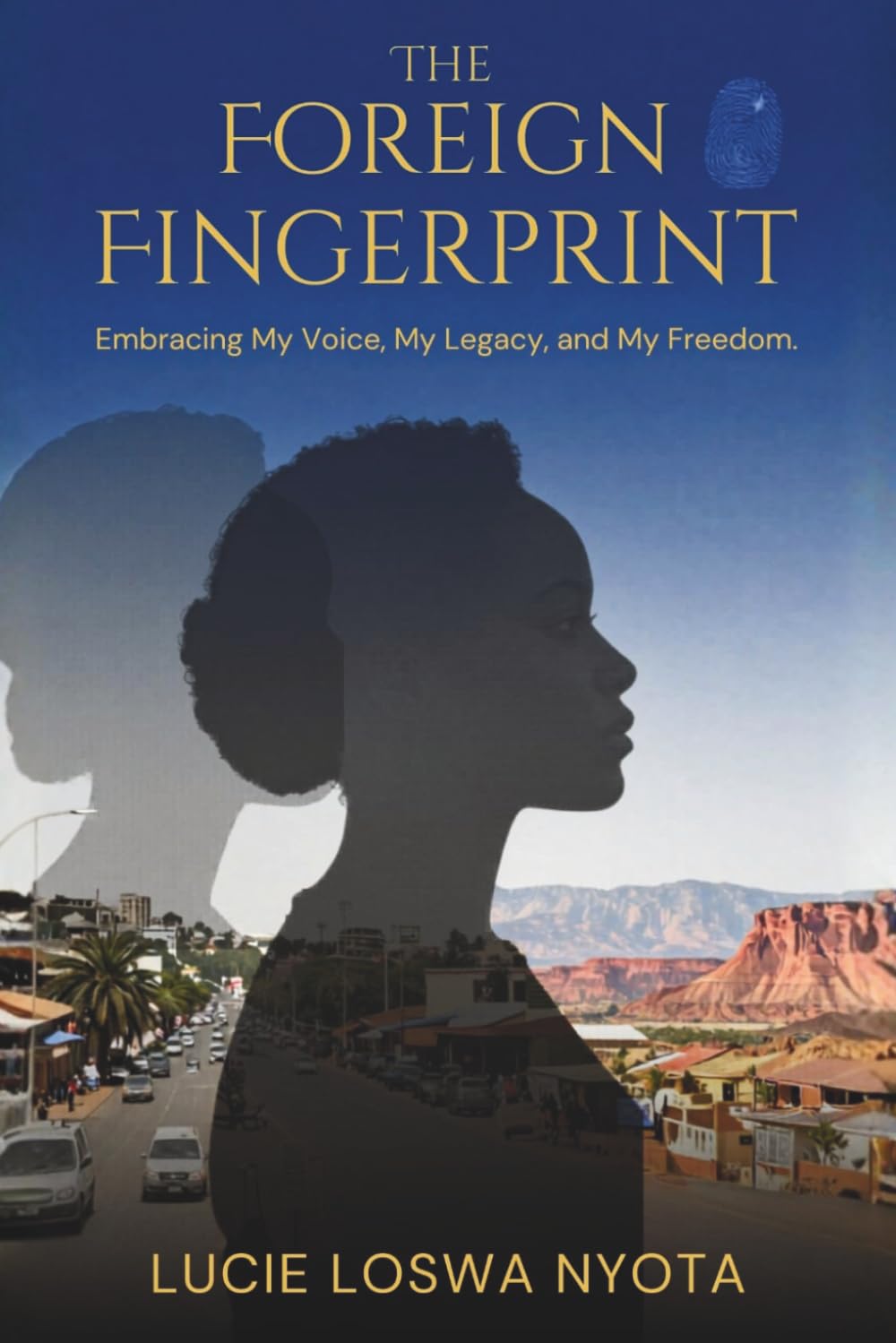
Alhambra, California Oct 3, 2026 (Issuewire.com) - Author Lucie Nyota shares the deeply personal story behind her journey from the Democratic Republic of the Congo to refugee resettlement in the United States in her memoir, The Foreign Fingerprint: Embracing My Voice, My Legacy, and My Freedom. The book looks beyond the label of "refugee" and tells the story of a daughter, twin sister, student, and young woman who had to rebuild her life while carrying questions about family, identity, language, and belonging.
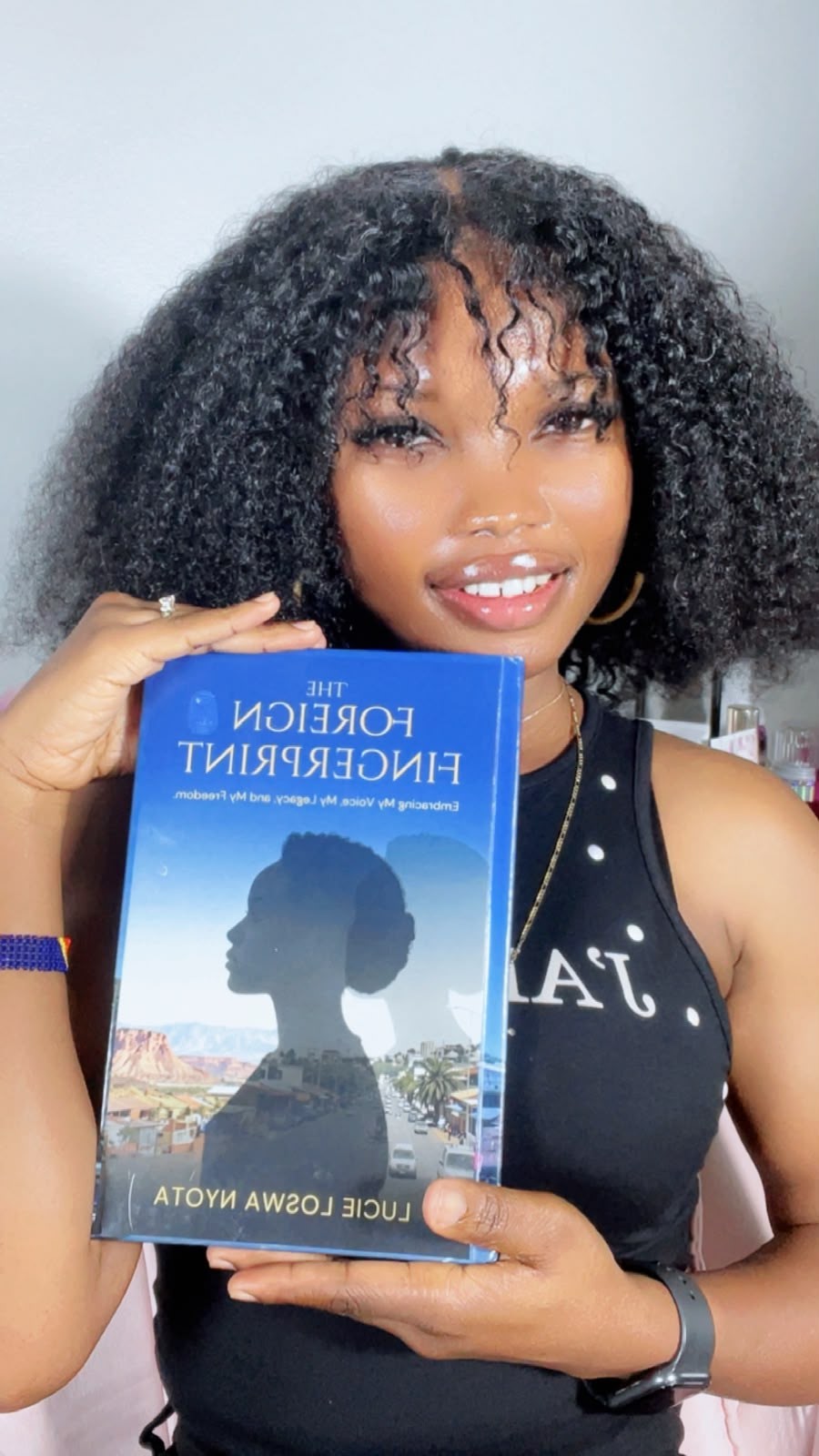
Lucie Nyota with her memoir, The Foreign Fingerprint.
Nyota's story begins in Kinshasa, where her childhood was shaped by family, faith, school, music, language, and the ordinary routines that make a place feel like home. That sense of security changed after the death of her father and growing tension around the family. What followed was not one sudden change, but a series of losses that eventually separated Nyota and her twin sister, Agnes, from the life they knew.
The sisters later made their way to Nairobi, Kenya, where they entered the uncertainty of refugee life. For Nyota, that period meant waiting, interviews, medical checks, changing living arrangements, and living with the painful reality that she did not know what had happened to some members of her family. Her memoir describes refugee life not as an identity, but as a condition created by circumstances that can interrupt a person's education, relationships, sense of safety, and plans for the future.
Resettlement eventually brought Nyota and her sister to the United States. The move gave them greater safety, but it also introduced a different kind of struggle. Nyota entered school while learning English and adjusting to a culture that often felt unfamiliar. Her Congolese accent made her stand out, and she experienced bullying and assumptions about her intelligence because of the way she spoke.
Those experiences changed the way she used her voice. Speaking became something she thought about carefully instead of something that came naturally. At times, silence felt easier than risking embarrassment or being misunderstood. The Foreign Fingerprint explores how that kind of pressure can affect a person's confidence even after the immediate danger of displacement has passed.
With support from her twin sister, foster family, teachers, mentors, faith, and education, Nyota gradually began to see her accent differently. Instead of treating it as something that needed to disappear, she came to understand it as part of her history. The phrase "foreign fingerprint" grew from that realization: the idea that the things that make a person different can also carry the story of where that person has been.
Education became an important part of that rebuilding process. Nyota continued her studies and began working with children, including children with special needs, as a behavior technician. A behavior technician is a professional who supports children as they build communication, learning, behavioral, and daily living skills. The work connected directly to her own experience of being misunderstood because she could not always express herself in the way others expected.
That connection is one of the quieter themes running through the memoir. Nyota learned firsthand that difficulty communicating does not mean a person has nothing to say. In her work with children, she now brings patience to moments when a child may be struggling to make a need, fear, or frustration understood.
Her path has also included higher education, mentoring, community involvement, and becoming a United States citizen. None of those milestones erased what came before. The memoir makes room for both progress and grief, especially because Nyota's search for her mother and other family members remains part of her life story.
Rather than forcing a perfect ending, The Foreign Fingerprint leaves space for the truth that healing can remain unfinished. A person can build a meaningful life while still carrying unanswered questions. Nyota's story moves between Congo, Kenya, and the United States, but its central concern is more personal than geographic: how someone learns to belong to herself again after being separated from so much of what once defined home.
In 2026, Evergreen Awards recognized Lucie Loswa Nyota as Best Memoir Author in Southern California. Her work has also been featured by Women's Insider. Both recognitions have helped bring wider attention to the themes of identity, education, resilience, and finding a voice that run through her memoir.
The Foreign Fingerprint was released in July 2026 by Lucie Nyota Publishing. Nyota's official website describes the memoir as an exploration of identity, displacement, resilience, belonging, freedom, and self-expression. Readers can also use the site to learn more about her story, book, speaking work, and media availability.
About The Author
Lucie Nyota Publishing is the publishing platform connected with author Lucie Nyota and her memoir, The Foreign Fingerprint: Embracing My Voice, My Legacy, and My Freedom.
Nyota's work centers on identity, displacement, resilience, education, belonging, and the process of finding one's voice after major life changes.
Her perspective is shaped by her experiences in the Democratic Republic of the Congo, Kenya, and the United States, as well as her work with children.
Through writing and speaking, she shares a personal account of rebuilding without pretending that every part of the past can be neatly resolved.
More information about Lucie Nyota, her memoir, and her speaking and media work is available at https://thelucienyota.com/.
Shop on Amazon: https://a.co/d/03rX9pWR
Media Contact
Lucie Loswa Nyota lucienyota11@gmail.com https://thelucienyota.com/