Hangzhou, Zhejiang Jun 30, 2026 (Issuewire.com) - How can an automated production line maintain its operational precision when minor voltage fluctuations occur across the factory floor? What steps can engineers take when standard, off-the-shelf motor drives fail to communicate correctly with a specialized PLC system? In modern industrial manufacturing, these practical integration challenges arise frequently. While standard motor drivers perform well in basic applications, they often hit a wall when confronted with unusual operating voltages, specialized communication protocols, or strict physical space limitations. Resolving these bottlenecks requires hardware and software that are precision-engineered for the specific machinery involved.
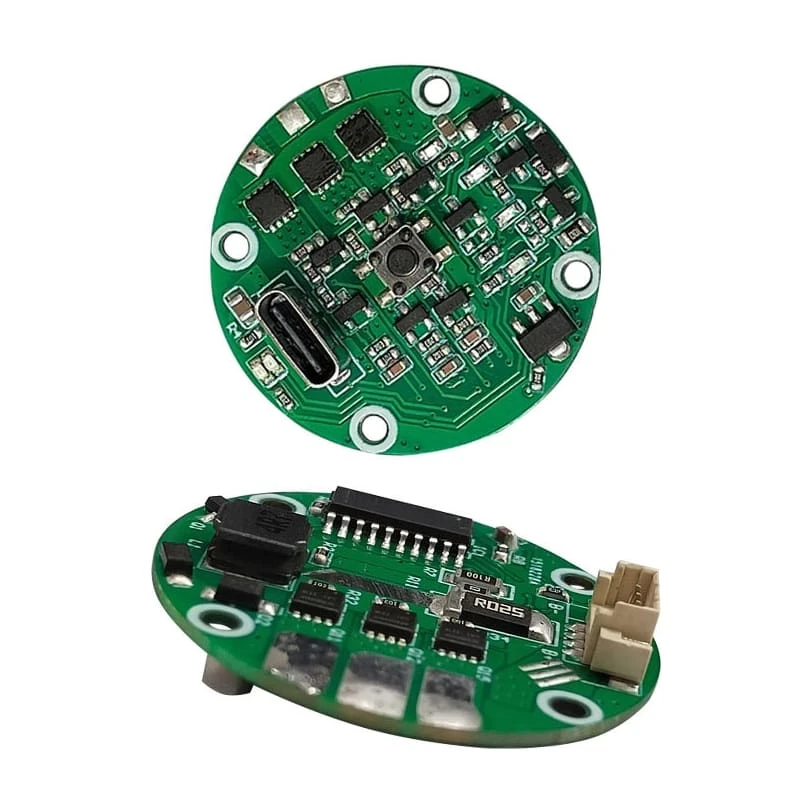
This is why looking for a Specialized BLDC Motor Controller In China has become a practical approach for engineering teams focused on optimizing system integration. True technical breakthroughs in this field do not stem from purely theoretical designs, but from the practical ability to align driver electronics with the unpredictable realities of industrial environments.
For decades, Hangzhou Boyang Motor Co., Ltd. has operated at the center of these technical requirements. Established in 1998, the company has developed over 28 years of manufacturing experience, growing into a major producer supported by a workforce of 600 skilled workers. By collaborating closely with academic institutions and channeling that research into large-scale production, Boyang Motor has built a comprehensive product portfolio that includes DC motors, brushless motors, fans, water pumps, servo motors, and drive controllers. For businesses upgrading their automated machinery, CNC systems, HVAC equipment, and precision instruments, the engineering challenge is always about creating a seamless link between the mechanical motor and the digital control system.
Tailoring Power Stages and Wide Voltage Ranges
Industrial power environments are rarely uniform. While 24V and 48V DC lines are standard across many automation panels, customized machinery frequently utilizes uncommon internal DC buses—such as 65V or 130V lines—to maximize torque efficiency or accommodate existing power supply layouts. Standard drivers on the market generally lack the flexibility to handle these irregular power inputs without requiring extra transformers or voltage regulators, which add unnecessary cost and bulk to the electrical cabinet.
To address this, Boyang Motor has focused its engineering on power stage adaptability. Their integrated controller lineup covers distinct current ratings including 3A, 5A, 8A, 15A, and 50A configurations, alongside dedicated AC BLDC drivers. The underlying technical breakthrough rests in their ability to support an expansive motor-side voltage range spanning from 12VDC up to 320VDC. By customizing the power stage components and switching frequencies, the hardware handles unconventional voltage inputs safely. This allows industrial facilities to implement a customized bldc motor controller that connects directly to their native power infrastructure, avoiding extra conversion hardware and minimizing thermal losses.
Interface Flexibility and Communication Expansion
A controller must do more than just deliver raw power; it needs to interact intelligently with the broader factory network. In traditional setups, simple pulse-width modulation (PWM) or 0–5V analog signals are sufficient for adjusting motor speeds. However, as production lines move toward the data-driven demands of Industry 4.0, a simple speed dial is no longer enough. Controllers must transmit real-time telemetry back to master control stations and accept complex command strings on the fly.
Engineering teams can utilize customized bldc motor controller options that bridge this gap between legacy analog control and modern digital networking. Beyond standard PWM and analog inputs, specialized variants feature dedicated communication extensions, integrating UART and RS485 interfaces. This enables direct networking with programmable logic controllers (PLCs) or industrial computers. Furthermore, the physical hardware incorporates onboard DIP switches, allowing technicians to manually configure acceleration and deceleration slopes as well as precise current-limit thresholds. This adaptability means the exact same driver hardware can be tuned to manage multiple types of inertial loads across a production floor, simplifying spare parts inventory.
Embedded Protection Algorithms and Hardware Robustness
In an industrial setting, a single motor failure can halt an entire assembly line, resulting in costly downtime. Motor controllers operate in harsh environments where they face sudden voltage spikes, mechanical jams, and ambient temperature changes. Without intelligent safeguards, these issues can easily destroy the driver electronics or burn out the motor windings.
The technical solution lies in embedding reactive protection algorithms directly into the controller’s firmware. Boyang Motor integrates a complete suite of hardware safeguards into its drive systems, including under-voltage lockout (UVLO), over-voltage protection (OVP), continuous over-current monitoring, stall detection, and thermal protection. When an anomaly occurs—such as a conveyor belt jamming—the controller senses the sudden current draw and automatically shuts down power output within milliseconds, broadcasting a specific fault code via its communication port. Because Hangzhou Boyang Motor Co., Ltd. designs both the underlying motor hardware and the control electronics, these protection parameters are pre-matched during production to prevent false tripping while ensuring absolute safety during true fault conditions.
Motor-Drive Parameter Optimization
One of the most persistent challenges in industrial automation is the commissioning phase. When an engineer pairs a brushless motor from one manufacturer with a controller from another, they often spend days tuning Proportional-Integral (PI) loops, adjusting feedback loops, and correcting phase misalignments. If the controller cannot accurately decode the motor's internal positioning data, the system suffers from jerky motion, inefficient power consumption, and excessive heat.
Achieving true system synchronization requires locking in the parameters between the motor and the drive before the equipment ever reaches the factory floor. By analyzing specific motor constants like the Kv value and back-electromotive force (back-EMF) constants, engineering teams can pre-program the controller's PI loops to ensure rapid convergence and smooth velocity control. During the customization process, the motor’s internal Hall sensor phase sequencing and feedback resolution can be modified to match the precise decoding logic of the controller. This deep hardware alignment eliminates tedious on-site parameter tuning, allowing field engineers to install the drive and achieve optimal performance immediately.
Manufacturing Standardization and Global Compliance
An excellent electrical design is only as good as the manufacturing process behind it. Industrial-grade electronics require consistent assembly quality, robust thermal management, and comprehensive testing to survive years of continuous operation.
With its CE-certified production facilities and 600 skilled workers, Boyang Motor ensures that every customized bldc motor controller undergoes rigorous load verification on dedicated testing rigs before shipment. This quality control process subjects the drive electronics to simulated real-world conditions, validating thermal stability under maximum current loads and verifying communication accuracy under electrical noise. The resulting products are distributed to global markets, supported by clear multilingual technical data sheets (TDS) and wiring diagrams that simplify international installation and maintenance.
Engineering Value in Industrial Upgrades
The true value of a specialized motor controller is not found in adding unnecessary software features. Instead, it lies in the precise matching of electrical characteristics, robust communication interfaces, locked-in motor parameters, and dependable industrial protection algorithms. These targeted technical improvements allow industrial facilities to complete upgrades smoothly, ensuring that new automation systems operate with total reliability. Engineering teams looking to optimize their equipment can collaborate directly with technical specialists to establish exact voltage, current, and interface specifications, ensuring a perfectly matched drive solution for their specific application.
For detailed product specifications, technical documentation, and customization options, please visit https://www.boyangmotor.com/.
Media Contact
Hangzhou Boyang Motor Co., Ltd. info@brushlessmotor.cn http://www.boyangmotor.com